Hướng dẫn về biến áp tăng áp và giảm áp: Các loại điện áp và ứng dụng
Ngày đăng: Tác giả: Johsuntech
If you’ve ever wondered how your electrical devices get the right voltage or how power travels efficiently across vast distances, you’re already familiar with the crucial role of Biến áp tăng áp và biến áp hạ áp. These devices are the unsung heroes behind voltage regulation, enabling everything from high-voltage power lines to the safe operation of household appliances. In this guide, you’ll discover exactly how these transformers work, what sets them apart, and why choosing the right type—whether for industrial use or simple voltage conversion—is essential. Ready to demystify Biến áp tăng áp và biến áp hạ áp and learn how they power our world? Let’s get started!
What Is a Transformer? Basic Principles
If you’ve ever wondered how electrical energy changes voltage levels safely and efficiently, the answer lies in a transformer. A transformer is an electrical device that transfers alternating current (AC) voltage from one circuit to another without any direct electrical connection. This happens through the fundamental process of Sự cảm ứng điện từ—a phenomenon where a changing magnetic field induces a voltage in a nearby coil.
Transformers rely heavily on sự cảm ứng lẫn nhau, where the magnetic field created by current flowing through the transformer’s primary winding induces a voltage in the secondary winding. These two windings—primary and secondary windings—are wrapped around a shared magnetic core made from laminated steel to guide the magnetic flux efficiently. Proper insulation separates these windings, ensuring electrical safety and preventing short circuits.
What makes transformers unique is their ability to transfer energy via magnetic fields, not direct wire connections. When AC voltage is applied to the primary winding, it creates a changing magnetic field in the core. This magnetic flux induces a voltage in the secondary winding, either increasing or decreasing the voltage depending on the number of turns in each coil. This principle allows transformers to step-up or step-down voltages for different applications while maintaining electrical isolation between circuits.
Understanding these basics clarifies how transformers—whether step-up or step-down—serve as essential components in power transmission and distribution systems worldwide.
Understanding Step-Up Transformers
A step-up transformer increases voltage from the primary winding to the secondary winding by having more turns on the secondary coil compared to the primary. This design results in a transformer turns ratio greater than 1, meaning the voltage output is higher than the input voltage. However, as voltage rises, the current correspondingly decreases, following the principle of energy conservation.
Step-up transformers play a crucial role in power generation stations where electricity needs to be sent over long distances. By boosting voltage to very high levels, they help minimize transmission losses caused by resistance (I²R losses) in power lines. You’ll also find them used in industrial equipment that requires higher operating voltages to function efficiently.
Using a step-up transformer means more efficient high-voltage delivery, reducing energy waste and making long-distance transmission economical and reliable. For tailored solutions that meet specific industrial or power transmission needs, exploring custom step-up transformers can ensure optimal performance.
A Biến áp hạ áp reduces voltage from the primary winding to the secondary winding by having more turns on the primary coil. This means the voltage transformation ratio is less than one, so the output voltage is lower than the input. As the voltage decreases, the current increases, following the principle that power stays nearly constant, minus small losses.
Step-down transformers are essential in many areas. They’re commonly used in distribution substations to lower the high voltage from transmission lines to safer levels for end-users. You’ll also find them in household appliances, electronics, and small devices like chargers or doorbells, where they convert higher voltages to the standard levels required by these devices.
Using step-down transformers offers clear advantages:
Provides safe voltage levels suited for homes and businesses
Ensures compatibility with a wide range of standard equipment
Helps protect sensitive electronics from voltage spikes
For those looking for dependable Biến áp gia dụng hoặc custom step-up step-down transformers, understanding step-down transformer working principles is key to choosing the right model to match voltage needs and current requirements.
For more on custom specifications and reliable products, check out Johsun Tec’s range of voltage stabilizers and transformers designed to meet diverse power needs.
Step-Up vs Step-Down Transformers: Key Differences
Here’s a quick look at how Biến áp tăng áp và biến áp hạ áp differ side by side:
Tính năng
Biến áp tăng áp
Biến áp hạ áp
Điện áp đầu ra
Higher than input (Voltage up)
Lower than input (Voltage down)
Dòng điện ra
Lower than input (Current down)
Higher than input (Current up)
Tỷ số biến đổi
Secondary windings > Primary
Primary windings > Secondary
Primary Coil Role
Input (lower voltage side)
Input (higher voltage side)
Secondary Coil Role
Output (higher voltage side)
Output (lower voltage side)
Ứng dụng điển hình
Power plants, high voltage transmission
Đồ gia dụng, điện tử
Efficiency Focus
Minimize transmission losses (I²R)
Safe, compatible voltage delivery
Reversibility and Design Variations
Most transformers can technically function in reverse—as a step-up or step-down device—by switching the input and output connections. However, practical limits like insulation ratings and winding design usually dictate their primary use.
Key design differences include:
Winding placement: Step-up transformers often have thicker insulation on the secondary windings because of higher voltages.
Insulation requirements: Higher voltage sides need better insulation to ensure safety and reliability.
Hiệu quả: Designs are optimized for their typical load and operating voltage to reduce losses and heat generation.
To get the best use from your transformer, understanding these distinctions helps you pick the right device that fits your needs precisely.
Transformers, especially step up and step down transformers, play a crucial role in how electricity travels from power plants to your home and workplace. At power generation stations, step-up transformers increase voltage for high-voltage transmission. This reduces energy loss over long distances, ensuring efficient power delivery. Once the electricity nears consumption areas, step-down transformers reduce the voltage to safer, usable levels for homes and businesses.
In everyday life, step-down transformers are common in household voltage converters, enabling devices to safely switch between different voltage standards like 110V and 220V/240V. Travel adapters and small appliances rely heavily on these transformers to operate correctly and safely.
Industrially, transformers are customized for specialized needs such as renewable energy systems, manufacturing equipment, and heavy-duty machinery that require specific voltage and current levels.
Johsun Tec stands out in providing custom step-up and step-down transformers tailored to unique requirements. Their expertise ensures durable, efficient solutions with competitive transformer prices, meeting the exact demands of various sectors. Explore Johsun Tec’s range of Biến áp tùy chỉnh designed for reliable power management across applications.
Cách chọn biến áp phù hợp
Picking the right transformer matters—to keep your system safe, efficient, and long-lasting. Here’s what to consider:
Yếu tố chính
Voltage ratings: Match the input and output voltages exactly to your needs (e.g., 110V to 220V).
Power capacity (kVA): Choose a transformer rated for your maximum load to avoid overheating.
Tần suất: Confirm compatibility with local standards (50 Hz or 60 Hz).
Hiệu quả: Higher efficiency means less energy loss and cooler operation.
Cooling type: Air-cooled (dry type) or oil-cooled options depend on your environment and power needs.
Sizing Tips
Calculate your actual load needs, including peak usage.
Build in safety margins (typically 20-25%) to allow for future expansion or unexpected demand.
Common Pitfalls to Avoid
Pitfall
Risk
Overloading transformer
Overheating, shortened lifespan
Incorrect voltage matching
Equipment damage, inefficient power transfer
Why Choose Custom Transformers from Johsun Tec?
Tailored specs for your exact voltage, current, and size requirements.
High-quality components ensuring durability and performance.
Competitive transformer prices without compromising quality.
Choosing a custom step-up or step-down transformer from Johsun Tec ensures your application gets the perfect fit—whether for industrial use, power transmission, or household equipment. For more on construction and core details, see our thorough guide on transformer construction and iron core structure.
Maintenance, Safety, and Best Practices for Step-Up and Step-Down Transformers
Keeping your step up and step down transformers in top shape means regular maintenance is a must. Routine checks should focus on insulation conditions, cooling systems, and all electrical connections. Over time, insulation can degrade, which risks short circuits, while poor cooling can lead to overheating and reduced transformer efficiency.
Safety is critical when handling transformers. Always ensure proper đặt chân xuống đất to prevent electrical shocks and install overload protection devices to guard against current spikes that could damage your transformer or connected equipment. These measures not only protect your devices but also users around them.
For long-term reliability, it’s wise to choose transformers made with durable materials and to source them from reputable suppliers who stand behind their product quality. Selecting custom transformers from trusted partners like Johsun Tec ensures you benefit from high-quality components, tailored designs, and competitive pricing that matches your specific power needs.
To dive deeper into selecting the right transformer materials and specs, check Johsun Tec’s detailed core specs and selection checklist, which covers maintenance-friendly setups and performance tips to keep your transformers reliable and safe for years.
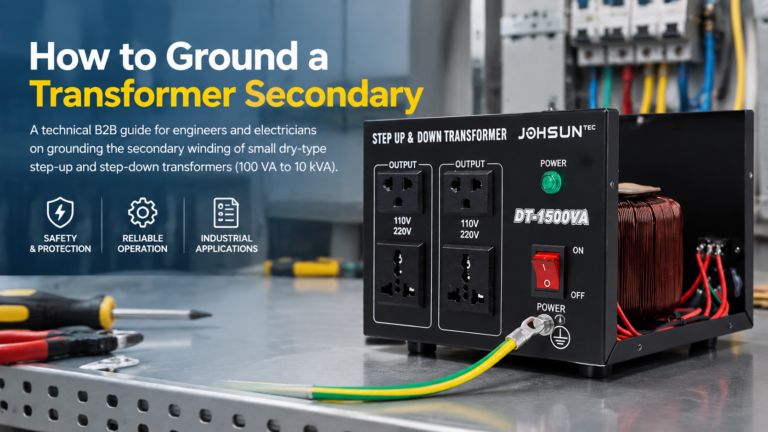
A practical guide to grounding the secondary of small dry-type step-up and step-down transformers — which conductor to bond, how to verify it, and mistakes to avoid.
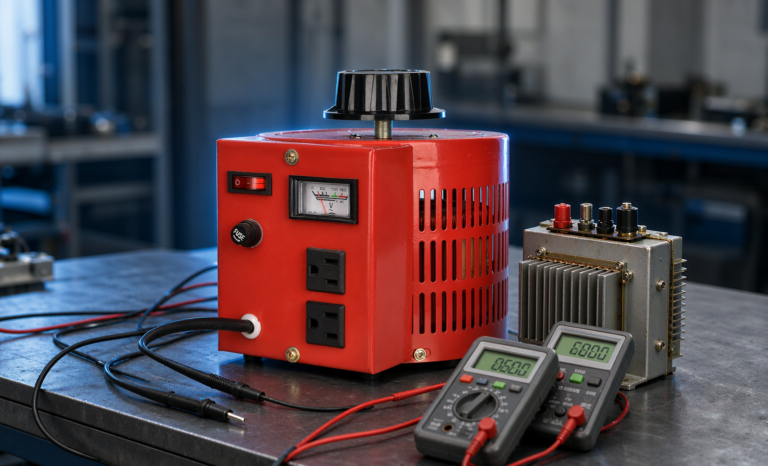
A practical guide to transformer turns ratio testing on low voltage units - the applied-voltage method with a variac, tolerance limits, tap checks, and when to call for a ratio tester.
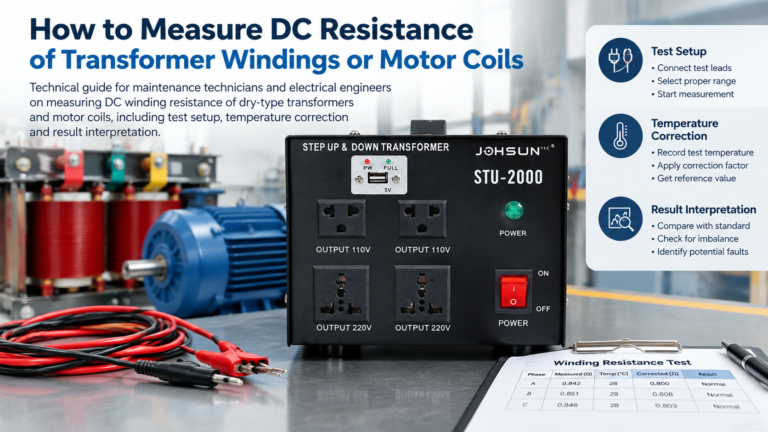
A practical guide to measuring the DC resistance of transformer windings and motor coils, covering four-wire setup, test current selection, temperature correction and pass/fail limits.