If you need to run a 110V appliance in a country with 220–240V mains power, choosing the right 220 to 110 voltage converter is about more than matching two voltage numbers. You must also account for wattage, startup surge, operating time, frequency, plug type, and safety protection. The short answer is to choose a genuine step-down transformer with the correct input and output voltage, then size it above the appliance’s maximum demand—not merely its normal running watts.
This guide gives you a practical selection process for home appliances, office equipment, audio systems, tools, and imported devices. It also explains when you do not need a converter at all.
Do You Actually Need a 220 to 110 Voltage Converter?
Start with the electrical label on the appliance or its external power supply. Look for a line marked INPUT. A device labeled “100–240V, 50/60Hz” is dual voltage and normally does not need voltage conversion. It may only need a plug adapter that fits the local wall socket.
A device labeled “110V,” “115V,” or “120V only” does need a step-down converter when the local supply is 220V, 230V, or 240V. A plug adapter alone changes the physical plug shape; it does not reduce voltage. Connecting a single-voltage 110V appliance directly to 220V can cause immediate damage, overheating, or a fire hazard.
Device label
الإمدادات المحلية
ما تحتاجه
100–240 فولت، 50/60 هرتز
220–240 فولت
عادةً ما يكون مجرد محول قابس فقط
110–120 فولت فقط
220–240 فولت
220 to 110 step-down voltage converter
220–240 فولت فقط
110–120 فولت
110 to 220 step-up converter
How to Choose a 220 to 110 Voltage Converter in 6 Steps
1. Confirm the input and output voltage
The converter input must accept the local mains range, commonly 220–240V AC. Its output must match the appliance, usually 110–120V AC. If you travel or sell equipment across several markets, a bidirectional step-up/step-down model can be more flexible, but the input selector must always be set correctly before power is connected.
2. Find the appliance wattage or calculate it
Read the nameplate, manual, or manufacturer specifications. If the label lists watts, use that figure as the starting load. If it gives only voltage and current, estimate power with this formula:
Watts ≈ volts × amps
For example, a 110V appliance rated at 5A draws about 550W. When several devices will share one converter, add their maximum wattages together. Do not size the converter for only the device you expect to use most often.
3. Add capacity for continuous load and startup surge
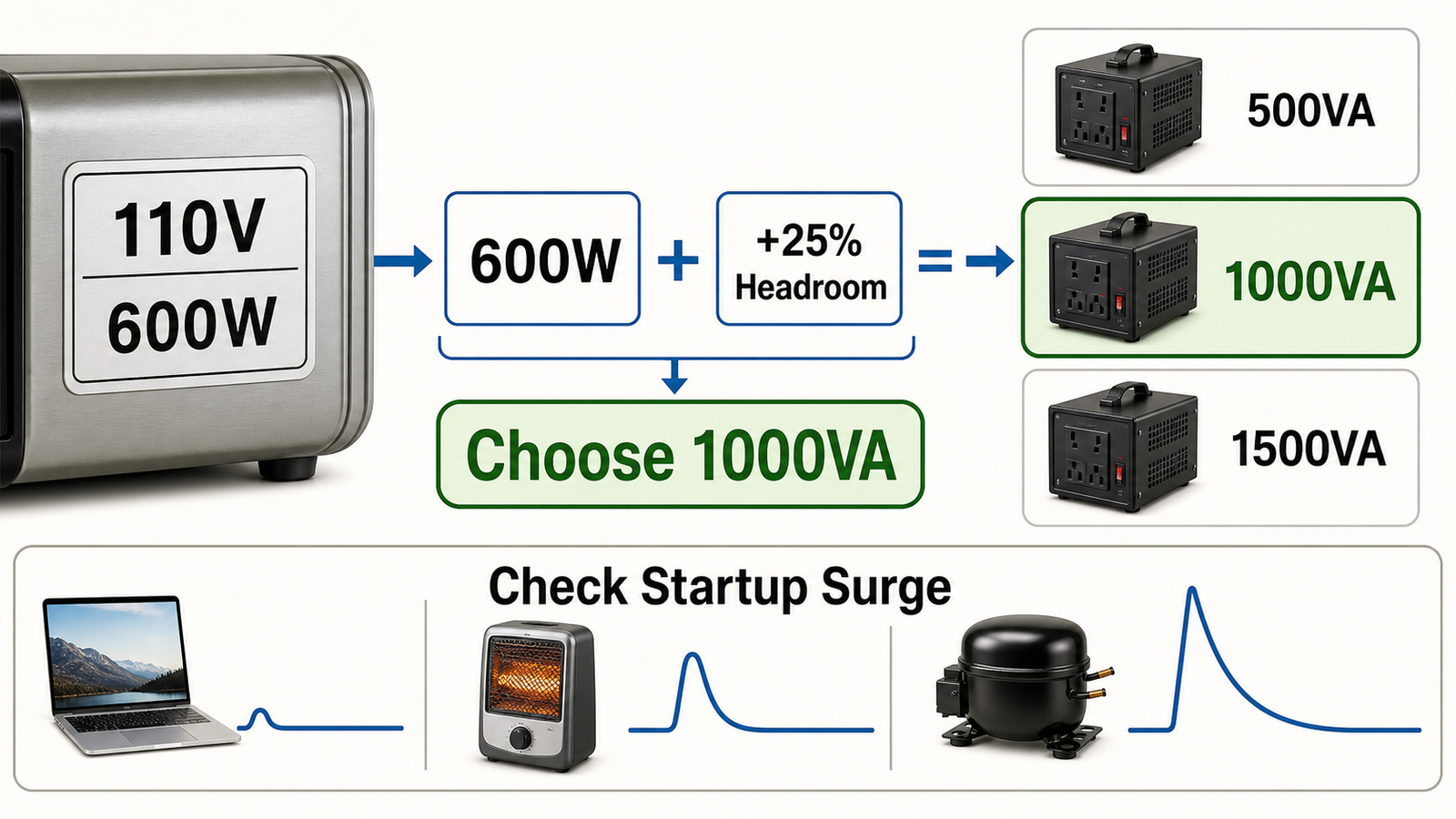
A converter should not be selected at exactly the appliance’s running wattage. For simple electronic or resistive loads, choose at least 20–25% capacity above the maximum continuous load. A 500W continuous load therefore calls for at least 625VA; in practice, move up to the next available size, such as 750VA or 1000VA.
Motor-driven and compressor-driven appliances can draw several times their normal current for a short period at startup. Refrigerators, pumps, power tools, air conditioners, and some kitchen equipment need a much larger margin. Check the manufacturer’s stated starting watts or consult a qualified supplier. If no surge data is available, avoid guessing—especially for expensive equipment.
نوع الحمولة
Examples
Typical sizing approach
Low-surge electronics
TV, monitor, audio source
Rated load plus at least 20–25%
Resistive heating
Basic heater, kettle
Full rated watts plus margin; verify continuous-duty rating
Motor or compressor
Refrigerator, pump, power tool
Size for measured or specified startup surge
أجهزة متعددة
Home office or AV rack
Add maximum simultaneous loads, then add margin
4. Check 50Hz and 60Hz compatibility
A standard transformer changes voltage but usually does not change frequency. A 60Hz-only clock, turntable, induction motor, or timer may run at the wrong speed or overheat on a 50Hz supply even when the voltage is correct. Devices marked “50/60Hz” are designed for either frequency. If the appliance is frequency-sensitive, confirm compatibility with its manufacturer before use.
5. Match the outlets, plug, and grounding
Check both the converter’s input cord and its output receptacle. Universal sockets can be convenient, but they do not replace proper grounding or local electrical compliance. A three-prong appliance should remain grounded through the complete setup. Avoid loose adapters, overloaded power strips, and daisy-chained converters.
6. Look for essential protection and cooling
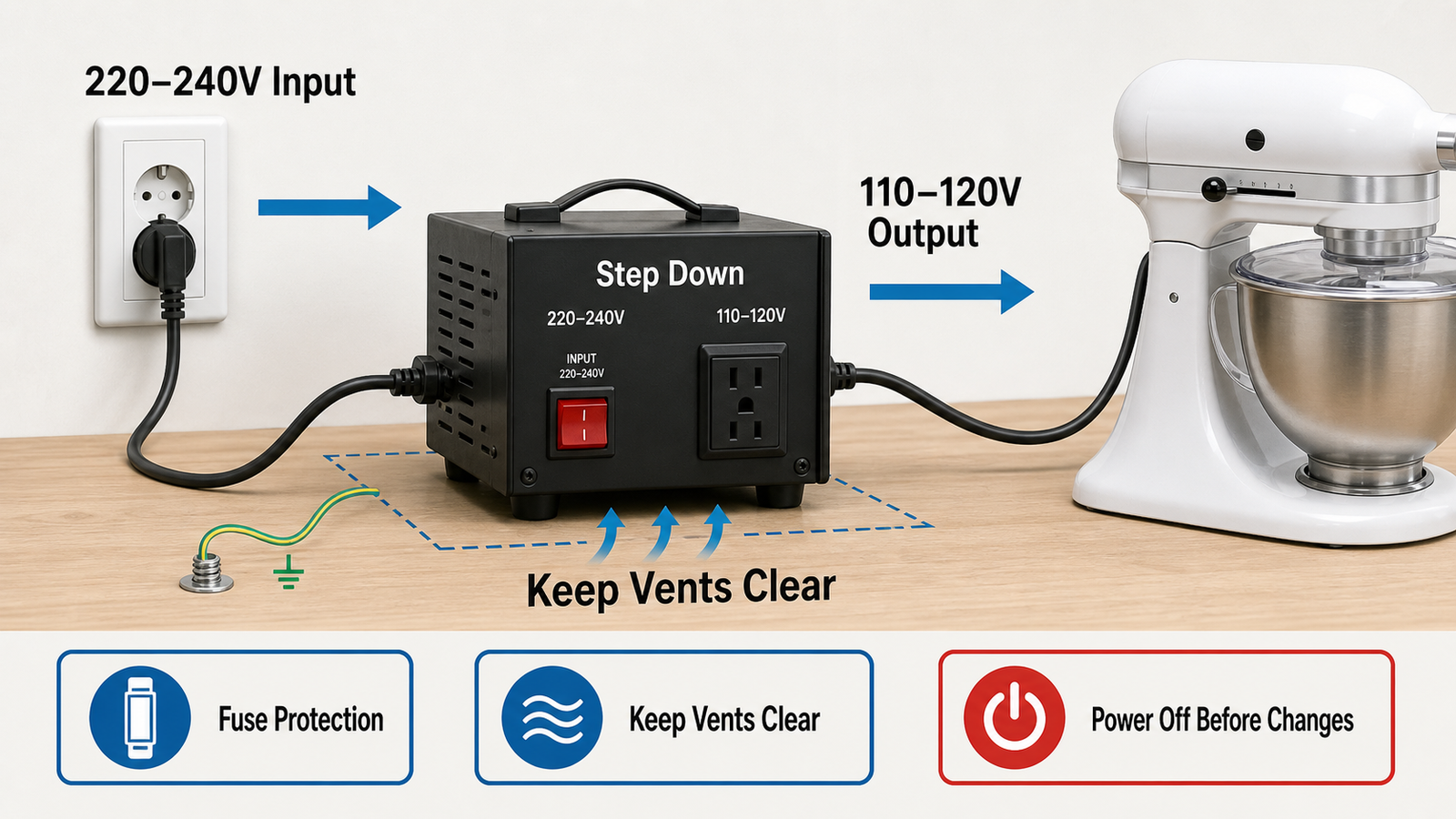
Useful protection features include an input fuse or circuit breaker, overload protection, thermal protection, and a properly grounded enclosure. The case should have enough ventilation for the intended load and operating time. Keep airflow openings clear and place the transformer on a stable, dry, nonflammable surface.
For higher continuous loads, consider a heavier-duty option such as the ST-3000VA 220V to 110V converter. These examples are not substitutes for calculation: verify the appliance nameplate, startup demand, and duty cycle first. You can compare the broader step-up and step-down transformer range when you need a different capacity or enclosure format.
الأخطاء الشائعة التي يجب تجنبها
Buying only a plug adapter: it changes the connector, not the voltage.
Matching watts exactly: this leaves no margin for heat, inefficiency, or surge current.
Ignoring frequency: correct voltage does not guarantee that a 60Hz motor will work properly on 50Hz.
Using a travel converter continuously: some compact electronic converters are intended only for short-duration resistive loads, not sensitive electronics or all-day use.
Blocking ventilation: transformers naturally generate heat and require airflow.
Connecting too many devices: simultaneous load can exceed capacity even if every device works alone.
Changing the voltage selector while energized: disconnect power before changing input settings or connections.
Transformer or Electronic Travel Converter?
A traditional transformer is generally the practical choice for stable AC output, continuous use, and a wider variety of loads, although it is heavier. A compact electronic travel converter may be designed only for specific high-wattage resistive appliances and limited operating periods. It may not be suitable for audio equipment, digitally controlled appliances, or motor loads. Read the converter’s permitted-load list rather than relying on the wattage printed on the front.
Switch off and unplug the converter and appliance.
Confirm that the converter input setting matches the wall supply.
Connect the converter to a correctly grounded wall outlet.
Connect the appliance to the correct 110–120V output.
Switch on the converter, then switch on the appliance.
Check for unusual heat, odor, noise, or repeated breaker trips.
Switch off and disconnect immediately if operation appears abnormal.
For fixed wiring, high-power equipment, medical loads, or an appliance with uncertain startup current, use a qualified electrician or technician. A portable converter is not a replacement for a properly engineered branch circuit.
نصائح بشأن الاختيار النهائي
The right 220 to 110 voltage converter starts with the appliance label. Confirm that the device is single voltage, calculate its maximum load, allow appropriate headroom, account for startup surge, and verify frequency compatibility. Then choose a properly protected transformer with the correct sockets, grounding, cooling, and duty rating.
Visit the Johsun Tec الصفحة الرئيسية to explore its power solutions, or اتصل بنا with your input voltage, output voltage, appliance wattage, load type, and required socket standard for a more specific recommendation.
الأسئلة الشائعة
Can I plug a 110V appliance into a 220V outlet?
Not directly unless the appliance label explicitly supports 220–240V. A 110V-only appliance needs a correctly sized 220 to 110 voltage converter.
Is a 220 to 110 plug adapter the same as a converter?
No. A plug adapter changes the physical connection. A voltage converter changes the electrical voltage.
What size converter do I need for a 1000W appliance?
For a simple continuous load, use at least 20–25% headroom, so a rating above 1250VA is a reasonable minimum starting point. If the appliance has a motor, compressor, heating control, or high startup surge, use its specified starting demand and select a larger unit.
Does a step-down transformer change 50Hz to 60Hz?
No. Most standard step-down transformers change voltage but not frequency. Confirm that the appliance supports the local frequency.
Can I leave a voltage converter on all day?
Only if the model is rated for continuous duty at the actual load and has adequate ventilation. Follow the manufacturer’s operating instructions and never cover the enclosure.
Can one converter power several appliances?
Yes, if the converter has suitable outlets and its continuous and surge capacity exceed the maximum simultaneous load. Add all device loads before selecting the size.
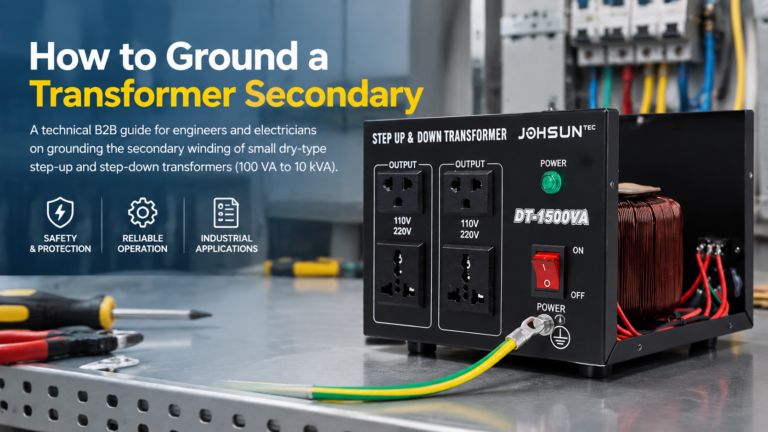
A practical guide to grounding the secondary of small dry-type step-up and step-down transformers — which conductor to bond, how to verify it, and mistakes to avoid.
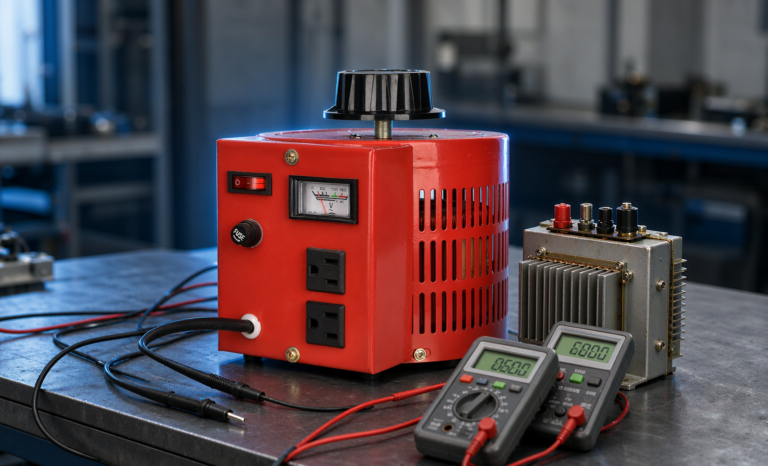
A practical guide to transformer turns ratio testing on low voltage units - the applied-voltage method with a variac, tolerance limits, tap checks, and when to call for a ratio tester.
A practical guide to measuring the DC resistance of transformer windings and motor coils, covering four-wire setup, test current selection, temperature correction and pass/fail limits.