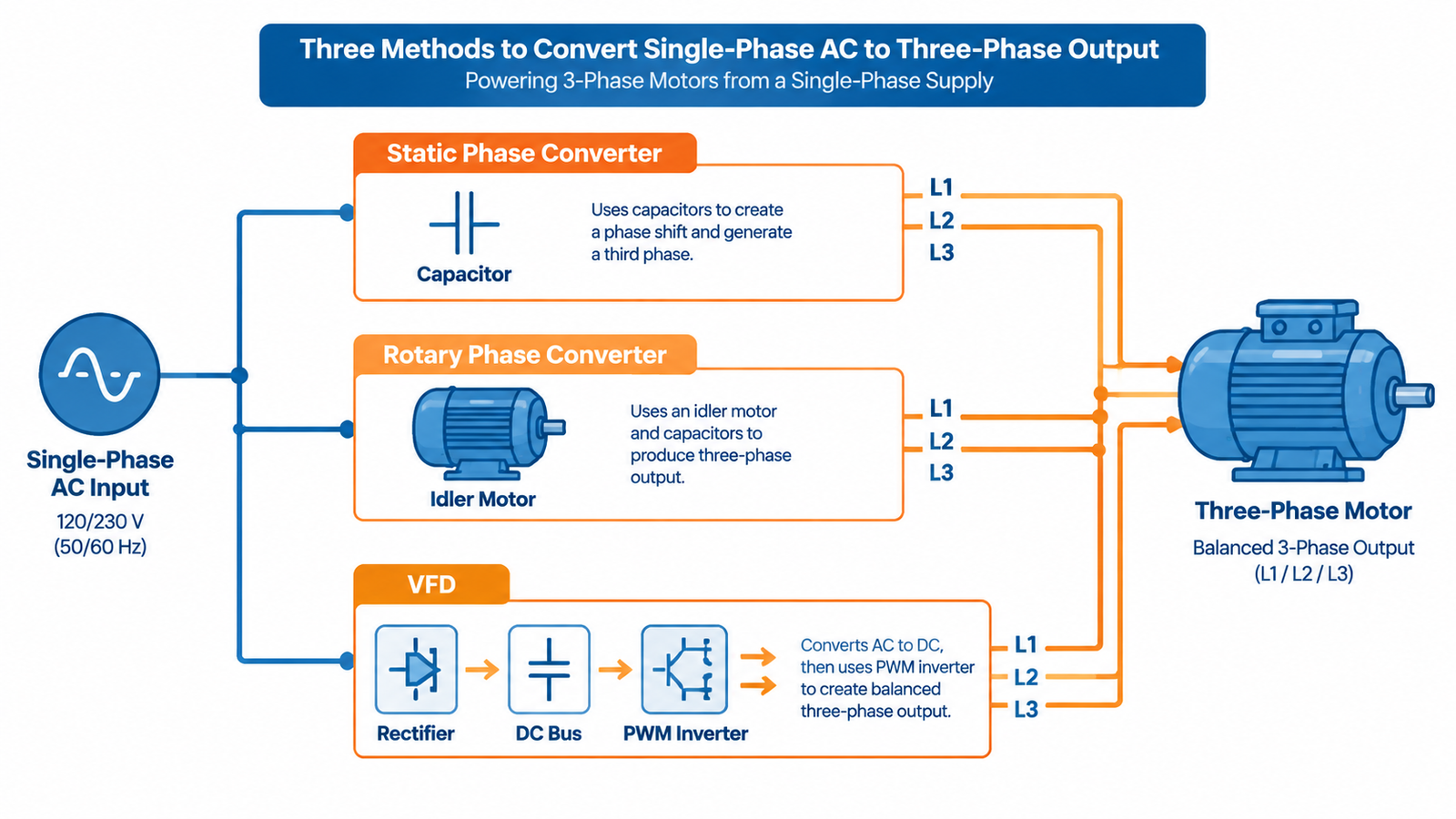
Atölyenizde 5 HP'lik üç fazlı bir torna makinesi varsa, ancak binanıza gelen elektrik gücü sadece tek fazlı elektrik, üç pratik seçeneğiniz vardır: döner faz dönüştürücü, statik faz dönüştürücü veya değişken frekanslı sürücü (VFD). Doğru seçim, yükünüzün büyüklüğüne, kaç makine çalıştırdığınıza ve hız kontrolüne ihtiyacınız olup olmadığına bağlıdır. Şu nokta baştan bellidir: Bir transformatör tek başına eksik fazları oluşturamaz — transformatör voltajı değiştirir, faz sayısını değiştirmez. Bu kılavuzda, her bir yöntemin nasıl çalıştığı, ekipmanın boyutlandırılması, transformatörün hangi durumlarda hala uygun olduğu ve çoğu dönüşümün başarısız olmasına neden olan hatalar açıklanmaktadır.
Tek Fazlı ve Üç Fazlı: Temel Fark
Tek fazlı güç, biri faz, diğeri sıfır olan iki iletken aracılığıyla alternatif akım sağlar ve dalga şekli saniyede 100 veya 120 kez sıfırı geçer. Üç fazlı güç, dalga formları 120 elektriksel derece kaydırılmış üç iletken kullanır; bu sayede motora verilen güç hiçbir zaman sıfıra düşmez. Bu örtüşme, üç fazlı motorların aynı güç değerine sahip tek fazlı ünitelerden daha küçük, daha düzgün ve daha verimli olmasının nedenidir.
Elektrik şebekeleri, caddeler ve sanayi bölgeleri boyunca üç fazlı elektrik taşır, ancak evler ve küçük dükkanlar için tek fazlı hizmete geçer. Bu nedenle pek çok küçük fabrika, çiftlik ve ahşap işleme atölyesi sonunda bir üç fazlı dönüşüm ve transformatör çözümü: Ekipman üç fazlıdır, ancak duvar prizi değildir. Daha ayrıntılı bir karşılaştırma için, şu konudaki kılavuzumuza bakınız: tek fazlı ve üç fazlı transformatörler.
Tek bir transformatör tek fazlı akımı üç fazlı akıma dönüştürebilir mi?
Hayır. Geleneksel bir transformatör, manyetik olarak bağlanmış bir cihazdır: Birincil taraftan aldığı dalga biçimini ve faz sayısını ikincil tarafa aktarır; yalnızca gerilim oranını değiştirir. Tek fazlı besleme yaparsanız, tek fazlı çıkış elde edersiniz. Nadir istisnalar — Scott-T ve açık delta düzenlemeleri — yine de bir tarafta üç fazlı bir kaynak veya eşleştirilmiş üniteler gerektirir; bu nedenle, iki telli bir beslemeden üçüncü bir faz yaratamazlar.
Ne muhteşem bir transformatör! yapabilir Yapılması gereken, sorunun gerilim tarafını ele almaktır. Faz farkının kendisi her zaman önce elektronik veya mekanik olarak kapatılmalıdır. Bu konuyla ilgili makalemiz: Bir transformatörün üç fazlıdan tek fazlıya geçip geçemeyeceği ayna görüntüsü durumunu ayrıntılı olarak ele almaktadır.
Tek Fazlı Akımı Üç Fazlı Akıma Dönüştürmenin Üç Pratik Yolu
1. Döner Faz Dönüştürücü
Bir döner faz dönüştürücü (RPC), tek fazlı güçle dönen bir üç fazlı motor olan “idler motor”u kullanarak üçüncü fazı mekanik olarak üretir; çalışma kondansatörleri ise yük altında faz dengesini korur. Çıkış gücü, gerçek üç fazlı güce yakındır ve her makinenin bağımsız olarak çalıştırılıp durdurulabildiği bir atölyenin tamamına güç sağlayabilir.
Boyutlandırma kuralı: En büyük tek motorunuzun gücünün 1,5 ila 2 katı, artı aynı anda çalışan diğer tüm motorların güçlerinin toplamı kadar nominal güce sahip bir RPC seçin. 5 HP'lik bir freze, 3 HP'lik bir matkap presi ve 2 HP'lik bir torna tezgahı bulunan bir atölye için yaklaşık 15 HP'lik bir konvertör gereklidir. Dikkate alınması gereken başlıca hususlar, boşta güç tüketimi, duyulabilir uğultu ve düzenli rulman bakımıdır.
2. Statik Faz Dönüştürücü
Statik faz dönüştürücü, başlangıçta bir faz kayması sağlamak için kondansatörler kullanır; ardından, sargılardan birinin yardımcı sargı görevi görmesiyle motorun tek fazda çalışmasına olanak tanır. Bu, en ucuz giriş seçeneğidir; ancak motor, nominal beygir gücünün yalnızca yaklaşık üçte ikisini sağlar ve dengesiz akımlar sargıların ömrünü kısaltır. Statik dönüştürücüler, hafif ve seyrek kullanılan yükler için uygundur; CNC makineleri veya günde sekiz saat çalışan cihazlar için uygun değildir.
3. Değişken Frekanslı Sürücü (VFD)
Bir VFD, tek fazlı girişi doğru akıma (DC) dönüştürür, ardından PWM anahtarlama yoluyla temiz bir üç fazlı çıkış üretir; bu sayede tam nominal tork, yumuşak çalıştırma, motor koruması ve hız kontrolü sağlanır. Önemli kural: Tek fazlı bir besleme kaynağından beslenen sürücünün, motor beygir gücünün yaklaşık 1,5 ila 2 katı kadar büyük boyutlu olması gerekir — 5 HP'lik bir motor için 7,5–10 HP nominal güce sahip bir sürücü gereklidir. Ayrıca, bir VFD'nin yalnızca bir motora güç sağladığını unutmayın; kontrol devreleri ve panel elektroniği şebeke tarafında kalmalıdır.
Yöntem
Ortalama Maliyet
Çıktı Kalitesi
Çoklu Motorlar
En Uygun Olan
Döner faz dönüştürücü
Orta-yüksek
İyi bir denge (±5%)
Evet
Çoklu makine atölyeleri, torna tezgahları, freze tezgahları
Statik faz dönüştürücü
Düşük
Başlangıçta güçsüz; ~1/3 HP kaybı
Hayır
Hafif, aralıklı tek motorlar
VFD
Orta
Mükemmel (sentezlenmiş sinüs dalgası)
Hayır (her tahrik için bir motor)
Pompalar, fanlar, konveyörler, hız kontrolü
Tek Fazlı Akımı Üç Fazlı Akıma Nasıl Dönüştürürsünüz: Adım Adım
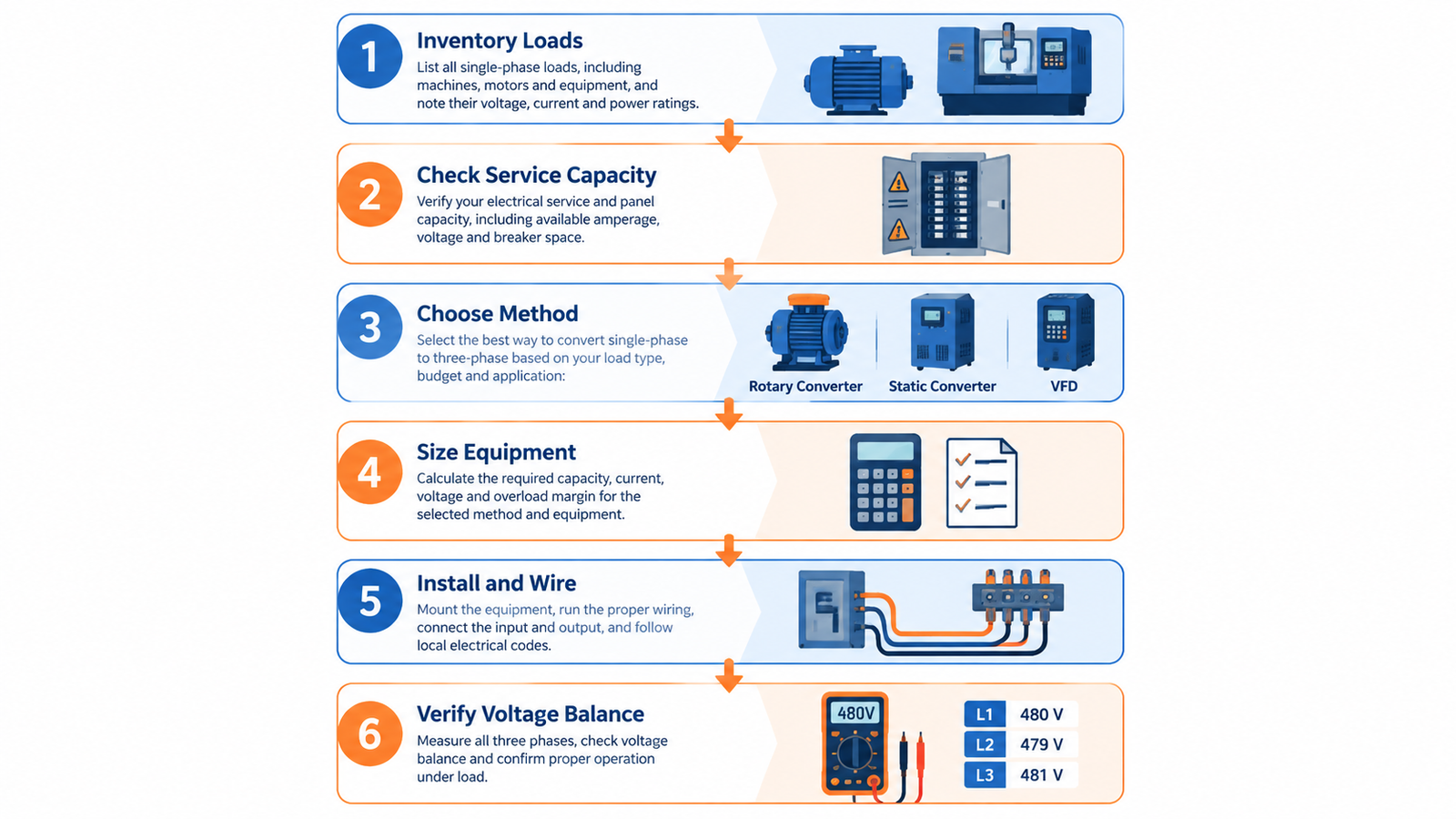
Yüklerinizi envanterine kaydedin. Tüm üç fazlı makineleri, isim plakasında belirtilen beygir gücü veya kW değerlerini, tam yük amper değerlerini ve hangi makinelerin aynı anda çalıştığını listeleyin.
Tek fazlı elektrik hattınızın kapasitesini kontrol edin. Bir VFD aracılığıyla çalışan 5 HP’lik bir motor, 230 V’luk tek fazlı bir hat üzerinden 25 A veya daha fazla akım çekebilir. Kesici panonuz ve elektrik bağlantınız, en kötü durumdaki çalıştırma akımını karşılayabilmelidir.
Dönüştürme yöntemini seçin. Hız kontrolü gereken tek bir motor → VFD. Tek bir besleme kaynağını paylaşan birkaç makine → döner konvertör. Nadiren kullanılan hafif bir yük → statik konvertör.
Ekipmanın boyutlarını belirleyin. Azaltma kurallarını uygulayın: Tek fazlı girişli bir VFD için motor HP değerinin 1,5–2 katı, bir RPC için en büyük motorun 1,5–2 katı. Fazlı ekipmanların boyutlarını asla tip plakasında belirtilen değerlere tam olarak uydurmayın.
Kurun ve kablolamayı yapın. Üniteyi havalandırma sağlayacak şekilde monte edin, kılavuza uygun olarak tek fazlı girişi ve ardından üç fazlı çıkışı bağlayın. Varsa, turuncu iletkenlere sahip “high leg” (wild leg) bağlantılarını belirleyin ve kontrol devrelerini şebeke tarafında tutun.
Tam yüklemeden önce kontrol edin. Üç çıkış kolu arasındaki gerilimi ölçün — yaklaşık 5%’nin üzerindeki dengesizlik, kapasitör bankasının boyutunun yetersiz olduğunu veya arızalı olduğunu gösterir. Ardından, üretime geçmeden önce makineyi yüksüz olarak deneme çalıştırması yapın.
Üç fazlı elektrik kaynağı sağlandığında kablolama ile ilgili ayrıntılar için, bizim Üç fazlı transformatör bağlantı talimatları Delta ve Y konfigürasyonlarını adım adım inceleyin.
Uygulama Örneği: 5 HP’lik Bir Motorun Boyutlandırılması
5 HP, 230 V, üç fazlı bir hava kompresörünü 230 V tek fazlı bir besleme kaynağı üzerinden çalıştırmanız gerektiğini varsayalım. Tip plakasında belirtilen tam yük akımı yaklaşık 14,5 A’dır, ancak tek fazlı giriş akımı aynı gücü yalnızca iki kablo üzerinden taşımak zorundadır:
Çıkış kVA ≈ √3 × 230 V × 14,5 A ≈ 5,8 kVA. Giriş akımı ≈ 5.770 VA ÷ 230 V ≈ 25 A.
Dolayısıyla VFD’nin en az 26 A’lık bir giriş değeri gerekir — bu sürücü “7,5 HP tek fazlı giriş” olarak satılır — ve besleme devre kesicisinin boyutu bu giriş değerinin 125–150%’si kadar olmalıdır. Aynı motor için bir döner konvertörün ise 7,5–10 HP'lik bir avara motoru gerekir. Her iki durumda da, sadece çalışma yükünü değil, ani akımı da bütçenize dahil etmelisiniz.
Transformatörün Kullanım Alanları: Gerilim Uyumu ve İzolasyon
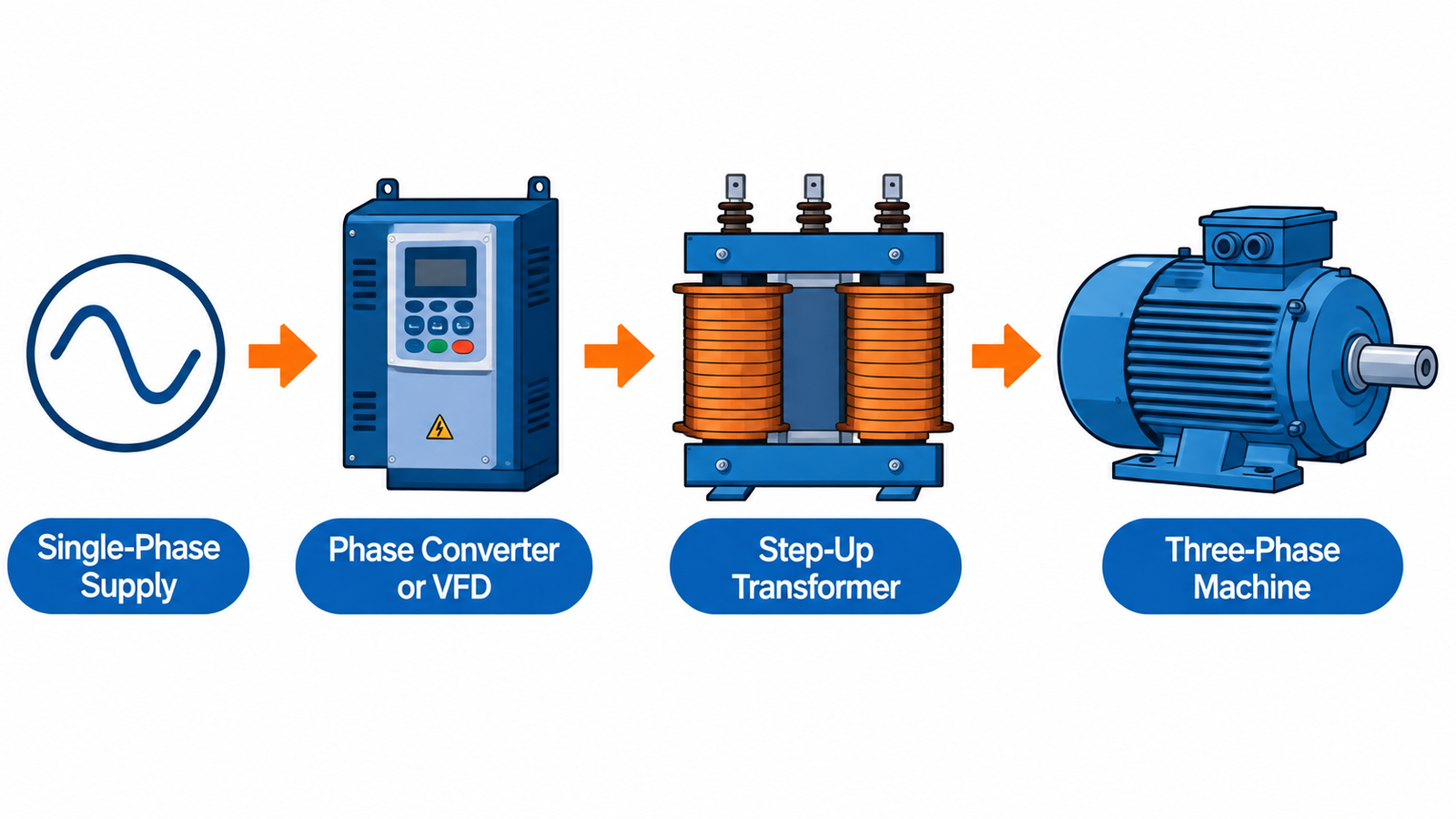
Faz dönüşümü ve gerilim dönüşümü birbirinden ayrı sorunlardır. Bir VFD veya dönüştürücü, besleme geriliminizde — örneğin 230 V — üç fazlı güç üretir; ancak ithal edilen birçok makine 400 V, 440 V veya 575 V gerektirir. İşte bu noktada bir STU serisi gibi yükseltici/düşürücü transformatör zincire girer: tek fazlı besleme → faz dönüştürücü veya VFD → yükseltici transformatör → üç fazlı makine. Transformatörün kVA cinsinden boyutlandırılması ve yeterli yedek kapasiteye sahip olması gerekir; transformatör değerleri mekanik çıkıştan ziyade görünür gücü yansıttığından, gözden geçirin Transformatörlerin neden kVA cinsinden derecelendirildiği bir model seçmeden önce.
90% verimliliğine ve 0,85 güç faktörüne sahip 5 HP (≈3,7 kW) gücündeki bir motor yaklaşık 4,8 kVA çekmektedir; bu nedenle, çalıştırma marjı da dikkate alındığında 5–7,5 kVA’lık bir yükseltici ünite pratik açıdan asgari gereksinimi karşılar. 5 kVA'nın altındaki makineler için — tezgah üstü frezeler, küçük pompalar, test cihazları — tek bir STU-5000 ünitesi, tek bir muhafaza içinde hem gerilim dönüşümünü hem de güvenlik marjını karşılar.
Kaçınılması Gereken Yaygın Hatalar
Faz dönüştürücü yerine bir transformatör satın almak. Transformatör, fazları değil gerilimi düzenler — bu, ilk kez satın alanlardan en sık duyduğumuz yanlış kanıdır.
Boyutlandırma yalnızca isim plakasına göre yapılır. Başlangıç akımı, çalışma akımının 5–7 katıdır; tip plakasındaki değerlere tam olarak göre boyutlandırılmış ekipman, başlatma sırasında devre dışı kalır veya durur.
Giriş akımını göz ardı ederek. Tek fazlı girişli bir VFD, giriş tarafında üç fazlı motor akımının yaklaşık 1,73 katı kadar akım çeker.
VFD çıkışından besleme kontrol devrelerine güç sağlanması. PWM ile üretilen güç, sinüs dalgalı beslemeye uygun olarak tasarlanmış panel elektroniği, sensörler ve solenoidlere zarar verecektir.
Bakiye kontrolü atlanıyor. 5% üzerindeki gerilim dengesizliği motorların aşırı ısınmasına neden olur; sadece boşta değil, yük altında da üç fazın tümünü ölçün.
SSS
Üç fazlı elektrik elde etmek için yükseltici transformatör kullanabilir miyim?
Tek başına değil. Yükseltici transformatör gerilimi yükseltir, ancak aldığı faz sayısını olduğu gibi geçirir. Dönüştürme işlemi için bir faz dönüştürücü veya VFD ile birlikte kullanın, ardından gerilim uyumu için transformatörü kullanın.
Küçük bir atölye için hangisi daha iyidir: döner konvertör mü, yoksa VFD mi?
Tek bir motor çalıştırıyorsanız ve hız kontrolü istiyorsanız, VFD daha temiz, daha sessiz ve genellikle daha ucuzdur. Farklı zamanlarda birden fazla makine çalıştırıyorsanız, bir döner konvertör tek bir üniteden tüm atölyenin ihtiyacını karşılayabilir.
Tek fazlı sistemi üç fazlı sisteme dönüştürmenin maliyeti ne kadardır?
Ekipman tarafındaki dönüşüm, bir VFD ile makine başına yaklaşık 150–500 ABD doları, atölye genelinde bir döner dönüştürücü için ise 800–3.000 ABD doları tutarındadır. Yeni bir üç fazlı şebeke bağlantısı 5.000–25.000 ABD doları tutabilir; bu nedenle çoğu küçük atölye, dönüşüm işlemini yerinde gerçekleştirir.
Tek fazlı akımı üç fazlıya dönüştürmek güç kaybına neden olur mu?
Uygun boyutta bir VFD veya döner konvertör, motorun etiketinde belirtilen tam beygir gücünü sağlar. Statik konvertör, motorun gücünü yaklaşık üçte ikisine düşürür; sadece kondansatör kullanılan (Steinmetz) yöntem ise gücü –50% oranında azaltabilir.
Faz dönüşümünden sonra hangi boyutta bir transformatöre ihtiyacım var?
Transformatörün kVA değerini, makinenin görünür güç tüketiminin en az 25% üzerinde olacak şekilde belirleyin; kompresörler gibi zor devreye giren yükler için bu değer daha yüksek olmalıdır. 5 HP’lik bir motor için bu, 5–7,5 kVA’lık bir ünite anlamına gelir.
Sonuç
Tek fazlı gücü üç fazlı güce dönüştürmek çözülmüş bir sorundur — burada anahtar nokta, yöntemi yüke uygun hale getirmektir. Hız kontrolü gerektiren tek bir motor için VFD en uygun seçenektir; döner konvertör ise tüm bir atölyeye güç sağlar; statik konvertör ise yalnızca ara sıra yapılan hafif kullanımlar için uygundur. Bir transformatör asla üçüncü fazı oluşturmaz, ancak dönüşümden sonra gerilim uyumu ve izolasyon için vazgeçilmezdir. Atölye ekipmanları için bir dönüşüm zinciri kuruyorsanız, yükseltici ve alçaltıcı transformatör serisi ya da özel yükünüzle ilgili boyutlandırma konusunda yardım almak için Johsun Tec’in mühendislik ekibiyle iletişime geçin.
Tek Fazdan Üç Faza Dönüştürme İçin Önerilen Modeller
Teoriyi okumak yerine bir ünite seçmek istiyorsanız, buradan başlayın. Bu modeller, tek fazdan üç faza dönüşüm için en sık talep edilen kapasite aralıklarını kapsamaktadır ve her birinin teknik özelliklerine ve fiyat aralığına doğrudan bağlantı bulunmaktadır.
İhtiyacınız olan giriş gerilimini, çıkış gerilimini, fazı ve sürekli kVA değerini bize bildirirseniz, bir iş günü içinde size uygun modeli, fiyatı ve teslim süresini teyit edeceğiz. Standart dışı değerler ise şu şekilde ele alınır: OEM/ODM özel transformatör üretimi.
İspanya için 230 V - 110 V transformatör: REBT uyumluluğu, ITC-BT-18 ve ITC-BT-24 standartları, ikincil devrenin topraklanması ve UNE-EN IEC 61558 belgeleri.
Hollanda için 230 V - 110 V transformatör: NEN 1010, 30 mA kaçak akım kuralları, kaçak akım anahtarı ile otomatik kaçak akım şalteri arasındaki fark ve ikincil topraklama.