Variac Transformatörünün Çalışma Prensibi, Kablolama, Seçimi ve Uygulamaları
Yayın tarihi: Yazar: Lisa
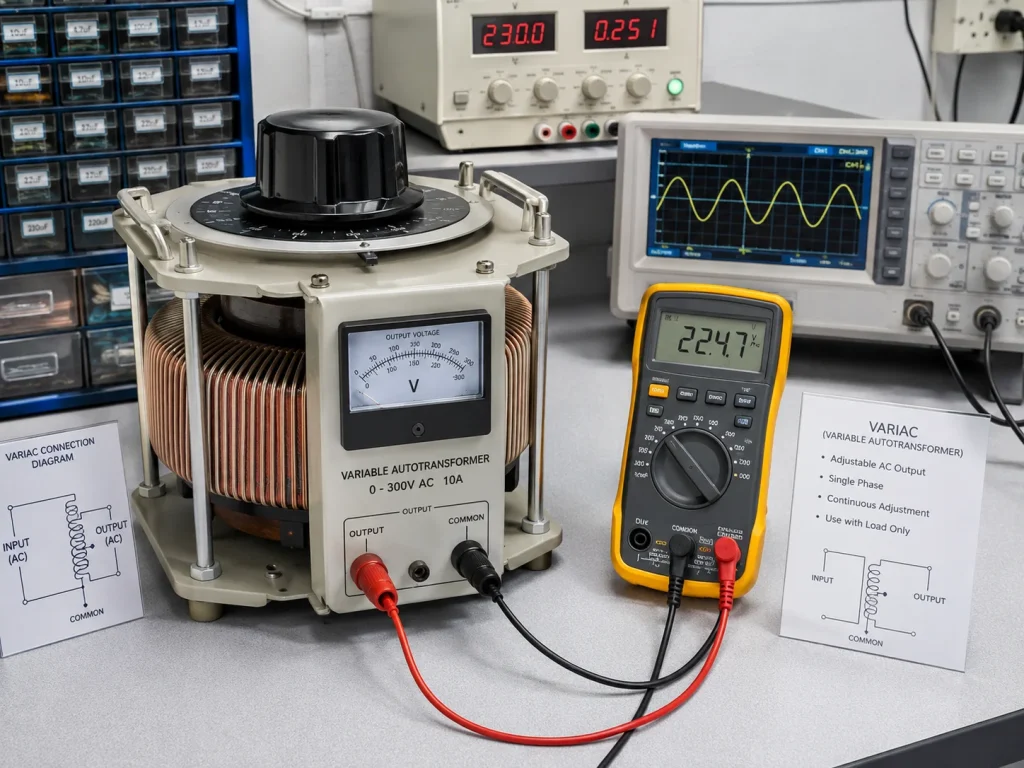
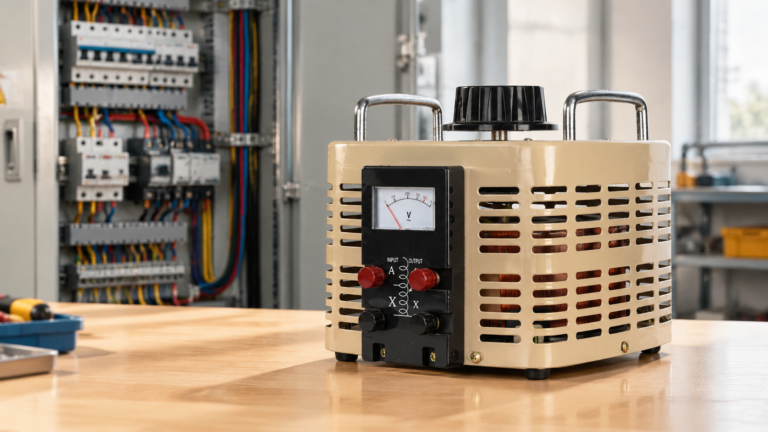
A variac transformatörü sabit bir AC girişinden sürekli olarak ayarlanabilir AC çıkış gerilimi sağlayan değişken bir ototransformatördür. Sabit birincil ve ikincil sargılara sahip geleneksel bir transformatörün aksine, bir variac tek bir sürekli sargı ve döner bir fırça mekanizması kullanarak, giriş geriliminin sıfırdan yaklaşık 117%’ye kadar herhangi bir çıkış değerini ayarlamanıza olanak tanır. Bu kılavuzda, bir variac'ın nasıl çalıştığı, nasıl seçileceği, nasıl bağlanacağı ve atölyenizde, laboratuvarınızda veya üretim hattınızda nereye yerleştirileceği konuları ele alınmaktadır.
Variac Transformatörü Nedir?
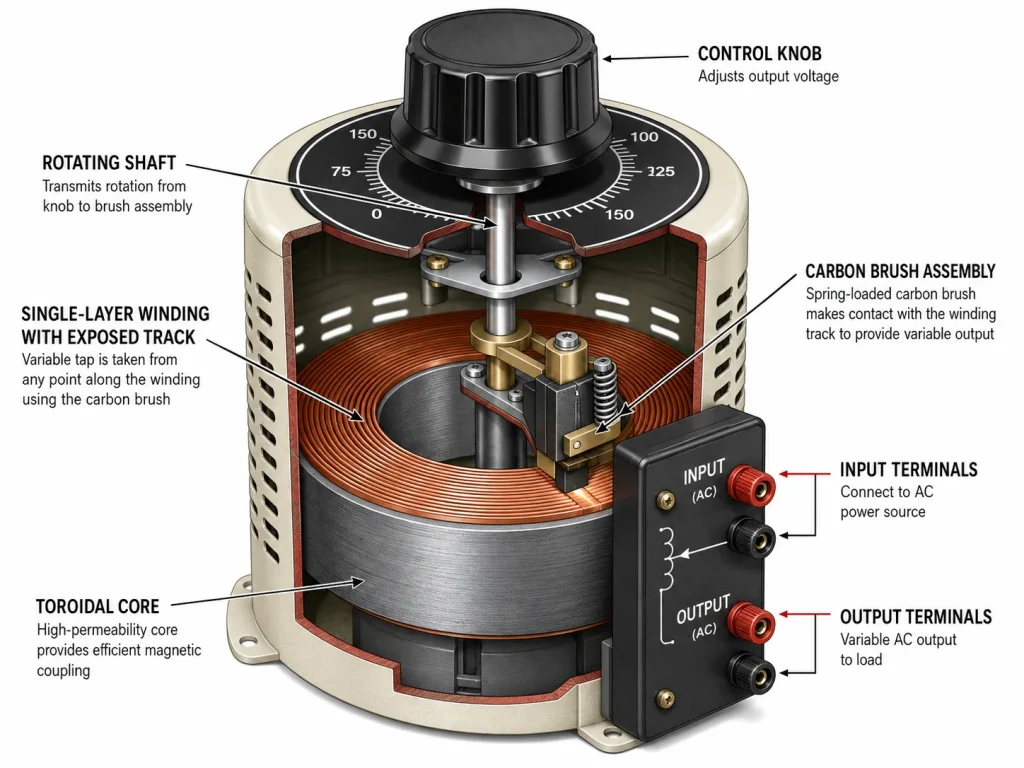
“Variac” terimi, 1934 yılında piyasaya sürülen ve o zamandan beri her türlü cihaz için genel bir isim haline gelen General Radio şirketinin tescilli ticari markasıdır. değişken otomatik transformatör. Teknik olarak, bir variac bir değişken otokotransformatör toroidal çekirdekli, tek katmanlı sargılı ve açıkta kalan sargı yüzeyiyle kayan temas kuran bir karbon fırçaya sahip.
Fırça sargı üzerinde ilerledikçe, ortak uç ile fırça arasındaki devir sayısı değişir ve bu da çıkış geriliminde orantılı bir değişiklik oluşturur. Bu sayede, belirli gerilim seviyeleri arasında kademeli geçiş yapan kademe değiştirme transformatörlerinden farklı olarak, kesintisiz ve kademesiz bir gerilim kontrolü elde edersiniz.
Bir variac genellikle şu şekilde adlandırılır: ayarlanabilir transformatör, bir ayarlanabilir gerilim transformatörü, ya da bir değişken akım transformatörü. Bu isimlerin tümü aynı cihaz sınıfını ifade eder. Bu cihazların en belirgin özelliği, manuel ve gerçek zamanlı gerilim ayarlaması sağlayan döner düğmedir.
Variac Transformatörünün Çalışma Prensibi
Bir variac’ın çalışma prensibi, bileşenlerinin fiziksel düzenini anladığınızda oldukça basittir.
Çekirdek ve Sargı Yapısı
Bir variac, bir toroidal (halka şeklinde) manyetik çekirdek tahıl yönlü silikon çelik şeritten yapılmış ve kesintisiz bir halka şeklinde sarılmıştır. Çekirdekte hava boşluğu bulunmadığından manyetik akı kaçağı en aza indirgenir ve verimlilik yüksek tutulur. Çekirdeğin tüm çevresi, tek kat emaye kaplı bakır tel ile sarılmıştır.
Sargı işleminden sonra, telin üst yüzeyindeki yalıtım dairesel bir iz boyunca zımparalanarak çıplak bakır ortaya çıkarılır. Fırça, bu iz üzerinden elektriksel temas kurar. Sonuç olarak, her bir turun potansiyel bir bağlantı noktası olarak kullanılabildiği bir sargı elde edilir; bu da çıkış geriliminin ayarlanması için fiilen sonsuz bir çözünürlük sağlar.
Fırça Mekanizması
Ön paneldeki düğmeye bağlı döner bir kola monte edilmiş bir karbon-grafit fırça, açıkta kalan sargı izine baskı uygular. Düğmeyi çevirdiğinizde, fırça bir sargı turundan diğerine kayar. Fırça, bakır sargıya kıyasla nispeten yüksek bir elektrik direncine sahiptir ve bu önemli bir amaca hizmet eder: fırça iki bitişik sargı turunu birbirine bağladığında, bu direnç, fırçanın aşırı ısınmaya neden olacak bir kısa devre sargısı gibi davranmasını engeller.
Çıkış gerilimi, şunlar arasında ölçülür: ortak terminal (sargının bir ucu) ve fırça terminali. Düğmeyi ortak uçtan uzak uca doğru çevirmek, çıkış devresindeki sargı tur sayısını kademeli olarak artırarak gerilimi sıfırdan yaklaşık şebeke gerilimine yükseltir. Aşırı gerilim özelliğine sahip modellerde, sargının bir kısmı giriş çıkma noktasının ötesine uzanır ve girişin yaklaşık 117%’sine kadar çıkış sağlanmasına olanak tanır.
Giriş ve Çıkış Arasındaki İlişki
Gerilim ilişkisi, standart transformatör sargı oranı kuralına uygundur:
Düğme Konumu
Çıkış Devresindeki Dönüşler
Çıkış Gerilimi (220 V giriş için)
Tamamen saat yönünün tersine (0%)
~0
~0 V
Çeyrek tur (25%)
~25% sargı
~55 V
Orta ölçekli (50%)
~50% sargı
~110 V
Üç çeyrek tur (75%)
~75% sargı
~165 V
Tamamen saat yönünde (100%)
~100% sargı
~220 V
Aşırı gerilim konumu (117%)
~117% sargı
~257 V
Çıkış, giriş frekansına uyan saf bir sinüs dalgasıdır. Elektronik bir dimmer veya tristör kontrol cihazında görülebileceği gibi dalga formu kesintisi, PWM veya harmonik bozulma söz konusu değildir. Bu temiz çıkış, hassas uygulamalarda variac’ın en çok değer verilen özelliklerinden biridir.
Variac Transformatörünün Temel Teknik Özellikleri ve Değerleri
Bir variac seçerken, teknik etiketindeki özellikleri anlamak, güvenli ve verimli çalışmayı sağlar. Kontrol edilmesi gereken en önemli parametreler:
Şartname
Ne Anlama Geliyor?
Tipik Menzil
Giriş gerilimi
Gerekli besleme gerilimi
110 V, 120 V, 220 V, 230 V, 240 V AC
Çıkış gerilimi aralığı
Ayarlanabilir çıkış aralığı
0 ile giriş gerilimi arasında; veya aşırı gerilim modelleri için 0 ile 117% girişi arasında
Anma akımı (A)
Maksimum sürekli çıkış akımı
Tezgah üstü modeller için 0,5 A ila 20 A; endüstriyel modeller için 100 A ve üzeri
Anma gücü (kVA)
Görünür güç kapasitesi
0,1 kVA ila 5 kVA masaüstü tip; 10 kVA ve üzeri endüstriyel tip
Frekans
Çalışma şebeke frekansı
50 Hz, 60 Hz veya 50/60 Hz nominal
Çalışma döngüsü
Sürekli veya aralıklı çalışma modu
Çoğu tezgah ünitesi, sürekli çalışma sınıfındadır
Yalıtım sınıfı
Maksimum sargı sıcaklık değeri
B Sınıfı (130 C) veya F Sınıfı (155 C)
Önemli bir ayrıntı: Akım değeri, gerilim aralığı boyunca sabittir. Bu, daha düşük çıkış gerilimlerinde kullanılabilir gücün kVA cinsinden azaldığı anlamına gelir. 10 A ve 220 V nominal değerine sahip bir variac, tam çıkışta 2,2 kVA sağlayabilir, ancak 110 V çıkışta yalnızca 1,1 kVA sağlayabilir (10 A x 110 V = 1,1 kVA). Bir variac seçerken, seçiminizi maksimum gerilimdeki görünür güce değil, maksimum yük akımına göre yapın.
Variac Transformatörünün Kablolaması Nasıl Yapılır?
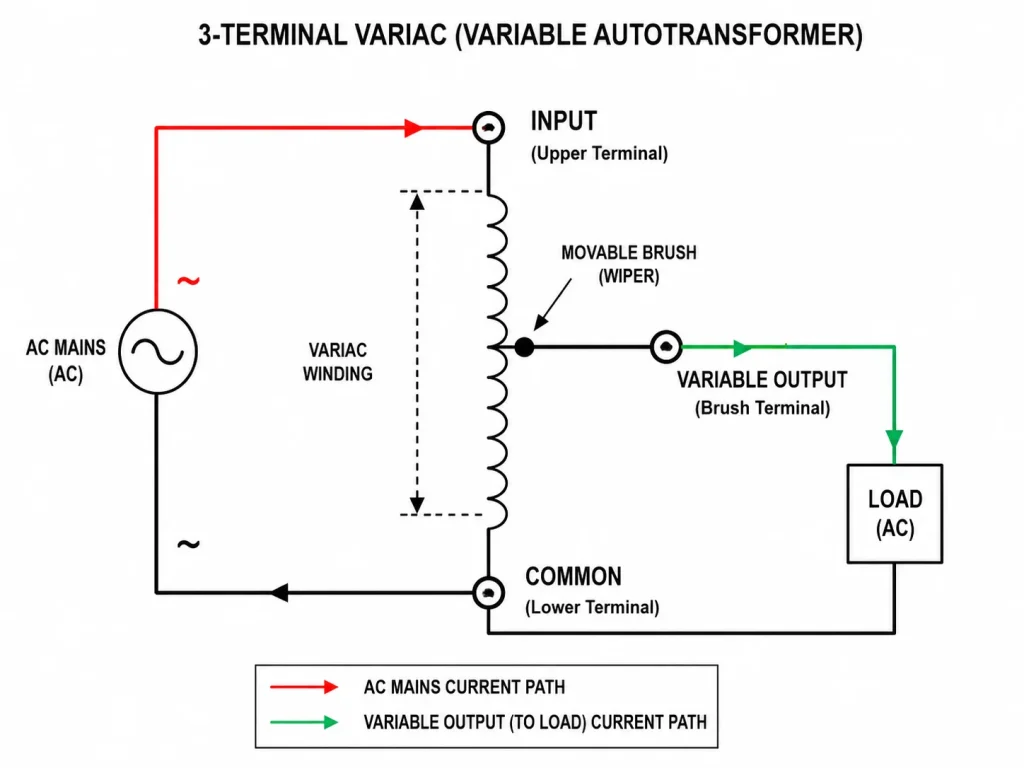
Bir variac’ın doğru şekilde bağlanması, cihazın hasar görmesini önler ve operatörün güvenliğini sağlar. Çoğu tezgah tipi variac, standart etiketlere sahip üç veya dört terminal kullanır.
Tipik Bir 3 Terminalli Variac için Terminal Düzeni
Terminal
Etiket
Fonksiyon
1 (veya C)
Yaygın
Giriş ve çıkış arasında paylaşılır. Giriş nötrünü ve çıkış nötrünü buraya bağlayın.
2 (veya OUT)
Fırça / Çıktı
Değişken çıkışlı sıcak su. Gerilim, düğmenin konumuna göre değişir.
3 (veya IN)
Giriş / Hat
AC girişi “hot” olarak sabitlenmiştir. Şebeke hattını buraya bağlayın.
110 V veya 220 V Variac için Kablolama Adımları
Cihazın fişinin prizden çekildiğinden emin olun. Variac herhangi bir izolasyon sağlamaz. Düğme sıfır konumunda olsa bile çıkış, girişe elektriksel olarak bağlıdır.
AC şebeke nötr ucunu bağlayın ortak terminale (Terminal 1 veya C).
AC şebeke hattını bağlayın giriş terminaline (terminal 3 veya IN). Tip plakasında belirtilen nominal gerilime uygun olmalıdır.
Yük nötrünü bağlayın ortak terminale (giriş nötrüyle aynı).
Yük hattını bağlayın çıkış/fırça terminaline (terminal 2 veya OUT).
Bir çıkış sigortası takın yükle seri olarak bağlanır. Fırça sargısı düşük gerilim ayarlarında yüksek akım taşıyabildiğinden, bir çıkış sigortası, giriş tarafındaki bir kesicinin algılayamayabileceği aşırı akım durumlarına karşı hem yükü hem de variacı korur.
Girişi asla fırça terminaline bağlamayın. Aksi takdirde, yüke doğrudan regüle edilmemiş şebeke gerilimi verilir ve bu durum fırça mekanizmasına zarar verebilir. Girişi daima sabit terminallere, çıkışı ise ortak + fırça çiftine bağlayın.
Variac Transformatörü ve Diğer Gerilim Kontrol Yöntemleri
Variac, alternatif akım gerilimini ayarlamanın çeşitli yöntemlerinden biridir. Bu cihazın diğer alternatiflere kıyasla nasıl bir konumda olduğunu anlamak, uygulamanız için doğru araç olup olmadığına karar vermenize yardımcı olur.
Yöntem
Çıkış Dalga Formu
Ayarlama Aralığı
Verimlilik
EMI
En Uygun Olan
Variac (değişken ototransformatör)
Saf sinüs dalgası
0 ila 117% giriş
95 ila 98%
Çok düşük
Laboratuvar testleri, onarım, klima kontrol sisteminin temizliği
Elektronik dimmer (TRIAC/SCR)
Kesik dalga formu, yüksek THD
~5 ila 95% RMS
90 ila 95%
Yüksek
Işık kısma, dirençli ısıtıcı kontrolü
Değişken frekanslı sürücü (VFD)
PWM sentezli
0'dan nominal gerilime ve frekansa
85 ila 95%
Yüksek
Motor hızı kontrolü
Kademeli transformatör
Saf sinüs dalgası
Ayrık adımlar (örn., 50%, 65%, 80%, 100%)
96 ila 99%
Çok düşük
Dağıtım düzenlemesi, yumuşak başlatma
Reostat (seri direnç)
Saf sinüs dalgası (azaltılmış)
Yük akımına göre değişir
<50%
Yok
Küçük DC motor kontrolü (artık kullanılmamaktadır)
Variac Transformatörlerinin Yaygın Kullanım Alanları
Bu Variac güç kaynağı çok çeşitli ortamlarda kullanılmaktadır. Temiz AC çıkışı ve basit manuel kontrolü sayesinde, ekipmanların test edilmesi, kalibre edilmesi veya standart dışı gerilimlerde çalıştırılması gereken her durumda tercih edilen çözümdür.
Laboratuvar Testleri ve Ar-Ge
Mühendisler, ürünlerin giriş geriliminin tüm tolerans aralığı boyunca nasıl davrandığını test etmek için variac’lar kullanır. 100 ila 240 V giriş gerilimi için tasarlanmış bir güç kaynağı, her iki uç değerde de doğrulanmalıdır. Bir variac, tek bir laboratuvar prizinden bu aralıktaki herhangi bir gerilimi simüle eder. Yaygın testler arasında düşük gerilim kilitleme doğrulaması, aşırı gerilime dayanıklılık testi ve çeşitli giriş seviyelerinde verimlilik ölçümleri yer alır.
Onarım ve Servis Atölyeleri
Onarım teknisyenleri, “ramping” olarak adlandırılan bir işlemle, durumu bilinmeyen ekipmanı bir variac kullanarak kademeli olarak devreye alırlar. Sıfır volt seviyesinden başlayıp akım çekimini izleyerek voltajı yavaşça artırmak, kısa devreleri, arızalı kondansatörleri veya diğer sorunları, bunlar ciddi arızalara yol açmadan ortaya çıkarır. Bu teknik, hem onarım altındaki ekipmanı hem de teknisyenin çalışma tezgahındaki aletlerini korur.
Endüstriyel Proses Kontrolü
Üretim ortamlarında, bir variac, frekans kontrolü gerektirmeyen küçük AC motorların hızını ayarlar, dirençli ısıtıcıların sıcaklığını temiz bir dalga formu ile kontrol eder ve inceleme veya fotoğraf çekimi için akkor aydınlatmanın yoğunluğunu değiştirir. Elektronik kontrol cihazlarının aksine, variac, aynı devreyi paylaşan hassas ölçüm ekipmanlarını etkileyebilecek herhangi bir elektriksel gürültüyü güç hattına aktarmaz.
Eğitim ve Öğretim
Elektrik mühendisliği laboratuvarlarında, transformatör prensiplerini, gerilim düzenlemesini ve alternatif akım devrelerinde gerilim, akım ve güç arasındaki ilişkiyi göstermek için variac’lar kullanılır. Görünür sargısı, fırça mekanizması ve analog gerilim ölçeği, variac’ı mükemmel bir öğretim aracı haline getirir.
Gerilim Dönüştürme (Geçici veya Değişken)
Sabit oranlı ototransformatörler kalıcı gerilim dönüşümünü sağlarken, bir variac, 110 V’luk ekipmanları geçici olarak 220 V’luk şebekeye uyarlayabilir veya standart dışı şebekeler için tasarlanmış ekipmanlara ara gerilimler sağlayabilir. Bu, kalıcı bir kurulum yapmaya karar vermeden önce ithal edilen ekipmanları değerlendirmek açısından yararlıdır.
Variac Transformatörlerinin Avantajları ve Sınırlamaları
Avantajlar
Temiz sinüs dalgası çıkışı: Dalga formunda bozulma, harmonikler veya elektromanyetik parazit (EMI) yoktur. Hassas elektronik cihazlar ve ölçüm çalışmaları için idealdir.
Sürekli ayarlama: Sıfırdan maksimuma kadar kademesiz çözünürlük. Kademeli geçişler yoktur.
Yüksek verimlilik: Çoğu çalışma aralığında 95 ila 98%. Nominal yükte ısı oluşumu minimum düzeydedir.
Basit ve güvenilir: Arızalanabilecek yarı iletken, kontrol devresi veya yazılım yoktur. Tek aşınan parça, binlerce çalışma saati ömrü olan karbon fırçadır.
Kompakt: Toroidal yapı, lamine çekirdekli transformatörlere kıyasla küçük bir kaplama alanına yüksek güç yoğunluğu sağlar.
Aşırı gerilim dayanımı: Birçok model, marj testleri için yararlı olan 117%’ye kadar giriş gerilimi sağlayabilir.
Sınırlamalar
İzolasyon yok: Çıkış, elektrik şebekesine bağlıdır. Sıfır dahil olmak üzere tüm çıkış gerilimlerinde elektrik çarpması tehlikesi bulunmaktadır.
Yalnızca manuel kontrol: Uzaktan programlama yok, geri besleme döngüsü yok, harici ekipman olmadan kapalı devre düzenleme yok.
Sabit akım değeri: Mevcut kVA değeri, gerilim düştükçe azalır. 10 A nominal değerine sahip bir variac, düşük çıkış ayarlarında tam kVA değerini sağlayamaz.
Fırça aşınması: Karbon fırça kullanım sırasında yavaş yavaş aşınır ve sonunda değiştirilmesi gerekir. Sık sık ayar yapılması aşınmayı hızlandırır.
Güç sınırlaması: 5 kVA’nın üzerindeki tek fazlı variac’lar büyük, ağır ve pahalı hale gelir. Bu aralığın üzerinde, kademe değiştirme transformatörleri veya elektronik kontrol cihazları daha pratiktir.
DC için geçerli değildir: Tüm transformatörler gibi, variac’lar da yalnızca alternatif akımla çalışır.
Variac Transformatörü Nasıl Seçilir?
Doğru seçimi yapmak variac değişken transformatör Her şey beş karara bağlı. Her birini sırayla yanıtlayın; doğru model netleşecektir.
Giriş gerilimi: Şebeke geriliminize uygun seçin: 110–120 V veya 220–240 V. 220 V şebekede 110 V nominal değerli bir variac kullanılması, çekirdeğin doymasına ve cihazın anında bozulmasına neden olur.
Çıkış gerilimi aralığı: Standart modeller 0 ile şebeke gerilimi arasında çıkış sağlar. Aşırı gerilim modelleri ise 0 ile 117% şebeke gerilimi arasında çıkış sağlar ve fiyatları biraz daha yüksektir. Nominal şebeke geriliminin üzerinde marj testi yapmanız gerekiyorsa aşırı gerilim modelini seçin.
Mevcut değer: Yükünüzün çektiği maksimum akımı hesaplayın. Variac’ın akım değeri bu değere eşit olmalı veya bu değeri aşmalıdır. Akım değerinin çıkış gerilimine bağlı olarak değişmediğini unutmayın; 10 A’lık bir variac, her ayarda 10 A akım sağlar.
Muhafaza türü: Ekipman içine panel montajı için açık çerçeveli model. Laboratuvar kullanımı için göstergeli ve düğmeli tezgah üstü model. Taşınabilir saha kullanımı için kablo ve priz ile birlikte sunulur.
Frekans: Çoğu variac 50/60 Hz'de çalışır. 60 Hz için tasarlanmış bir variac'ı 50 Hz'de kullanmak, nominal gerilimde çekirdek doygunluğuna ve aşırı ısınmaya neden olabilir. Tasarlanan frekansı öğrenmek için tip plakasını kontrol edin.
Veriac'ı voltaj ve akım gereksinimlerinize uygun şekilde seçme konusunda yardıma ihtiyacınız varsa, bizim değişken transformatör ürün yelpazesi 0,5 kVA ile 5 kVA arası kapasiteli, tezgah üstü ve kapalı tip modelleri içerir.
Variac Transformatörünün Bakımı ve Güvenliği
Bakım Kontrol Listesi
Fırçayı her 500 ila 1.000 çalışma saatinde bir kontrol edin. Orijinal uzunluğunun yarısından daha azına kadar aşındığında değiştirin. Aşınmış bir fırça kavis oluşturur, aşırı ısınır ve sargı yüzeyine zarar verir.
Açığa çıkan sargı yolunu temizleyin. Toz ve oksitlenme, temas direncini artırır. Yumuşak, kuru bir bez veya özel bir temas temizleyicisi kullanın. Sargıdan bakırı aşındırabilecek aşındırıcı malzemeleri asla kullanmayın.
Terminalin sıkılığını kontrol edin. Çalışma sırasında oluşan titreşim, zamanla vida terminallerinin gevşemesine neden olabilir. Her yıl tekrar sıkın.
Düğme kalibrasyonunu kontrol edin. Ön paneldeki voltaj ölçeği, yıllar süren kullanım sonucunda sapma gösterebilir. Bir multimetre ile kontrol edin ve gerekirse yeniden işaretleyin.
Havalandırma. Havalandırma deliklerini açık tutun. Tam nominal akımda çalışan bir variac, ölçülebilir miktarda ısı üretir ve biriken ısı, yalıtımın ömrünü kısaltır.
Güvenlik Kuralları
Çıkışı her zaman canlı olarak değerlendirin. Düğme sıfır konumunda olsa bile, çıkış sargı aracılığıyla şebeke ile ortak bir iletken yol paylaşır.
Kaynak tarafında bir izolasyon transformatörü kullanın Sizin veya kullandığınız cihazların gerilim altındaki devrelere temas edebileceği durumlarda ekipmanı test ederken. Bir variac tek başına galvanik izolasyon sağlamaz.
Çıkışı birleştirin. Giriş kesicisi tek başına, tüm variac arıza durumlarına karşı yeterli koruma sağlamaz. Yük akımının 125% değerine göre boyutlandırılmış bir çıkış sigortası, önemli bir koruma katmanı sağlar.
Asla bir variac’ı doğru akımla kullanmayın. Çekirdek anında doymuş hale gelecek ve sargı, tahrip edici bir akım çekecektir.
Şasiyi topraklayın. Metal muhafaza, binanın topraklama sistemine bağlanmalıdır.
Variac Transformatörü Hakkında Sık Sorulan Sorular
Variac transformatörü ne için kullanılır?
A variac transformatörü Test, onarım, kalibrasyon ve proses kontrolü için ayarlanabilir bir alternatif akım (AC) beslemesi sağlar. Laboratuvarlarda ekipmanları çeşitli gerilim aralıklarında test etmek, onarım atölyelerinde durumu bilinmeyen cihazları güvenli bir şekilde çalıştırmak ve endüstriyel ortamlarda temiz bir dalga formu ile motor hızını veya ısıtıcı sıcaklığını kontrol etmek amacıyla kullanılır.
Bir variac transformatörü gerilimi yükseltebilir mi?
Evet. Birçok variac, giriş geriliminin yaklaşık 117%’sine kadar çıkış sağlayan bir aşırı gerilim sargısı içerir. Standart modeller, hat geriliminin 0 ila 100%'si arasında çıkış sağlar. Aşırı gerilim çıkışı, girişin sargının en uzak ucundan biraz önce bir çıkama noktasına bağlanmasıyla elde edilir; bu sayede giriş noktasının ötesinde fırça erişimi için fazladan sargı turları bırakılır.
Bir variac, şebekeden izolasyon sağlar mı?
Hayır. Variac, tek bir ortak sargıya sahip bir ototransformatördür. Giriş ve çıkış, bu sargı aracılığıyla elektriksel olarak birbirine bağlıdır. Galvanik izolasyon gerektiren uygulamalarda, şebeke ile variac girişi arasına veya variac çıkışı ile yük arasına bir izolasyon transformatörü yerleştirin.
Variac ile reostat arasındaki fark nedir?
Variac, 95%+ verimlilikle elektromanyetik indüksiyon yoluyla gerilimi ayarlayan bir transformatördür. Reostat ise, gücü ısı olarak dağıtarak gerilimi düşüren değişken bir dirençtir ve genellikle verimliliği 50%'nin altındadır. Variac daha hafiftir, daha az ısınır ve sürekli kullanıma uygundur. Reostat, giriş gücünün çoğunu ısı olarak boşa harcar ve günümüzde AC gerilim kontrolü için nadiren kullanılır.
DC gerilimini kontrol etmek için bir variac kullanabilir miyim?
Hayır. Bir variac, elektromanyetik indüksiyon yoluyla yalnızca alternatif akımla çalışır. Bir variac’a doğru akım uygulanması, çekirdeğin doygunluğa ulaşmasına ve sargıdan tahrip edici bir akım geçmesine neden olur. Bir variac’tan ayarlanabilir doğru akım elde etmek için, variac’ın çıkışını bir doğrultucu köprüsüne ve filtre kondansatörlerine bağlayarak ayarlanabilir bir doğru akım güç kaynağı oluşturabilirsiniz.
Yüküme uygun bir variac’ı nasıl boyutlandırırım?
Yükünüzün tam gerilimde çektiği maksimum RMS akımı belirleyin. Anma akımı bu değere eşit veya bu değerden yüksek olan bir variac seçin. Boyutlandırmayı yalnızca kVA değerine göre yapmayın, çünkü bir variac'ın akım değeri voltaj aralığı boyunca sabittir. 220 V'ta 10 A'lık bir variac, tam voltajda 2,2 kVA sağlar, ancak 55 V çıkışta yalnızca 0,55 kVA sağlar. Bir variac'ı yükünüze tam olarak uydurma konusunda rehberlik için, ototransformatör seçim kılavuzumuza göz atın.
Satılık bir variac'ı nereden bulabilirim?
Transformatör üreticileri ve elektrik malzemeleri tedarikçilerinden kaliteli variac'lar temin edilebilir. Seçenekleri karşılaştırırken, sürekli çalışma derecesine, net terminal etiketlemesine, sorunsuz dönen fırça mekanizmasına ve CE veya eşdeğer bir güvenlik sertifikasına dikkat edin. Johsun Tec, 0,5 kVA ile 5 kVA arası değişken otomatik transformatörler toroidal yapıya, analog gerilim ölçeklerine ve dahili aşırı akım korumasına sahip. Teknik özellikler veya toplu alım fiyatları için, satış ekibimizle iletişime geçin.
Variac Transformatörünün Teknik Özelliklerine Genel Bakış
Model Serisi
Güç Aralığı
Giriş Gerilimi
Çıkış Gerilimi
Frekans
Form Faktörü
TDGC2 Serisi
0,5 kVA ila 5 kVA
110 V veya 220 V
0 ila 250 V
50/60 Hz
Analog göstergeli tezgah üstü cihaz
TDGC2J Serisi
0,5 kVA ila 5 kVA
110 V veya 220 V
0 ila 250 V
50/60 Hz
Muhafazalı işaretçi tablosu
TSGC2 Serisi
1,5 kVA ila 15 kVA
380 V, 3 fazlı
0 ila 430 V, 3 fazlı
50/60 Hz
3 fazlı, birbirine bağlı tezgah üstü
Şu ürün grubunun tamamı için değişken gerilimli transformatörler ve ayarlanabilir AC güç kaynakları, şurayı inceleyin: transformatör ürün kategorileri veya fiyat teklifi isteyin İstenen giriş gerilimini, çıkış aralığını ve sürekli akımı belirtin.
Transformer core saturation happens when the core can no longer absorb more magnetic flux. Learn the causes, symptoms, a simple no-load test and prevention for 100 VA-10 kVA dry-type transformers.
How a buck-boost transformer works: series-winding polarity, differential kVA sizing with single-phase and three-phase examples, and the five limits that decide when it is the wrong tool.
How to size a step-up transformer for a motor: locked-rotor current, kVA code letters, starting kVA by method, voltage-dip and thermal-duty checks, plus the traps most guides miss.