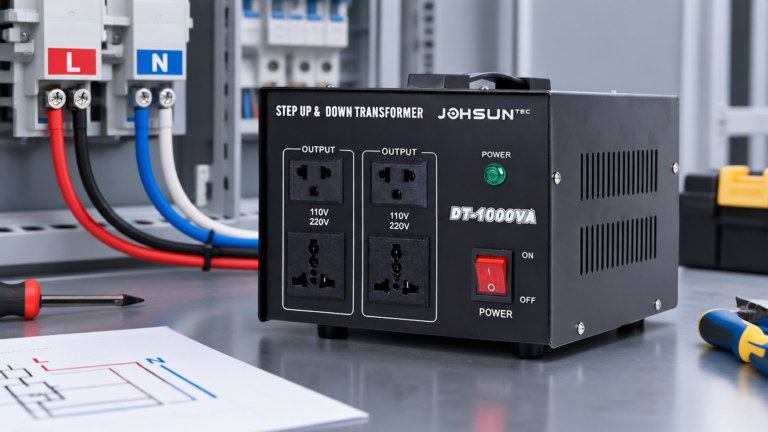
Step up and step down transformers are essential AC power components in industrial, data center, and export equipment projects, used to match voltage levels between the grid and your loads in a safe and efficient way. This blog explains how they work, how to wire them, how to select the right rating, and which type to choose for typical B2B scenarios.
How step up and step down transformers work
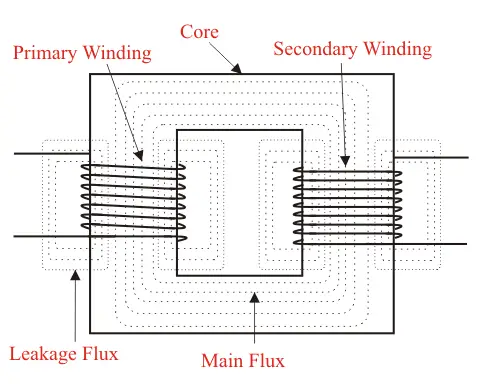
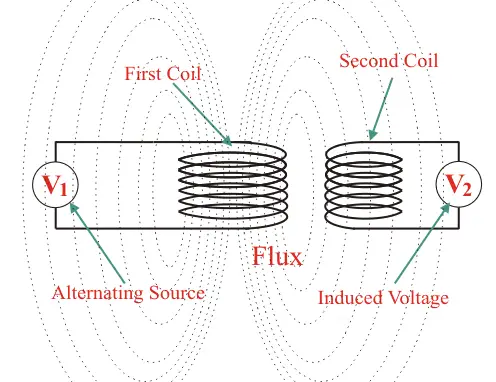
From an engineering perspective, aDT/ST Series DT-100VA to DT-10KVA step up and step down transformers is an AC device that uses electromagnetic induction and different turns ratios between primary and secondary windings to change voltage levels. In a step up transformer, the primary winding has fewer turns and the secondary winding has more turns, so the secondary voltage is higher and the output current is proportionally lower, which is suitable for long-distance transmission or high-voltage equipment. In a step down transformer, the primary has more turns and the secondary has fewer turns, so a higher primary voltage is reduced to a lower secondary voltage while the current capability increases, which is ideal for supplying end‑user loads.
In cross‑region power applications and export machinery, 110V to 220V step up transformers and 220V to 110V step down transformers are widely used to adapt between North American and EU/Asia voltage standards. In factory distribution, 380V to 220V or 400V to 230V step down transformers are commonly used to reduce busbar voltage to equipment and control voltages. In large‑scale energy projects, industrial step up and step down transformers are used as high‑voltage transformers: generator step up transformers raise medium voltage to transmission level, and substation step down transformers lower it back to a usable level for plants, commercial buildings, or data centers.
In power generation, high voltage step up transformers are installed at the generator output to raise the generator voltage (typically several kV) up to tens or hundreds of kV, enabling efficient long‑distance transmission with lower line losses. At the receiving end, medium voltage step down transformers in substations reduce 110 kV or 220 kV transmission voltages down to 10 kV or 6 kV for regional distribution, and then further down to 400/380 V for plant or building distribution. For utilities and EPC contractors, a coordinated set of step up and step down transformers forms the backbone of the transmission and distribution system.
Industrial plants: 380V/400V to 220V/110V
In industrial plants, a typical configuration is: medium voltage (6/10/13.8 kV) is first reduced to 400/380 V by a main distribution transformer, and then local 380V to 220V step down transformers or 400V 380V to 220V 110V step up and step down transformers are used near machines to supply their required voltages. For export machines going to North America or Japan, it is common to integrate a single phase 220V to 110V transformer inside the machine or beside the control panel so the complete system can be connected directly to the local grid.
Data centers and mining farms
Data centers typically use medium voltage feeders and dry type step down transformers to convert 13.8 kV or 35 kV down to 400/230 V, then distribute power to PDUs, UPS systems, and server racks. Here, “data center step down transformer” solutions focus on efficiency, noise, insulation class, and redundancy (N+1, 2N). In bitcoin mining or large GPU mining farms, large oil immersed step down transformers convert high or medium voltage down to 480 V or 400 V, then low‑voltage switchgear distributes power to mining containers. This “step down transformer for bitcoin mining site” scenario emphasizes high capacity, thermal performance, and cost per kW.
Export equipment and cross‑border power use
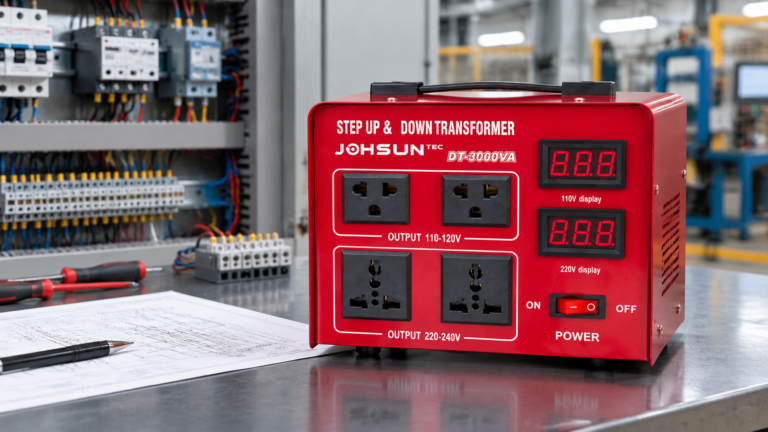
For cross‑border or multi‑region equipment, buyers often request 110V to 220V step up transformers or 220V to 110V step down transformers so that equipment designed for one region can operate safely in another. For medical, laboratory, and precision test equipment, 1:1 isolation transformers or enclosed isolation step down transformers are recommended to provide both voltage adaptation and galvanic isolation, reducing leakage current and noise.
How to wire step up and step down transformers
Single phase wiring: 220V ↔ 110V example
For single phase systems, whether you use a 220V to 110V transformer or a 110V to 220V step up transformer, the basic wiring principle is the same: the primary side connects to the grid, the secondary side connects to the load, and the enclosure must be properly grounded.
A typical wiring procedure for a single phase industrial step down transformer (220 V → 110 V) is:
Confirm the nameplate information: primary voltage, secondary voltage, kVA rating, frequency.
Make sure upstream power is isolated and locked out.
Connect the upstream 220 V line and neutral to the primary terminals (e.g., H1, H2) according to the wiring diagram.
Connect the load’s 110 V line and neutral to the secondary terminals (e.g., X1, X2).
Bond the transformer enclosure and junction box to the site grounding bar.
Before energizing, use a multimeter to check insulation resistance and verify that the voltage setting is correct.
The same procedure applies to single phase 110V to 220V step up transformers, as well as many single phase enclosed autotransformer step down transformers, provided you follow the manufacturer’s wiring diagram and safety instructions.
Three phase Δ/Y connections
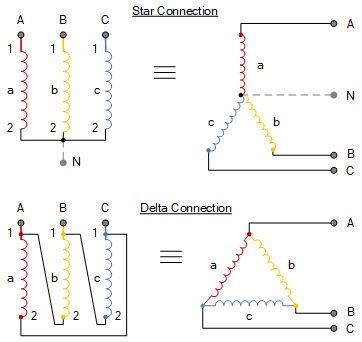
In industrial distribution, three phase step up and step down transformers are dominant. Common connection patterns include delta (Δ), star (Y), and open‑delta. For a typical 10 kV/0.4 kV distribution transformer, the high‑voltage side is connected in Y with grounded neutral, and the low‑voltage side is also Y‑connected with neutral to form a standard 400/230 V three phase system.
When you need to raise 380 V up to 690 V for a special motor, a three phase 380V to 690V step up transformer is used with appropriate Δ/Y or Y/Δ connections according to the motor design. More commonly, plants use three phase 380V to 220V step down transformers to provide 220 V single‑phase or three‑phase power to machine tools, pumps, and fans. In all cases, neutral and protective earth wiring must follow local electrical codes.
How to select a step up or step down transformer (how to choose)
Step 1: Fix input/output voltage and phase
The first selection step is to clearly define whether the transformer is single phase or three phase, and what the primary and secondary voltages should be. Typical B2B requirement phrases include:
“three phase 380V to 220V step down transformer for industrial machine”
“single phase 220V to 110V transformer for export equipment”
“high voltage step up transformer for power plant”
“data center step down transformer from 13.8kV”
For cross‑standard products, a 400V 380V to 220V 110V step up and step down transformer with multiple taps is an efficient way to cover different export markets while minimizing SKU count and simplifying inventory.
Step 2: Calculate kVA capacity and add margin
Next, you calculate the required kVA power rating based on total load:
Single phase: kVA≈1000V×A
Three phase: kVA≈10003×V×A
For industrial step down transformers, especially feeding motors, compressors, or welding machines with high inrush current, it is recommended to add 20–30% capacity margin above the calculated value. Sometimes an additional safety margin is added if future expansion is planned.
Example: if you have a 10 kW motor plus 2 kW auxiliary loads, you can convert 12 kW to kVA using the operating voltage, then multiply by 1.2–1.3 to choose the appropriate 380V to 220V step down transformer rating. If the project requires extra headroom, simply move one rating up in the catalog.
Step 3: Choose construction type (dry, oil‑immersed, auto, isolation)
Different constructions suit different applications:
Dry type transformer (cast resin or VPI): recommended for indoor use, especially as a data center step down transformer or in commercial buildings, where fire safety and low maintenance are important.
Oil‑immersed power transformer: the standard choice for outdoor substations, power plants, and other high‑voltage, high‑capacity applications due to excellent cooling and long life.
Autotransformer: used as an autotransformer step down transformer or step up transformer between close voltage levels such as 400 V/380 V and 230 V/220 V. It is compact and efficient but does not provide full galvanic isolation.
Isolation transformer: used where electrical isolation is critical (medical devices, labs, IT equipment). These can be configured as step up, step down, or 1:1 isolation transformers, commonly supplied as enclosed isolation units for safety.
When you decide between an autotransformer step down solution and an isolation transformer, consider whether your priority is cost/size or electrical isolation and EMC performance.
Step 4: Consider environment and standards
When requesting a quotation for a step up and step down transformer, it is best practice to provide:
Required protection level (IP rating), corrosion protection, or anti‑condensation measures.
Applicable standards and certifications (IEC, IEEE, GB, UL, CE, etc.).
Any special requirements from the utility or end customer (short‑circuit level, efficiency class, noise level).
These parameters directly influence insulation class, cooling method, and mechanical design, and they help the manufacturer quickly propose a technically compliant solution.
If your business seeks step up and step down transformers solutions, Get in touch today to request a product catalog or quote tailored to your needs.
The table below summarizes typical B2B use cases for step up and step down transformers and outlines a practical “which one to choose” logic.
Typical scenarios and recommended configurations
B2B scenario (intended use)
Recommended transformer type
Primary / Secondary
Phase
Typical kVA range
Notes
Industrial 380V to 220V step down transformer for machines
Three phase enclosed autotransformer or isolation step down transformer
380 V → 220 V
3‑phase
5–100 kVA
Installed near machines; consider motor starting current
Export equipment for US market (220V to 110V)
Single phase isolation step down transformer
220 V → 110 V
1‑phase
0.5–10 kVA
Integrated inside or beside the machine
Imported machine requiring 110V to 220V step up
Single or three phase step up transformer
110 V → 220 V
1‑ or 3‑phase
1–30 kVA
Check plug standards and wiring diagram
Data center main step down transformer
Dry type three phase distribution transformer
13.8 kV → 400/230 V
3‑phase
Hundreds of kVA to several MVA
Focus on efficiency, redundancy, and noise
Bitcoin mining or GPU farm site (10 MW class)
Large oil‑immersed step down power transformer
HV → 480 V / 400 V
3‑phase
5–10 MVA per unit
Emphasize CAPEX, losses, and reliability
Power plant generator step up transformer
High‑voltage generator step up transformer
Generator voltage → transmission level
3‑phase
Multi‑MVA
Customized to grid code and utility specs
For purchasing teams, a practical approach is to turn the technical need into a short description like “industrial 380V to 220V step down transformer for machine”, “data center step down transformer from 13.8kV”, or “step down transformer for bitcoin mining site”. With the voltage levels, phase, and kVA roughly defined, suppliers can quickly recommend specific models or custom designs.
FAQ
What is the key difference between a step up transformer and a step down transformer
The key difference is the turns ratio and the direction of voltage change: a step up transformer has more turns on the secondary to raise voltage (e.g., 110 V to 220 V), while a step down transformer has fewer turns on the secondary to reduce voltage (e.g., 380 V to 220 V or 220 V to 110 V).
In a factory, where are 380V to 220V transformers usually used
Industrial 380V to 220V step down transformers are typically installed in local panels or near machines to supply 220 V for equipment, control circuits, or small distribution boards; both autotransformer and isolation types are used depending on safety requirements.
For equipment exported to the US, should I choose a 220V to 110V transformer or redesign the motor?
For small or limited batches, using a single phase 220V to 110V transformer is cost‑effective and quick; for high‑volume, long‑term products in 110 V markets, redesigning with 110 V motors and components usually gives better overall efficiency and a cleaner design.
Can a 110V to 220V step up transformer be wired in reverse
Some designs can technically be reverse‑connected, but you must confirm in the transformer datasheet or with the manufacturer that the unit is approved for bidirectional use and that insulation and cooling are adequate; otherwise, reverse connection is not recommended in real projects.
How do I decide between an autotransformer and an isolation transformer
If you only need a small voltage change (e.g., 400 V to 230 V or 380 V to 220 V) inside an industrial system that already has proper grounding and protection, an autotransformer step down is usually more compact and economical. If the load is medical, lab, or IT equipment, or if you need better protection against electric shock and interference, an isolation transformer is the safer choice.
What information should I send when requesting a quote for a step up and step down transformer
At minimum, provide primary and secondary voltages, phase (single/three phase), frequency, required kVA, installation environment (indoor/outdoor), preferred construction (dry type, oil‑immersed, autotransformer, isolation), enclosure and protection level, and applicable standards or certifications. With this data, suppliers can quickly suggest suitable models and accurate pricing.
A control transformer steps a 380 V or 480 V supply down to the 120 V or 24 V that relays, contactor coils and PLC inputs run on. Learn how it works, why inrush VA — not sealed VA — sets the rating, and how to size, tap, fuse and ground one.
A practical guide to transformer live and neutral wiring: how to identify L and N terminals, connect them correctly, and avoid the hidden shock hazards of a reversed input.