Différence structurelle entre un transformateur élévateur et un transformateur abaisseur
Publié le : Auteur : Johsuntech
In modern industrial and commercial sectors, the safety and efficiency of electrical equipment are critical priorities. Have you ever wondered how factory machinery operates so reliably? One unsung hero is the transformateur—specifically, step-down transformers (Down Transformers) et transformateurs élévateurs. For B2B clients, choosing the right Step-Up and Down Transformer isn’t just about safety; it directly impacts operational costs and energy efficiency. This article dives into the structural and functional differences between these transformers, empowering you to make informed decisions. Need a tailored solution? Contact us today for expert guidance!
Basic Concepts of Transformers
What is a Transformer?
A transformer is a static electrical device that transfers energy between circuits via electromagnetic induction. Its core components are:
Enroulement primaire: Connects to the power source.
Enroulement secondaire: Delivers transformed voltage to the load.
Cœur de métier: Provides a low-resistance path for magnetic flux, enhancing efficiency.
How Do Transformers Work?
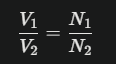
Transformers rely on mutual inductance. When alternating current flows through the primary winding, it generates a magnetic field in the core, which induces voltage in the secondary winding. Voltage changes depend on the taux de rotation:
Formula:
Where V1 and V2 are voltages, and N1 and N2 are winding turns.
Step-Down Transformer (Down Transformer): Structure and Operation
Definition and Applications
A Down Transformer converts high voltage to low voltage, ideal for:
Factory power distribution
Equipment protection
Data centers
Industrial automation
Structural Features
Enroulement primaire: More turns (high voltage input).
Enroulement secondaire: Fewer turns (low voltage output).
Cœur de métier: Laminated silicon steel cores with high permeability.
Thicker Secondary Wire: Handles increased current after voltage reduction.
Principe de fonctionnement
The primary winding receives high-voltage AC, while the secondary outputs low-voltage, high-current power.
Did You Know? Down Transformers not only reduce voltage but also boost current—critical for heavy-duty industrial machinery.
B2B Use Cases
Factory power cabinets
Industrial equipment power supply
Server racks in data centers
CNC machines and automated production lines
Struggling with voltage mismatches? Our Down Transformers offer seamless solutions!
Step-Up Transformers elevate low voltage to high voltage, used in:
Transport d'électricité sur de longues distances
Power plant outputs
High-voltage industrial equipment
Structural Features
Enroulement primaire: Fewer turns (low voltage input).
Enroulement secondaire: More turns (high voltage output).
Cœur de métier: High-permeability silicon steel.
Thinner Secondary Wire: Suitable for low-current, high-voltage output.
Principe de fonctionnement
The primary winding draws low-voltage AC, while the secondary delivers high-voltage, low-current power.
Fun Fact: Why do power companies love step-up transformers? High-voltage transmission cuts energy losses, saving costs and reducing environmental impact!
B2B Use Cases
Grid power transmission
Power plant output systems
High-voltage industrial devices
Comparative Analysis
Fonctionnalité
Down Transformer
Transformateur élévateur
Tension de sortie
Lower than input
Higher than input
Ratio de rotation
Primary > Secondary
Primary < Secondary
Courant de sortie
Higher than input
Lower than input
Wire Thickness
Thicker secondary wire
Thinner secondary wire
Applications
Factories, equipment
Power transmission, high-voltage
Key Takeaways
Structural Differences: Turns ratio and wire thickness vary significantly.
Functional Differences: Down Transformers lower voltage and raise current; Step-Up Transformers do the opposite.
Selection Tip: Choose Down Transformers for factory equipment and Step-Up Transformers for power transmission.
While both Down Transformers et Transformateurs élévateurs are vital to power systems, their structural and operational differences dictate their roles. Down Transformers keep factories running safely, while Step-Up Transformers enable efficient energy transmission. At Johsun Tec, we specialize in high-performance Down Transformateur and bespoke B2B solutions. Whether you’re a procurement manager or project engineer, our team is ready to optimize your power infrastructure.
Frequently Asked Questions (FAQ)
How to Choose the Right Down Transformer?
u003cstrongu003eConsider these factors:u003cbru003ePower Ratingu003c/strongu003e: Ensure it exceeds your equipment’s total demand.u003cbru003eu003cstrongu003eVoltage Levelsu003c/strongu003e: Match input/output voltages to your needs.u003cbru003eu003cstrongu003eCertificationsu003c/strongu003e: Opt for ISO/IEC-compliant products.u003cbru003eu003cstrongu003eEnvironmental Factorsu003c/strongu003e: Check IP ratings and installation conditions.
What to Consider When Procuring Down Transformers?
u003cstrongu003eSupplier Reliabilityu003c/strongu003e: Prioritize vendors offering customization and after-sales support.u003cbru003eu003cstrongu003eTechnical Expertiseu003c/strongu003e: Seek tailored solutions for your facility.u003cbru003eu003cstrongu003eDelivery u0026amp; Installationu003c/strongu003e: Verify lead times and on-site support capabilities.
Maintenance Differences Between Step-Up and Down Transformers?
u003cstrongu003eInspectionsu003c/strongu003e: Regularly check oil levels, temperature, and insulation.u003cbru003eu003cstrongu003eTestingu003c/strongu003e: Perform oil analysis, insulation resistance tests, and thermal imaging.u003cbru003eu003cstrongu003eEnvironmentu003c/strongu003e: Keep transformers dry, clean, and well-ventilated.
Don’t wait—reach out now and let Johsun Tec power your success!
Un transformateur est un appareil électrique principalement utilisé pour modifier le niveau de tension du courant alternatif (CA). Il fonctionne selon le principe de l'induction électromagnétique, convertissant l'énergie électrique d'entrée en sortie à différents niveaux de tension. Les transformateurs sont largement utilisés dans les systèmes de production, de transmission et de distribution d'électricité. La présence de transformateurs permet une transmission efficace de [...]