Transformador versátil de aumento e redução para necessidades globais de energia
Publicado: Autor: Johsuntech
Quando você escolhe um transformador elevador e redutor, você não está apenas comprando uma pequena caixa de metal — você está decidindo se o seu equipamento importado, sua bancada de testes ou sua linha de produção funcionará com segurança e confiabilidade por muitos anos. Neste guia, vamos nos concentrar em como conectar, como selecionar e qual tipo ou modelo é mais adequado para diferentes projetos B2B.
O que é um transformador elevador e redutor?
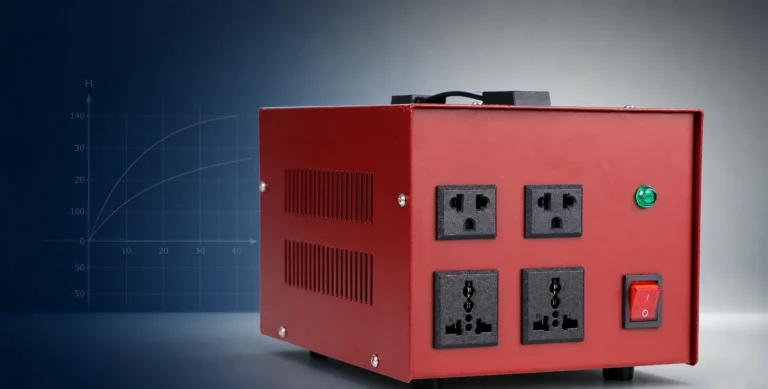
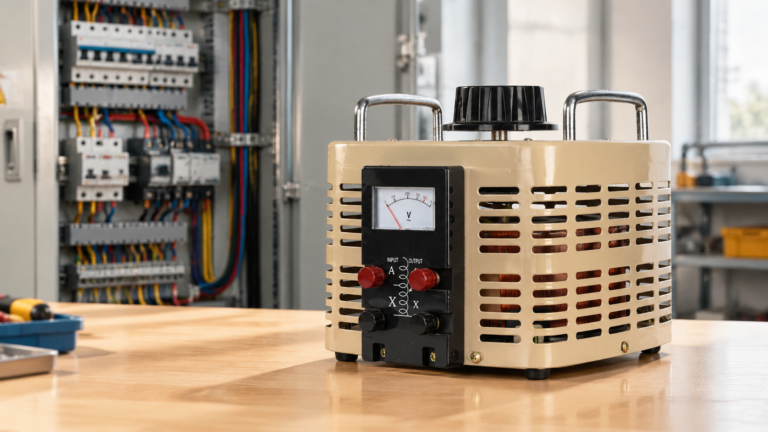
A Séries DT/ST ST-100VA a ST-1500VA transformador elevador e redutor é um conversor de tensão capaz de aumentar (elevar) ou reduzir (abaixar) a tensão CA entre dois padrões, como 110 V e 220 V. Muitos modelos são projetados como conversores bidirecionais de 110 V/120 V ↔ 220 V/230 V, comumente utilizados para eletrodomésticos importados, equipamentos de laboratório ou máquinas destinadas à exportação.
Ao contrário dos simples adaptadores de viagem, esses transformadores alteram o nível de tensão, mantendo a frequência inalterada; por isso, são essenciais quando um dispositivo é projetado para apenas uma tensão nominal. Para compradores do setor B2B, essas unidades aparecem em nomes de produtos como “Transformador de 220 V para 110 V,” “Transformador de 110 V para 220 V,” “transformador toroidal elevador/redutor de tensão,”, ou “transformador conversor de tensão.”
110/120 V ou 220/230/240 V (bidirecional em muitos modelos)
Potência nominal
De 100 VA até 5.000–7.500 VA para cargas industriais/domésticas
Tipo de núcleo
Núcleo laminado de EI ou toroidal
Tipo de conexão
Plugue e tomada, terminais ou entradas/saídas com fiação direta
Recursos de proteção
Sobrecarga, disjuntor térmico, proteção contra curto-circuito, fusível
Se você já tem um projeto específico (por exemplo, 50 conjuntos de unidades toroidais de 1.500 VA, 110/220 V, para um OEM), sinta-se à vontade para enviar suas especificações a um fabricante de transformadores para obter uma cotação rápida e recomendações técnicas.
Como funcionam os transformadores elevadores e redutores (sem a teoria chata)
No coração de todo transformador elevador e redutor há um enrolamento primário, um enrolamento secundário e um núcleo magnético. Quando a tensão CA é aplicada ao enrolamento primário, ela cria um campo magnético variável no núcleo, o que induz uma tensão proporcional no enrolamento secundário, de acordo com a relação de espiras.
Se a defesa secundária tiver mais voltas do que no primário, a tensão de saída é maior — trata-se de uma configuração elevadora.
Se a defesa secundária tiver menos curvas do que no primário, a tensão de saída é menor — trata-se de uma configuração redutora.
Como a energia é, em linha geral, conservada (desconsiderando as perdas), quando se aumenta a tensão, a corrente diminui; quando se reduz a tensão, a corrente aumenta. É por isso que a potência nominal em VA do transformador e a corrente de carga são tão importantes na hora de selecionar uma unidade para motores, aquecedores ou fontes de alimentação SMPS.
Aumento vs. redução em uma única caixa
Muitos comerciais Séries DT/ST ST-100VA a ST-1500VA Os transformadores elevadores e redutores simplesmente conectam ambos os enrolamentos a uma derivação ou a um circuito de comutação, de modo que o mesmo dispositivo possa:
Aceita entrada de 110/120 V e fornece saída de 220/230 V (elevador de tensão), ou
Aceita entrada de 220/230 V e fornece saída de 110/120 V (redutor).
Os enrolamentos internos não mudam por mágica; em vez disso, a entrada e a saída são invertidas ou combinadas por meio de derivações ou interruptores. Para os engenheiros, isso significa que é preciso ler atentamente a placa de identificação e o diagrama de fiação antes de fazer a conexão.
Diferenças de projeto: toroidal x EI
Os transformadores toroidais elevadores e redutores utilizam um núcleo em forma de anel que oferece baixo ruído, tamanho compacto e maior eficiência em comparação com os núcleos EI tradicionais. Os transformadores EI são mais fáceis de fabricar e podem ter um custo menor para aplicações de baixo custo, mas geralmente apresentam maior fluxo disperso e zumbido audível.
Tipo de núcleo
Principais vantagens
Uso típico no setor B2B
Toroidal
Alta eficiência, baixo ruído, baixo vazamento, compacto
Equipamentos de áudio, dispositivos médicos, instrumentos de precisão
Núcleo do EI
Processo de baixo custo, robusto e maduro
Aparelhos em geral, ferramentas, conversores de tensão de baixo custo
Se o seu projeto exigir um funcionamento silencioso e com baixo nível de EMI (por exemplo, amplificadores de áudio ou instrumentos de laboratório), os transformadores toroidais elevadores e redutores costumam valer o custo adicional.
Como conectar um transformador elevador e redutor com segurança
Agora, vamos à parte que mais interessa aos engenheiros: como é que, na prática, fio Um transformador elevador e redutor em um painel ou sistema?
A boa notícia: as etapas gerais são semelhantes às da instalação elétrica de um transformador comum. O importante é seguir o diagrama de fiação do fabricante, garantir que as conexões primárias e secundárias estejam corretas e respeitar as normas elétricas locais.
Etapas gerais de instalação elétrica
Isolar a alimentação e verificar Sempre desligue e bloqueie o disjuntor ou a fonte de alimentação a montante antes de realizar a instalação elétrica. Verifique com um medidor se não há tensão.
Instale o transformador Prenda o transformador firmemente a um painel ou gabinete utilizando o método de montagem recomendado, mantendo espaço livre suficiente para o resfriamento.
Conecte o lado primário
Identifique os terminais principais (geralmente identificados como H1, H2, H3, H4 ou similares).
Para operação de redução de tensão (por exemplo, 220 → 110 V), conecte a tensão de linha mais alta ao primário, conforme o diagrama.
Para operação de elevação de tensão (por exemplo, 110 → 220 V), conecte a tensão de linha mais baixa ao enrolamento primário projetado para esse valor.
Ajustar as torneiras ou o seletor de tensão Muitos transformadores multitensão possuem derivações no lado primário (por exemplo, 100/110/120 V ou 220/230/240 V). Siga as instruções para conectar os terminais corretos ou ajuste o seletor de modo que corresponda à tensão real da rede elétrica.
Conecte o lado secundário
Identifique os terminais secundários (geralmente X1, X2, etc.).
Para saída de 110/120 V, conecte sua carga aos terminais secundários especificados.
Para saída de 220/230 V, siga as instruções de conexão em série, caso haja dois secundários.
Aterramento e proteção Conecte a caixa do transformador ao aterramento de proteção e instale fusíveis ou disjuntores na entrada (e, às vezes, na saída) de acordo com a corrente indicada na placa de identificação. A proteção contra sobrecarga e curto-circuito aumenta a segurança e ajuda a evitar danos.
Testes Antes de conectar a carga final, ligue o equipamento sem carga, verifique a tensão de saída com um multímetro e verifique se há ruídos anormais ou superaquecimento.
Exemplos de fiação (unidade típica de 110/220 V)
Cenário de aplicação
Conexão principal
Conexão secundária
Rede elétrica de 220 V → aparelho de 110 V (redução de tensão)
Linha de 220 V para os terminais primários designados de 220 V
Aparelho conectado aos terminais secundários de 110 V
Rede elétrica de 110 V → equipamento de 220 V (elevador de tensão)
Linha de 110 V conectada aos terminais primários designados para 110 V
Equipamentos conectados aos terminais secundários de 220 V
Secundário de dupla tensão (2 × 110 V = 220 V)
Primários conectados conforme a placa de identificação
Secundários em série para 220 V, em paralelo para 110 V
Se você estiver projetando ou adquirindo painéis em grandes quantidades, compartilhar seu diagrama de fiação ou norma de identificação dos terminais com o fornecedor do transformador ajudará a garantir que as unidades fornecidas se encaixem perfeitamente em seu projeto, com o mínimo de ajustes.
Como escolher o transformador elevador e redutor adequado
É aqui que muitos compradores cometem erros: escolhem um transformador levando em conta apenas a tensão e o preço. Para projetos B2B ou de engenharia, é necessário um processo de seleção estruturado que leve em consideração a potência nominal, o tipo de carga, o ciclo de trabalho, o ambiente e a conformidade.
1. Defina claramente a tensão de entrada e de saída
Confirme seu tensão de rede (por exemplo, 220 V 50 Hz, 120 V 60 Hz) e o seu tensão do equipamento (por exemplo, apenas 110 V ou entrada universal de 110/220 V). Se o equipamento for universal (por exemplo, fonte de alimentação com regulação por switching de 100–240 V), talvez você nem precise de um transformador.
2. Calcule o VA (ou W) e acrescente a margem
A maioria dos transformadores elevadores e redutores é classificada em VA (volt-ampere).
Para cargas resistivas (aquecedores, lâmpadas incandescentes), VA ≈ W; portanto, você pode escolher uma potência nominal em VA ligeiramente acima da potência em watts.
Para cargas indutivas (motores, compressores, ferramentas elétricas), a corrente de partida pode ser várias vezes maior do que a corrente de funcionamento; portanto, deve-se selecionar um transformador com uma capacidade em VA pelo menos 25–50% superior à potência indicada na placa de identificação.
Uma orientação comum é escolher o tamanho imediatamente superior ao da carga calculada — por exemplo, para um dispositivo de 380 W, selecione um transformador redutor de 500 VA.
3. Verifique o ciclo de trabalho e as condições ambientais
Se o transformador for operar continuamente em um ambiente quente (por exemplo, em um gabinete vedado ou em uma fábrica com alta temperatura ambiente), talvez seja necessário um valor nominal de VA mais alto ou um projeto com melhor refrigeração. Para uso intermitente ou de baixa intensidade (por exemplo, testes ocasionais em laboratório), um valor nominal padrão pode ser suficiente.
4. Leve em consideração o tipo do núcleo, o ruído e a eficiência
Opte por modelos toroidais para obter baixo ruído e tamanho compacto em equipamentos de ponta e aplicações de áudio.
As opções básicas do EI costumam ser adequadas para aparelhos em geral e projetos com restrições orçamentárias.
Procure por uma eficiência acima de cerca de 90% em modelos de maior potência para reduzir o calor e o desperdício de energia.
5. Verifique a proteção e as certificações
Os transformadores elevadores e redutores de qualidade geralmente incluem:
Proteção contra sobrecarga ou proteção térmica
Proteção contra curto-circuito ou fusíveis de ação rápida
Certificações de segurança (UL, CE, etc.) dependendo do mercado.
Esses recursos ajudam a proteger tanto o transformador quanto o seu equipamento, especialmente em instalações sem supervisão ou destinadas à exportação.
6. Escolha a interface de conexão adequada ao seu projeto
Para aplicações de uso doméstico, as versões com plugues e tomadas, que oferecem diversos tipos de tomadas, podem ser convenientes. Para painéis industriais e equipamentos OEM, as conexões por bloco de terminais ou fios condutores costumam ser preferidas, pois garantem uma fiação segura e facilitam a integração.
Fator de seleção
O que verificar
Requisito típico do setor B2B
Tensão de entrada/saída
Compatibilidade com 110/120 V ↔ 220/230/240 V
Atender às normas de exportação/importação de cada país
Potência nominal (VA)
Soma da potência de carga, mais a margem de 25–50%
Operação estável em carga total, sem superaquecimento
Tipo de carga
Motor, aquecedor, fonte de alimentação comutada (SMPS), áudio, misto
Redimensionamento correto para corrente de irrupção e harmônicas
Conformidade com as regulamentações do mercado-alvo
Mecânica/conexão
Tipo de plugue, tomada, terminal e caixa
Fácil instalação em painéis ou como conversor independente
Se você fornecer a tensão de entrada, a tensão de saída, a potência de carga e o cenário de aplicação a um fabricante profissional de transformadores, ele poderá recomendar rapidamente um modelo padrão ou uma solução personalizada de transformador elevador ou redutor para você.
Se a sua empresa busca soluções de transformadores elevadores e redutores, entre em contato hoje mesmo para solicitar um catálogo de produtos ou uma cotação adaptada às suas necessidades.
Qual modelo você deve escolher para situações comuns?
Para tornar as coisas mais práticas, vamos examinar algumas aplicações típicas e ver que tipo de transformador elevador e redutor é mais adequado.
Cenário 1: Uso de equipamentos de 110 V em um país com rede elétrica de 220 V (redução de tensão)
Você importou instrumentos de laboratório, impressoras ou aparelhos de cozinha de 110 V e precisa que eles funcionem na rede elétrica de 220 V.
Use um transformador redutor com 220 V no primário e 110 V no secundário.
Dimensionar o transformador com base na soma da potência dos equipamentos, acrescentando uma margem de segurança (por exemplo, 1,25× para cargas mistas; mais para motores).
Para equipamentos sensíveis, opte por modelos toroidais, de baixo ruído, com isolamento e boa regulação.
Cenário 2: Alimentação de aparelhos de 220 V a partir da rede elétrica de 110 V (elevação de tensão)
Se você exportar máquinas que funcionam apenas com 220 V para uma região com 110 V, poderá usar transformadores elevadores dentro do painel ou como conversores externos.
Uso transformadores elevadores que recebem 110/120 V na entrada e fornecem 220/230 V na saída.
Considere o uso de unidades integradas para equipamentos OEM a fim de reduzir o cabeamento e facilitar a conformidade.
Cenário 3: Solução OEM para vários mercados
Alguns fabricantes de equipamentos originais (OEMs) desejam uma plataforma única que possa ser comercializada tanto nos mercados de 110 V quanto nos de 220 V.
Utilize transformadores com dois primários e derivações (por exemplo, 2 × 115 V) que possam ser conectados em série ou em paralelo, dependendo do destino.
Forneça instruções claras de fiação no manual para evitar erros de conexão por parte dos instaladores.
Cenário
Tipo de transformador recomendado
Aparelhos de 110 V em regiões com 220 V
Conversor redutor de 220 → 110 V com margem de VA
Aparelhos de 220 V em regiões com 110 V
Transformador elevador de 110 → 220 V
Equipamentos de áudio de alta qualidade
Transformador toroidal elevador/redutor com baixo ruído
Painel de exportação OEM (multitensão)
Transformador com dois primários ou com derivação, fiação configurável
Se o seu projeto envolver pedidos em grandes lotes ou normas especiais de segurança, muitas vezes é mais econômico discutir uma classificação personalizada ou um projeto de gabinete com um fabricante, em vez de combinar várias unidades prontas para uso.
Dicas de compra para o setor B2B: fabricantes, preços e personalização
Para as equipes de compras e engenharia, o desempenho técnico representa apenas metade da história; a outra metade é a capacidade do fornecedor e o custo total.
Pontos-chave na avaliação de fornecedores de transformadores elevadores e redutores
Linha de produtos e personalização: Verifique se o fornecedor oferece uma linha que vai desde pequenos conversores de mesa de 110/220 V até transformadores maiores da classe kVA, e se é possível personalizar a tensão, a potência nominal em VA e os tipos de conectores.
Certificações e testes: Verifique se há registros de controle de qualidade, testes de isolamento, testes de carga e conformidade com as normas pertinentes (como CE ou UL para o seu mercado-alvo).
Embalagem e logística: No caso de transformadores toroidais pesados ou unidades de 3 a 5 kVA, a embalagem e a paletização adequadas reduzem os danos durante o transporte.
Estrutura de preços: Solicite descontos para diferentes quantidades e verifique se há cobrança de taxas de ferramentas ou de engenharia para projetos personalizados para fabricantes de equipamentos originais (OEM).
Empresa do setor B2B
O que perguntar ao fornecedor
Ajuste técnico
Vocês podem fornecer os valores correspondentes à minha tensão de entrada/saída, VA e tipo de núcleo?
Conformidade
Para quais mercados/normas seus transformadores são certificados?
Prazo de entrega
Qual é o seu prazo de entrega padrão para 100 a 500 unidades?
Personalização
Vocês podem fornecer soquetes, terminais, etiquetas ou caixas personalizadas?
Custo ao longo da vida útil
Qual é a eficiência e a perda esperada no meu ponto de operação?
Se você estiver comparando vários fabricantes, enviar uma breve ficha técnica (tensão de entrada/saída, VA, tipo de carga, condições ambientais, volume anual previsto) ajudará a obter cotações mais precisas e a evitar especificações excessivas ou insuficientes.
E, é claro, se você já tem um projeto em mente, pode enviar suas especificações e solicitar uma recomendação de modelo de transformador elevador e redutor, acompanhada de fichas técnicas e preços para o volume que você pretende adquirir.
Quando você trata o Séries DT/ST ST-100VA a ST-1500VA Ao considerar o transformador elevador e redutor como uma parte essencial do seu sistema — e não apenas um pequeno acessório —, você obtém instalações mais seguras, menos falhas e usuários finais mais satisfeitos. Se você está planejando um novo projeto ou precisa de um fornecedor confiável a longo prazo, compartilhar suas necessidades detalhadas com um fabricante profissional de transformadores é a maneira mais rápida de receber uma proposta personalizada e preços competitivos.
PERGUNTAS FREQUENTES
u003cstrongu003eUm único transformador pode converter tanto de 110 V para 220 V quanto de 220 V para 110 V?u003c/strongu003e
Sim, muitos transformadores comerciais elevadores e redutores são projetados para funcionar bidirecionalmente, desde que você conecte a entrada e a saída de acordo com as marcações e o seletor. Sempre verifique a ficha técnica antes de utilizá-lo na polaridade inversa.
u003cstrongu003eQual deve ser a diferença entre a potência nominal em VA do transformador e a minha carga?u003c/strongu003e
Para cargas resistivas simples, escolha uma potência nominal ligeiramente superior à potência do dispositivo; para motores ou cargas mistas, escolha um valor de VA cerca de 25–50% superior para lidar com o pico de corrente de partida e evitar o superaquecimento.
u003cstrongu003ePreciso de um transformador toroidal ou um do tipo EI é suficiente?u003c/strongu003e
Os transformadores toroidais apresentam menor ruído e maior eficiência, o que os torna ideais para equipamentos de áudio ou eletrônicos sensíveis, enquanto os modelos EI costumam ser suficientes e mais econômicos para aparelhos e ferramentas de uso geral.
u003cstrongu003eUm transformador elevador e redutor pode converter 50 Hz em 60 Hz?u003c/strongu003e
Não, os transformadores comuns apenas alteram a tensão; a frequência permanece a mesma, portanto, é preciso garantir que a carga possa operar na frequência da rede elétrica local.
u003cstrongu003eO que acontece se eu escolher um transformador com capacidade insuficiente?u003c/strongu003e
Se a potência nominal em VA do transformador for muito baixa, ele poderá superaquecer, acionar o sistema de proteção ou apresentar falha prematura, além de causar queda de tensão que afete seus equipamentos.
Se a sua empresa busca soluções de transformadores elevadores e redutores, entre em contato hoje mesmo para solicitar um catálogo de produtos ou uma cotação adaptada às suas necessidades.
Transformer core saturation happens when the core can no longer absorb more magnetic flux. Learn the causes, symptoms, a simple no-load test and prevention for 100 VA-10 kVA dry-type transformers.
How a buck-boost transformer works: series-winding polarity, differential kVA sizing with single-phase and three-phase examples, and the five limits that decide when it is the wrong tool.
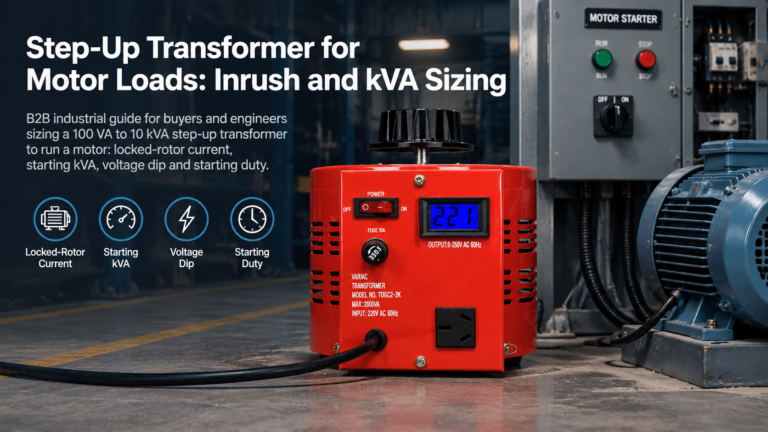
How to size a step-up transformer for a motor: locked-rotor current, kVA code letters, starting kVA by method, voltage-dip and thermal-duty checks, plus the traps most guides miss.