Tap Changer Maintenance and Troubleshooting: Common Faults and Fixes
Опубликовано: Автор: Лиза
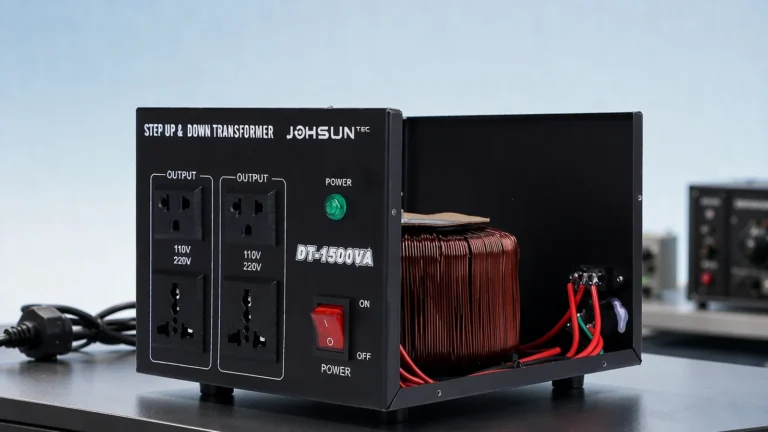
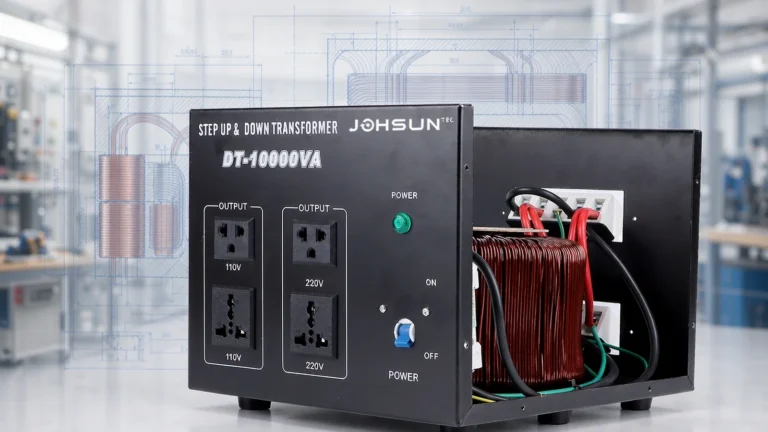
Search for tap changer maintenance and almost every result describes a substation asset: diverter switches, transition resistors, motor drives, oil sampling. That is real work, but it is not the tap changer most readers own. On the 100 VA to 10 kVA single-phase units used in control panels, machine tools and export equipment — the повышающий и понижающий трансформатор range — the tap changer is a four-position rotary selector or a copper link on a terminal block. It has no oil, no motor and no arc-quenching hardware, and its faults are different: oxidation, a detent that will not seat, a terminal nobody re-torqued. If you still need to choose a type, the on-load vs off-load comparison covers selection. This article is the sequel: what goes wrong after installation, how to prove the tap changer is at fault, and what values to write on the test sheet.
Where Tap Changer Faults Actually Come From
Two populations of hardware fail for two different reasons, and mixing them up is why troubleshooting so often goes in circles.
An on-load tap changer (OLTC) fails because it switches current. Every operation draws a small arc, erodes contact material, and deposits carbon in the diverter compartment. Published reliability surveys place tap changers among the two or three leading causes of transformer failure, at roughly a third to 40%. That figure describes substation equipment with a motor drive and tens of thousands of operations a year.
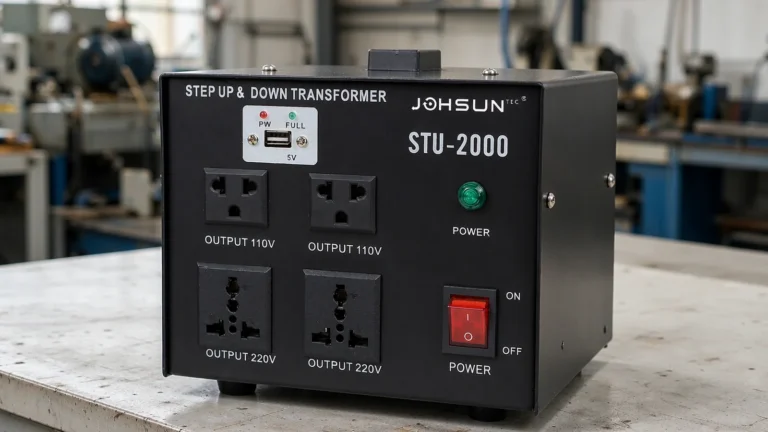
A de-energized tap selector fails because it does not switch current. It moves a handful of times in its life, so there is no arc damage. What degrades is the connection: contact surfaces oxidize, spring pressure relaxes, a screw backs off under thermal cycling, or someone sets the selector to the wrong position and never checks the output. On the rotary selector of a converter like the STU series, the failure mode is a worn detent or a carboned contact after years of being turned under load.
The consequence: on small dry-type units, tap changer maintenance is nearly all inspection and measurement, rarely part replacement.
Triage: Prove the Tap Changer Is Guilty First
Before anyone opens a terminal cover, run four measurements. Most “the tap changer is faulty” reports we see turn out to be something upstream or downstream of it.
Measure the supply at the transformer terminals, not at the panel busbar. A 220 V nominal feeder sitting at 198 V produces a low output at every tap position, and no tap setting fixes that.
Measure the no-load secondary at each tap position against the nameplate ratio. Consistently low by the same percentage at every position means the supply is low. One position wildly off means the selector.
Measure again under load. A transformer reading 110 V open-circuit and 103 V at full load is not a tap fault — that is voltage regulation, a winding impedance characteristic.
Check phase-to-phase balance on three-phase units. One phase 5% low points to that phase’s tap link, not the whole selector.
Only when the no-load ratio is wrong at one or more positions, with a confirmed correct supply, is the tap changer genuinely at fault. The turns ratio test covers instrument setup and the pass criterion.
Fault Table: Symptom, Cause, Test and Fix
This table covers both device classes. Read the symptom column first; tests are ordered cheapest first.
Симптом
Наиболее вероятная причина
Confirming test
Исправить
Output voltage wrong at every tap
Supply off nominal, or load exceeding rating
Measure supply at terminals; loaded vs no-load output
Correct the supply or resize the transformer — not a tap fault
Output wrong at one position only
Selector set to the wrong position, or contact open
Ratio test at each position against nameplate
Re-set the selector; if still wrong, inspect the contact
Output correct but terminal block hot
Loose terminal screw or oxidized contact
Infrared scan under load; DC resistance across the connection
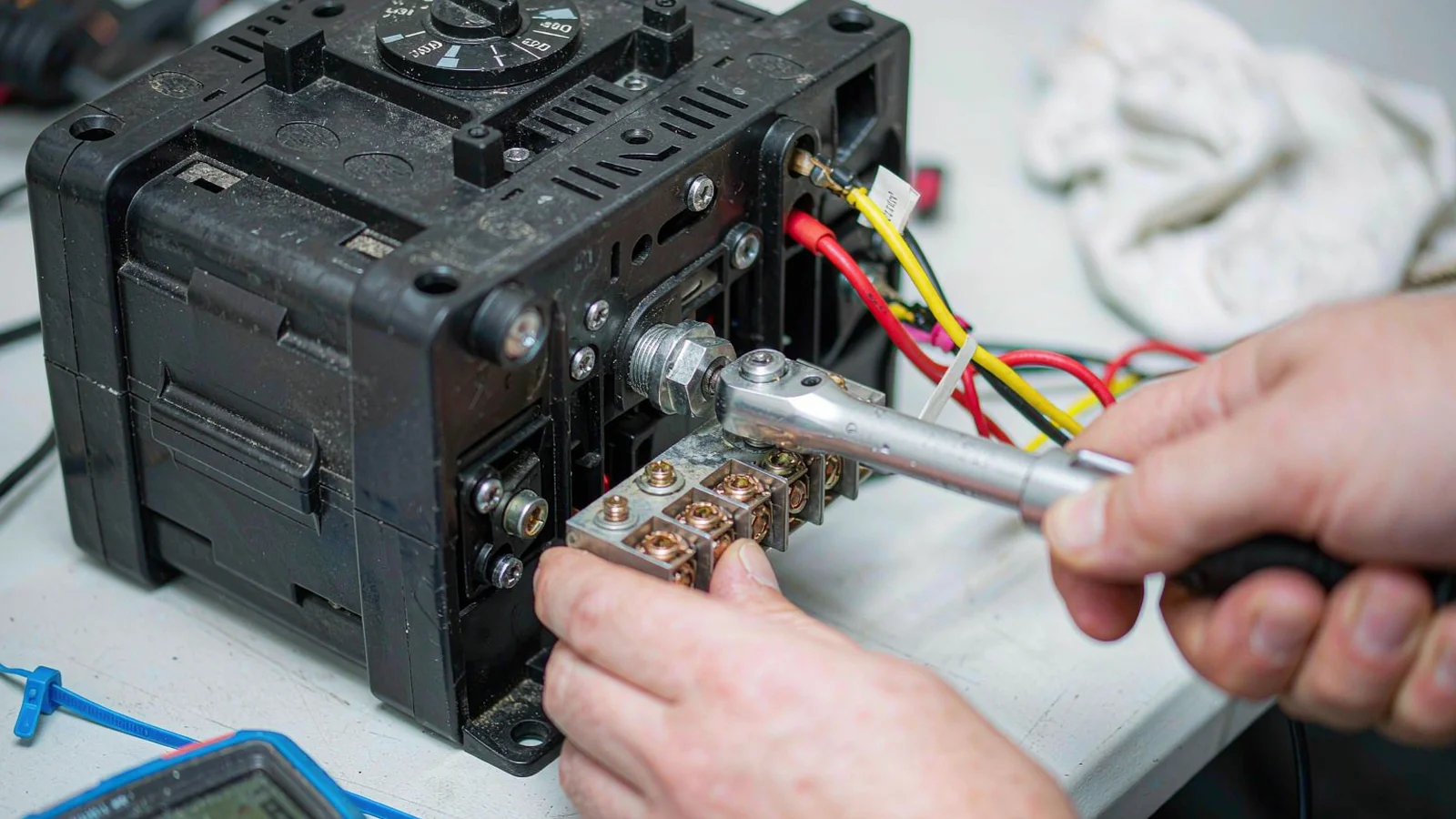
Clean contact surfaces, re-torque to the specified value
Audible arcing or buzzing at the selector
Contact not fully seated; worn detent; carbon tracking
Visual inspection with power off; unstable resistance reading
Replace the selector — do not dress a carboned contact
Filter or replace oil; inspect diverter contacts and resistors
The first row matters most: it removes the tap changer from suspicion, which resolves more field calls than any other entry here.
Test Values for a Small Dry-Type Tap Block
Vague advice (“check the contacts”) is not actionable at 7 a.m. on a stopped line. These are the measurements worth recording, with the band most LV dry-type manufacturers work to; defer to the unit’s datasheet where it differs.
Test
Instrument
Typical acceptance
Insulation resistance, winding to core and winding to winding
500 V DC insulation tester
≥ 100 MΩ, no downward trend across annual readings
Turns ratio at each tap position
Ratio meter, or precision AC source plus meters
Within ±0.5% of the declared ratio for that tap
DC resistance across the tap connection
Micro-ohmmeter with Kelvin clips
Stable; within about 2% of other phases or positions
Continuity between adjacent taps
Continuity tester
Open circuit — any continuity means a bridging fault
Terminal torque on tap studs
Calibrated torque wrench
Manufacturer value, commonly 1.5–3 N·m on M4–M6 studs
Thermal scan under load
Infrared camera
No terminal more than about 10 K above its neighbours
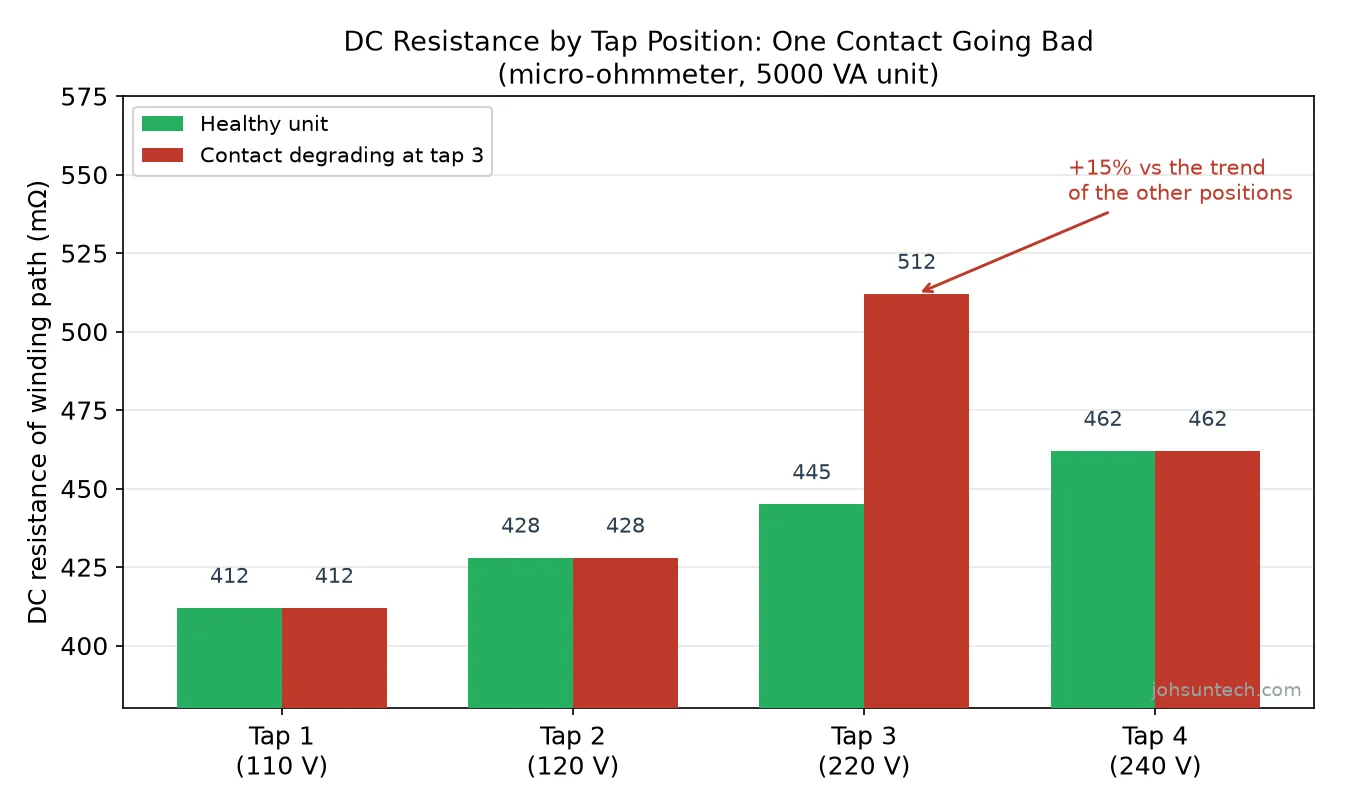
Two deserve emphasis. DC resistance across a tap connection is the earliest indicator of a contact going bad — resistance climbs before temperature does, catching the fault a season early. And the continuity check between adjacent taps catches the most destructive small-transformer fault: a link bridging two taps, shorting a section of winding and driving a large circulating current through very few turns. The method is the same one used for DC resistance testing of transformer windings.
The Annual Twenty-Minute Check
For a de-energized tap block or rotary selector on a 100 VA to 10 kVA unit, a full annual routine fits in twenty minutes per transformer. Six steps:
Isolate and prove dead. Both sides, lockout/tagout, verified meter at the tap block. “Off-load” is an instruction, not a description.
Inspect visually. Discoloration, green copper salts, carbon tracking, cracked insulation on tap leads, a selector sitting between detents.
Verify the setting against the record. The tap position should match the site’s measured supply. A selector still on 240 V from a commissioning day when the feeder ran high is a common, silent fault.
Re-torque the tap studs. Thermal cycling loosens them. Use the specified value; overtightening cracks the moulding.
Measure insulation resistance and record it. The absolute number matters less than the trend across years.
Re-energize, then measure the secondary before reconnecting the load. Confirm the ratio at the tap actually in use.
Log the readings against the unit’s serial number; a four-year record turns a future fault from a mystery into an obvious trend.
OLTC Faults: What Changes at Substation Scale
If you do operate an on-load tap changer, the maintenance logic inverts: contacts are consumed by design, so intervals follow operation count rather than calendar.
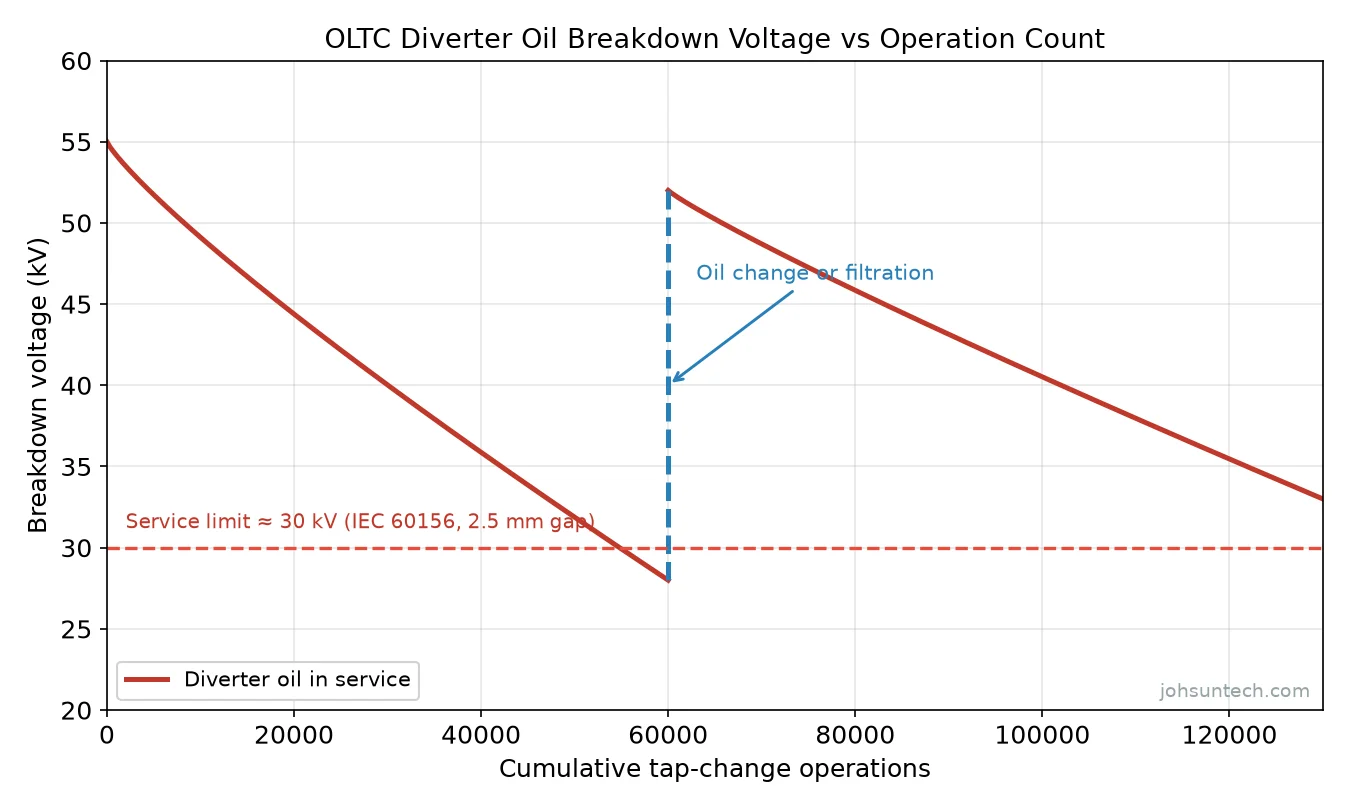
Oil condition is the primary indicator. The diverter compartment holds its own oil, sampled separately from the main tank. Breakdown voltage below roughly 30 kV on a 2.5 mm gap, or moisture above about 35 ppm, means filter or replace. Oil testing and DGA interpretation covers the full panel.
Acetylene is the arcing marker. Rising C₂H₂ in OLTC oil means contacts are arcing abnormally, not switching normally. IEEE C57.139 is the reference for interpreting those gases.
Contact wear is measured, not judged. Contacts come out at the manufacturer’s wear limit, often stated as remaining material thickness or a percentage of original mass.
Transition resistors crack. A static resistance test can miss it; dynamic resistance measurement during a tap operation catches the anomaly.
The drive is half the asset. Rising motor current, longer operating time, or position indication disagreeing with the controller are early warnings that cost far less than a failed diverter switch.
Interval practice varies: sealed vacuum types commonly run to several hundred thousand operations or about seven years, older oil-immersed diverter switches much sooner. Follow the OEM’s number, not a generic table.
Faults That Look Like Tap Problems But Are Not
Three conditions mimic a tap changer fault closely enough to waste a service visit.
Overheating from overload. A transformer running above rating gets hot at the terminals, and the tap block is usually the hottest, most accessible thing to point an infrared camera at. Check load current before condemning the contact — the warning signs of transformer overheating read the same at the terminal block.
Core saturation from a mis-set tap. Selecting a lower-voltage tap adds primary turns and reduces flux; the wrong direction does the opposite. A unit left on the wrong position can hum loudly, draw high no-load current and run hot while still producing a plausible output — a failing-selector lookalike that is really a setting error.
A failing winding or a blown protective device. A partial winding short or an open fuse produces a wrong output that survives every tap position. If the ratio is off by the same amount everywhere and the supply is correct, the fault is in the winding. The patterns in what causes a transformer to blow help separate the two.
Repair or Replace on 100 VA to 5 kVA Units
On small units the economics are unforgiving. A rotary selector or tap block is an inexpensive part, but reaching it means a call-out, disassembly and a re-test — typically more than the ex-works price of a 500 VA to 1 kVA converter. Three rules of thumb:
Loose or oxidized connection: clean and re-torque. Worth doing on any unit.
Worn detent, carbon tracking, or a bridged link that has already arced: replace the transformer. A damaged selector usually means the winding saw the fault current too.
Correct diagnosis but wrong rating: if the unit runs at or above nameplate because the load grew, a new tap changer solves nothing. Step up a frame size.
For context on how the selector sits inside a small converter, the STU series 100 VA to 5 kVA uses a rotary input selector with 110 / 120 / 220 / 240 V positions — a 5000 VA unit on 220 V in, 110 V out carries 22.7 A on the input tap and 45.5 A on the output, which is why a half-seated selector there is destructive rather than merely inconvenient.
Заключение
Tap changer troubleshooting starts with a decision, not a tool: prove the tap changer is at fault before you touch it. Measure the supply, the ratio at each position, then again under load. If the fault survives that, the table narrows it to a contact, a setting or a mechanism. On small dry-type units the answer is usually a clean, a re-torque and a recorded reading; on an OLTC it is oil condition and operation count.
If a tap-related fault has you stuck, send us the nameplate data, the measured voltages at each position and the load current through the страница «Контакты» — we will tell you whether it is the selector, the winding or the supply.
ЧАСТО ЗАДАВАЕМЫЕ ВОПРОСЫ
How often should a tap changer be maintained?
For a de-energized tap block or rotary selector on a small dry-type unit, once a year: visual inspection, torque check, insulation resistance and a ratio check at the tap in use. For an on-load tap changer, intervals follow operation count and oil condition — commonly every one to two years for oil-immersed diverter types, longer for sealed vacuum designs. Follow the manufacturer’s schedule.
Can you change a tap while the transformer is energized?
Not on an off-load or de-energized tap changer — the name is an instruction. Its contacts have no arc-control hardware, so opening them under load draws a sustained arc that pits the surface, and a partially seated link can bridge two taps and short part of the winding. Isolate, lock out, prove dead, then move the link.
What is a normal contact resistance for a tap changer?
There is no universal ohm value; judge it against the factory baseline and against the other phases or tap positions. A reading within about 2% of its neighbours is healthy. A rising trend on one position, or an unstable reading that moves as you tap the connection, indicates a degrading contact — that is the reading to act on.
Why does my transformer output read low on every tap position?
Because the tap changer is not the fault. Either the supply at the terminals is below nominal, the load is drawing more than rated kVA, or the winding has a partial short. Measure the supply first, then compare loaded against no-load output. A tap changer fault changes the output at one position, not uniformly at all of them.
Does a small transformer’s tap selector need lubrication?
Generally no. Rotary selectors on small converters use sealed or dry-lubricated detent mechanisms, and adding grease attracts dust and stiffens with age — a common cause of a selector that will not turn. Clean the mechanism and replace the switch if the detent has failed, rather than lubricating it.
An on-load tap changer regulates under load; an off-load tap changer needs a de-energized visit. Why an OLTC never fits 100 VA to 10 kVA units, plus real tap-selection math on a 1000 VA transformer.
A buyer-focused comparison of transformer winding types for 100VA-10kVA dry-type units: where layer, disc and foil windings each make sense, and what to specify on your next RFQ.
How to identify the LV and HV side of a transformer using the nameplate, H/X terminal markings, winding resistance, winding position and a safe low-voltage injection test.
Мы используем файлы cookie для улучшения вашего пользовательского опыта, предоставления персонализированного контента и анализа посещаемости нашего сайта.