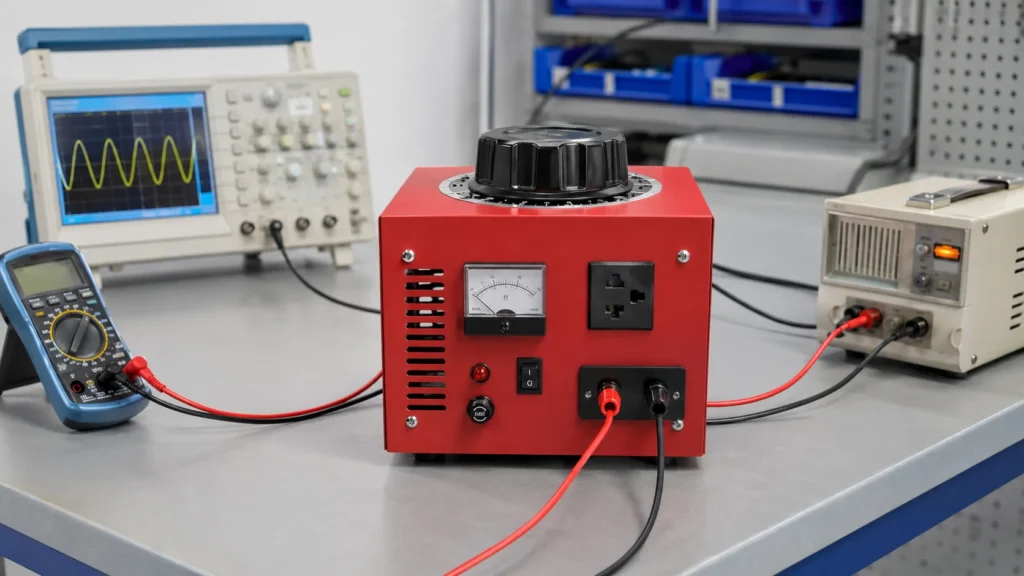
JOHSUN Variac Transformatörleri Bunlar, AC çıkış gerilimini sıfırdan belirtilen bir maksimum değere kadar kademesiz olarak ayarlamanıza olanak tanıyan değişken ototransformatörlerdir. Birkaç sabit bağlantı noktası arasında geçiş yapmak yerine, hareketli bir kontak ortak bir sargı üzerinde ilerler ve kontrol düğmesini çevirdiğinizde etkin dönüş oranını değiştirir. Sonuç olarak laboratuvarlar, tamir tezgahları, üretim testleri, eğitim ve endüstriyel ekipmanlar için hassas ve kesintisiz bir AC gerilim kontrolü sağlanır.
Bu kılavuzda, JOHSUN Variac transformatörünün ne olduğu, diğer ototransformatör türleriyle olan ilişkisi, voltaj yükseltme ve düşürme işlevlerinin hangi durumlarda kullanıldığı ve taşınabilir Variac, 120 voltluk Variac, panel tipi ünite veya özel tasarımlı rafa monte Variac arasında nasıl seçim yapılacağı açıklanmaktadır.
JOHSUN Variac Transformatörü Nedir?
JOHSUN Variac transformatörü, ototransformatör prensibine dayalı olarak tasarlanmış bir temas tipi değişken transformatördür. Hem giriş hem de çıkış için tek bir kesintisiz sargı kullanır. Bir karbon fırça veya benzeri bir kayar temas elemanı, bu sargı üzerindeki bir noktayı seçer ve operatörün devreyi kesintiye uğratmadan çıkış gerilimini yükseltmesine veya düşürmesine olanak tanır.
“Variac” kelimesi bir ticari marka olarak ortaya çıkmış olup, günümüzde elektrik sektöründe kademesiz olarak ayarlanabilen bir ototransformatörü tanımlamak için yaygın olarak kullanılmaktadır. Teknik özelliklerde, değişken transformatör, değişken ototransformatör, kontaklı gerilim regülatörü veya ayarlanabilir AC transformatör gibi terimlere de rastlayabilirsiniz.
JOHSUN, sabit bir dönüşüm oranı yerine ayarlanabilir alternatif akım gerektiren uygulamalar için değişken transformatör ürünleri sunmaktadır. Şunları inceleyebilirsiniz: JOHSUN değişken transformatör serisi mevcut kapasiteleri ve kasa formatlarını karşılaştırmak için.
Variac Transformatörü Nasıl Çalışır?
Geleneksel bir ototransformatör, bir veya daha fazla çıkış noktası bulunan tek bir sargıya sahiptir. Variac ise sabit çıkış noktalarının yerine hareketli bir fırça kullanır. Düğmeyi çevirmek, ortak terminal ile fırça arasında kaç sargı turu olduğunu değiştirir; böylece çıkış gerilimi, seçilen tur sayısıyla orantılı olarak değişir.
Sargının sabit bir bölümü arasına alternatif akım uygulanır.
Fırça, sargı boyunca açıkta kalan bir ray ile temas eder.
Kontrol düğmesini çevirmek, etkin tur sayısını değiştirir.
Giriş frekansı ve sinüzoidal dalga şekli korunurken, çıkış düzgün bir şekilde artar veya azalır.
Örneğin, 110 veya 120 V giriş için tasarlanmış bir model, 0–130 V gibi ayarlanabilir bir aralık sunabilir. Bu durum, modelin tip plakasındaki bilgilerin amaçlanan giriş, çıkış, akım ve frekansı desteklemesi koşuluyla, 120 voltluk bir variac’ın düşük gerilim ve makul düzeyde aşırı gerilim testleri için kullanışlı olmasını sağlar.
Güvenlik uyarısı: Bir Variac normalde bir izolasyon transformatörü değildir. Girişi ve çıkışı aynı elektrik bağlantısını paylaşır; bu nedenle düşük gerilim ayarı, şebeke beslemesinden galvanik izolasyon sağlamaz.
Yükseltme ve Düşürme Ototransformatör Çalışması
A Yükseltici ve Düşürücü Ototransformatör Giriş bağlantısı, ortak bağlantı ve seçilen sargı tur sayısı arasındaki ilişki yoluyla AC gerilimini değiştirir. Çıkış, girişten daha az tur kullanıyorsa, cihaz gerilimi düşürür. Çıkış, giriş bölümünden daha fazla tur kullanıyorsa, tasarlanan aralık dahilinde gerilimi yükseltebilir.
Bir Variac, aynı prensibi sürekli olarak uygular. Geniş bir düşürme aralığı sağlayabilir ve genişletilmiş sargıya sahip modellerde, nominal giriş değerinin üzerinde sınırlı bir yükseltme aralığı da sunabilir. Ekstra güç üretmez: Gerilim arttıkça, mevcut yük akımı ve transformatörün VA değeri yine de güvenli çalışma sınırını belirler.
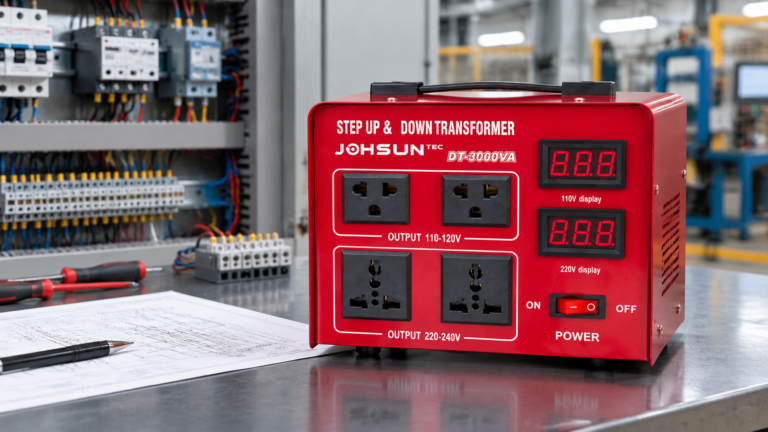
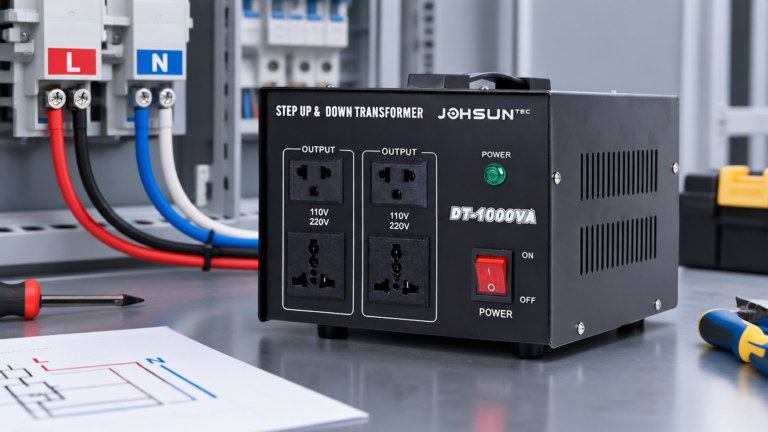
Sürekli ayarlama yerine sabit bir 110 V’dan 220 V’a veya 220 V’dan 110 V’a dönüştürme gerektiren uygulamalar için, sabit oranlı bir transformatör genellikle daha basittir. JOHSUN’un ana sayfa hem değişken hem de sabit gerilim dönüştürme çözümlerine genel bir bakış sunar.
Transformatör ve Ototransformatör: Aralarındaki Fark Nedir?
Bu konudaki en önemli nokta şudur: Transformatör ve Ototransformatör Karşılaştırması Aradaki fark, sargıların ayrılmasıdır. Geleneksel bir izolasyon transformatöründe birincil ve ikincil sargılar ayrıdır. Bir ototransformatör ise tek bir ortak sargı kullanır; bu nedenle gücün bir kısmı manyetik yolla olduğu kadar iletken yolla da aktarılır.
Özellik
İki Sargılı Transformatör
Oto-transformatör veya Variac
Sargılar
Birincil ve ikincil unsurları birbirinden ayırın
Tek ortak sargı
Galvanik izolasyon
Genellikle sağlanır
Genellikle sunulmaz
Çıkış ayarı
Ek denetimler eklenmedikçe genellikle sabittir
Sabit musluklar veya kademesiz fırça ayarı
Boyut ve malzeme kullanımı
Benzer bir dönüştürme görevi için genellikle daha büyüktür
Genellikle daha kompakt ve malzeme tasarrufludur
Tipik kullanım
İzolasyon, güvenlik ayırması, sabit dönüşüm
Gerilim düzenleme, test, motor çalıştırma, ayarlanabilir alternatif akım
Elektriksel izolasyonun zorunlu olduğu durumlarda izolasyon transformatörü tercih edin. Ana amaç, AC geriliminin manuel olarak kademesiz bir şekilde ayarlanması ise Variac'ı tercih edin. Bazı test sistemlerinde, bir cihaz izolasyonu sağlarken diğeri değişken gerilim sağladığı için her ikisi de birlikte kullanılır.
Yaygın Otokonsansör Türleri
Oto-transformatör Türleri gerilim seçimi, faz konfigürasyonu, muhafaza türü ve kullanım amacına göre gruplandırılabilir:
Sabit çıkışlı ototransformatör: bir veya daha fazla önceden belirlenmiş gerilim oranını sunar.
Değişken otoktransformatör: kademesiz çıkış ayarı için hareketli bir fırça kullanır.
Tek fazlı model: genellikle tezgahlarda, servis atölyelerinde ve daha küçük ekipmanlarda kullanılır.
Üç fazlı model: uyumlu endüstriyel üç fazlı sistemler için tasarlanmıştır.
Açık veya panele monte model: bir makineye veya kontrol dolabına entegre edilmek üzere tasarlanmıştır.
Kapalı tip taşınabilir model: sahada ve laboratuvarda rahat kullanım için bir kasa, tutamak, ölçüm cihazı, sigorta, priz veya bağlantı uçları ekler.
Motorlu model: Fırçayı, uzaktan veya otomatik kontrol için bir motor aracılığıyla ayarlar.
En uygun tip, besleme gerilimi, faz, yük akımı, çıkış aralığı, görev döngüsü, montaj yöntemi ve nihai sistemin gerektirdiği koruma önlemlerine bağlıdır.
JOHSUN Variac Formları ve Ürün Örnekleri
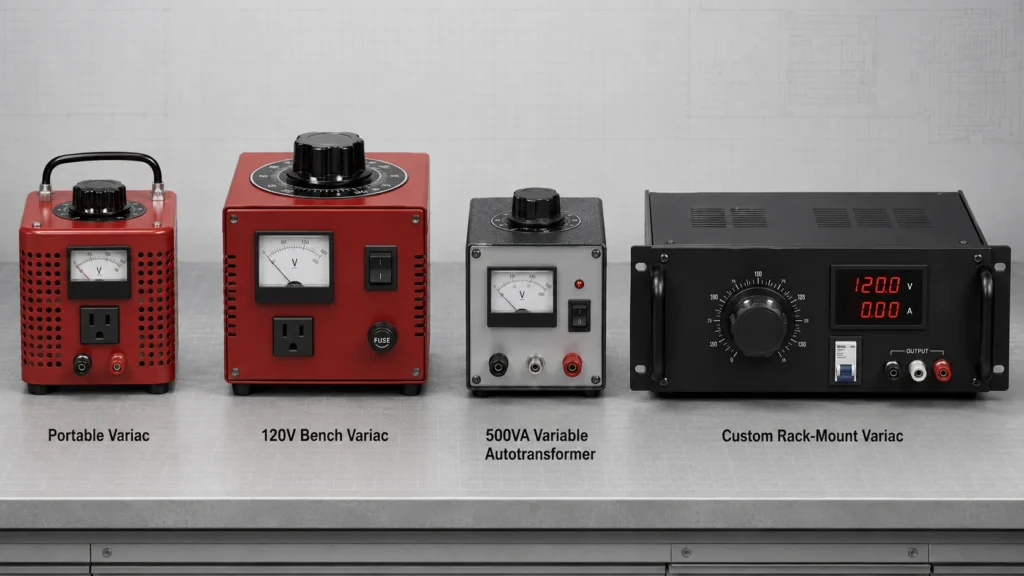
JOHSUN’un TDGC2J serisi, çeşitli kapasite ve sunum seçeneklerini kapsamaktadır. Aşağıdaki örnekler, aynı değişken ototransformatör prensibinin farklı alıcılar ve çalışma ortamları için nasıl uyarlanabileceğini göstermektedir.
Gereklilik
Uygun Yön
Neleri Doğrulamak Gerekir?
Tezgah veya saha kiti için taşınabilir variac
Sayaçlı ve çıkışına erişilebilen kapalı tek fazlı model
Tutamak, muhafaza, sigorta, priz tipi, ağırlık ve nominal akım
120 voltluk variac
Uygun bir ayarlanabilir çıkış aralığına sahip 110/120 V girişli model
50/60 Hz nominal değer, maksimum çıkış, fiş, priz ve topraklama
500 VA otomatik değişken gerilim transformatörü
TDGC2J 0,5 kVA sınıfı
Seçilen gerilimde yük başlangıç akımı ve sürekli akım
Raf montajlı variac
Özel tasarımlı panel veya rafa entegre montaj
Raf yüksekliği, ön panel, havalandırma, ölçüm cihazları, devre kesiciler, terminaller ve uzaktan kumanda
Raf montajlı bir variac, sadece bir rafa yerleştirilmiş bir masaüstü modeli değildir. Profesyonel bir raf tasarımı, mekanik destek, hava akışı, ön panel boşlukları, koruyucu cihazlar, terminal erişimi ve bakım kolaylığını dikkate almalıdır. JOHSUN’un ODM/OEM hizmeti Özel gerilim aralıkları, gövde biçimleri, ölçüm cihazları, konektörler, etiketleme ve markalama konularını görüşmek için kullanılabilir.
Ürün testi: Düşük, nominal ve yüksek hat koşullarında ekipmanın davranışını kontrol etmek.
Onarım ve restorasyon: akımı izleyerek uyumlu AC ekipmanlarını kademeli olarak devreye almak.
Laboratuvar çalışmaları: deneyler ve kalibrasyon düzenekleri için tekrarlanabilir ve ayarlanabilir bir alternatif gerilim sağlamak.
Eğitim: dönüş oranı, gerilim, akım, güç ve regülasyonu gösteren.
Endüstriyel kontrol: uyumlu dirençli yükleri, aydınlatmayı veya ekipmanları onaylanmış çalışma sınırları dahilinde ayarlamak.
Üretim hatları: değişken AC'yi işlevsel test istasyonlarına veya eskitme sistemlerine entegre etmek.
Bir Variac gerilimi değiştirir, ancak her giriş veya yük değişikliğine karşı çıkışı otomatik olarak düzenlemez. Ayrıca, kontrollü motor frekansı gerektiren uygulamalarda değişken frekanslı sürücünün yerini almaz.
Doğru JOHSUN Variac Nasıl Seçilir?
Giriş beslemesini ayarlayın. Nominal gerilimi, kabul edilebilir toleransı, fazı ve frekansı doğrulayın.
Çıkış aralığını belirleyin. Yalnızca düşürme işleminin mi gerekli olduğuna yoksa nominal giriş değerinin üzerinde bir çıkışa mı ihtiyacınız olduğuna karar verin.
Akım ve VA değerlerine göre boyutlandırma. Yük üzerinde belirtilen sabit durumdaki watt değerinin yanı sıra, başlangıç akımını veya ani akımı da hesaba katın.
Form faktörünü seçin. Açık çerçeveli, tezgah üstü, taşınabilir, panele monte veya özel raf yapısı seçeneklerinden birini seçin.
Koruma türünü belirtin. Giriş ve çıkış aşırı akım koruması, topraklama, termal koruma, acil durum devre kesme ve ortama uygun bir muhafaza unsurlarını göz önünde bulundurun.
Arayüzü onaylayın. Analog veya dijital ölçüm sistemini, terminalleri veya prizleri, fiş standardını, ölçek işaretlerini ve uzaktan kumanda ile ilgili tüm gereksinimleri seçin.
OEM alıcıları için yük türü, maksimum akım, giriş ve çıkış gerilimleri, çalışma süresi, kurulum yöntemi, hedef pazar ve gerekli standartları belirtin. Üretici hakkında daha fazla bilgiyi şu adresten edinebilirsiniz: JOHSUN Hakkımızda sayfası.
Variac Güvenlik Temel Bilgileri
Sistemde doğru şekilde belirtilmiş bir izolasyon transformatörü bulunmadığı sürece, çıkışın şebekeye bağlı olduğu varsayılmalıdır.
Tip plakasında belirtilen giriş gerilimi, çıkış akımı, VA değeri, frekans aralığı veya çalışma döngüsünü asla aşmayın.
Test prosedürü izin veriyorsa, bir yük bağlamadan önce çıkışı sıfıra ayarlayın.
Metal muhafazaları topraklayın ve uygun giriş ve çıkış korumaları kullanın.
Yeterli havalandırma sağlayın ve aşırı ısınma, kıvılcımlanma, olağandışı ses veya koku olması durumunda cihazı durdurun.
Elektrik tesisatı ve özel kurulumların, kalifiye personel tarafından yapılmasını veya kontrol edilmesini sağlayın.
Gerilim, Akım ve Uygulamaya Göre Seçim Yapın
JOHSUN Variac Transformatörleri Sabit bir kaynaktan düzgün ve ayarlanabilir alternatif gerilim elde etmek için pratik bir yol sunar. Ortak sargılı yapıları sayesinde kompakt ve verimlidirler; hareketli fırça ise sabit kademe ototransformatörlere kıyasla çok daha hassas bir kontrol sağlar. Bunun karşılığında göz ardı edilmemesi gereken bir husus da vardır: Bir Variac normalde şebeke izolasyonu sağlamaz ve güvenli kapasitesi akım, VA değeri, sıcaklık ve görev döngüsü ile sınırlıdır.
Öncelikle elektriksel gereksinimlerinizi belirleyin, ardından çalışma alanınıza uygun muhafaza ve kontrol sistemlerini seçin. Standart bir 120 V tezgah üstü ünite, taşınabilir bir variac, 500 VA’lık bir model veya özel olarak tasarlanmış bir raf düzeneği için JOHSUN, teknik özellikleri değerlendirip uygun bir konfigürasyon önerebilir.
Sık Sorulan Sorular
Variac ile ototransformatör aynı şey midir?
Variac, çıkış değerinin sürekli olarak ayarlanabilmesi için hareketli bir kontağa sahip bir ototransformatör türüdür. Her ototransformatör bir Variac değildir; birçok ototransformatör sabit bağlantı noktaları kullanır.
JOHSUN Variac, gerilimi yükseltebilir ve alçaltabilir mi?
Gerilimi kademesiz olarak düşürebilir ve belirli tasarımlar, nominal giriş değerinin üzerinde sınırlı bir çıkış sağlayabilir. Her zaman model teknik özelliklerinde belirtilen kesin giriş ve çıkış aralıklarını kontrol edin.
Variac, alternatif akımı doğru akıma dönüştürür mü?
Hayır. Bir Variac, alternatif akım gerilimini ayarlar ve besleme frekansını sabit tutar. Doğru akım çıkışı için bir redresör ve uygun filtreleme veya düzenleme gereklidir.
500 VA’lık bir otomatik değişken gerilim transformatörü hangi cihazları çalıştırabilir?
Bu, çıkış gerilimine, yük akımına, güç faktörüne ve ani akıma bağlıdır. 500 VA değeri görünür güçtür; her 500 W’lık yükün uygun olacağına dair bir garanti değildir. Cihazı, amaçlanan çalışma aralığı içindeki maksimum akımı dikkate alarak seçin ve uygun bir mühendislik payı bırakın.
Özel yapım taşınabilir veya rafa monte variac sipariş edebilir miyim?
Özel muhafaza, voltaj, ölçüm, bağlantı ve markalama gereksinimleri, JOHSUN’un ODM/OEM süreci kapsamında görüşülebilir. Uygulanabilirlik, elektriksel, mekanik, güvenlik ve miktar gereksinimlerinin tamamına bağlıdır.
Doğru modeli nasıl talep edebilirim?
Giriş geriliminizi, çıkış aralığınızı, fazınızı, frekansınızı, maksimum yük akımınızı, yük türünüzü, görev döngüsünü, kurulum biçiminizi, ülke standardınızı ve sipariş miktarınızı şu yolla gönderin: iletişim sayfası.
A control transformer steps a 380 V or 480 V supply down to the 120 V or 24 V that relays, contactor coils and PLC inputs run on. Learn how it works, why inrush VA — not sealed VA — sets the rating, and how to size, tap, fuse and ground one.
A practical guide to transformer live and neutral wiring: how to identify L and N terminals, connect them correctly, and avoid the hidden shock hazards of a reversed input.