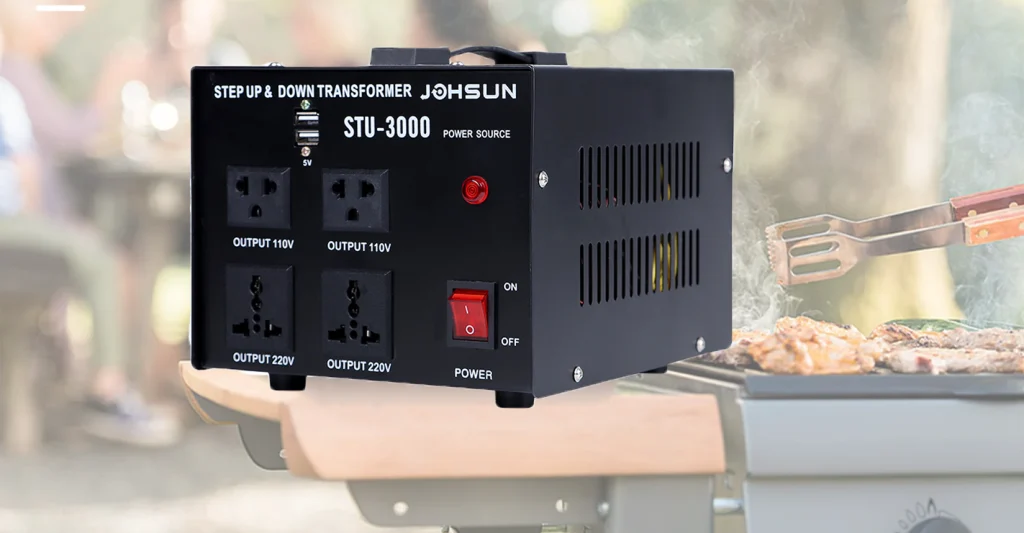
When your equipment requires a higher operating voltage than your local power supply can deliver, a yükseltici transformatör becomes essential. Choosing the wrong unit can lead to overheating, voltage instability, premature insulation failure, or even complete equipment damage. Whether you are sourcing for an OEM project, a factory retrofit, or an export installation, understanding how to evaluate voltage conversion requirements saves time, money, and operational risk. This guide explains what a step-up transformer does, compares single phase vs three phase options, and walks through the key parameters every buyer should verify before placing an order.
What Is a Step-Up Transformer?
A step-up transformer is an alternating-current (AC) device that increases the output voltage above the input voltage by using a higher number of turns on the secondary winding than on the primary winding. It does not change AC to DC, regulate voltage fluctuations, or act as a backup power source. Its sole purpose is voltage conversion: for example, raising 110 V to 220 V, or 220 V to 380 V / 400 V / 480 V, while maintaining the same frequency (50 Hz or 60 Hz).
The basic working principle follows Faraday’s Law of Electromagnetic Induction. When AC flows through the primary winding, it creates a changing magnetic field in the core. This field induces a higher voltage in the secondary winding because of the increased turn count. The ratio of secondary turns to primary turns determines the voltage step-up ratio.
Many step-up transformers on the market are also reversible, meaning they can operate as step-down units when wired in reverse. However, insulation ratings, tap configurations, and protective devices must be verified with the manufacturer before assuming bidirectional use.
Single Phase vs Three Phase: Which Do You Need?
One of the most common questions buyers ask is whether they need a single phase transformer or a three phase transformer. The answer depends on your load type, power requirements, and installation context.
Özellik
Single Phase Step-Up Transformer
Three Phase Step-Up Transformer
Typical Power Range
Up to ~20 kVA
5 kVA – 2000+ kVA
Yük Tipi
Light equipment, appliances, lab gear
Motors, compressors, production lines
Verimlilik
Good
Daha yüksek
Power Stability
Orta düzeyde
Excellent
Kurulum
Simple
Requires phase balance
Cost per kVA
Daha yüksek
Daha düşük
Choose single phase for small machines, laboratory or medical equipment, control panels, and OEM or export appliances. Choose three phase for industrial motors, CNC machines, pumps, compressors, and continuous-duty industrial systems. Using a single-phase transformer on a three-phase system without proper configuration will cause voltage imbalance and equipment stress.
Key Parameters to Check Before Buying
Before requesting a quotation, engineers and procurement teams should verify the following parameters. Omitting any of these is a leading cause of transformer mismatch and field failure.
Input and Output Voltage
Confirm both the available supply voltage and the equipment’s required operating voltage. Common step-up scenarios include 110 V → 220 V, 220 V → 380 V / 400 V / 480 V, and 208 V → 480 V for industrial systems. For three-phase installations, always verify whether the voltage is line-to-line or line-to-neutral, as this affects winding configuration and tap selection.
Power Rating (kVA or VA)
Transformer capacity should be based on apparent power (kVA or VA), not just real power in watts. For resistive loads such as heaters and lighting, VA approximately equals wattage. For inductive loads such as motors and compressors, VA is higher than the watt rating because of reactive power. As a general rule:
Resistive loads: add a 20% safety margin above the total load.
Motor or inductive loads: add 30–50% margin to account for inrush current.
Mixed loads: use a conservative margin based on the highest inrush device.
Ignoring starting current is one of the most common and expensive selection mistakes. A motor that draws 5 A while running may pull 25–30 A during startup. If the transformer is sized only for running current, it will overheat and trip protective devices.
Yük Tipi
The nature of your load directly influences transformer sizing and construction. Resistive loads are the easiest to accommodate. Inductive loads with high starting torque require oversized transformers or units with special inrush tolerance. Non-linear loads with harmonic content, such as variable-frequency drives or switching power supplies, may need transformers with K-factor ratings or electrostatic shields to prevent overheating and waveform distortion.
Frequency (50 Hz or 60 Hz)
Always match the transformer frequency to the power source. A transformer designed for 50 Hz will run hotter on 60 Hz due to increased core losses. Conversely, a 60 Hz unit operated on 50 Hz can magnetically saturate the core, drawing excessive current and triggering protective devices. Some modern transformers support dual-frequency operation, but this must be confirmed on the nameplate or datasheet.
Installation Environment
Consider where the transformer will operate. Indoor installations in climate-controlled rooms impose few constraints. Outdoor installations require weatherproof enclosures, UV-resistant insulation, and appropriate IP ratings. High ambient temperatures, dusty environments, or corrosive atmospheres may require derating or special cooling arrangements. Noise restrictions in commercial or residential settings may favor toroidal core designs over traditional EI cores.
Common Selection Mistakes to Avoid
Even experienced buyers can make costly errors when specifying a step-up transformer. Here are the most frequent pitfalls and how to avoid them.
Choosing by voltage only, ignoring kVA: A transformer that matches your voltage ratio but is undersized for your load will overheat and fail prematurely. Always size by apparent power, not voltage alone.
Underestimating motor starting current: Inrush current during motor startup can be five to seven times the running current. Size the transformer accordingly or specify an inrush-tolerant design.
Using single phase where three phase is required: Connecting a single-phase transformer to a three-phase load causes voltage imbalance, reduced efficiency, and potential motor damage.
Forgetting certification and local compliance: Different markets require CE, UL, IEC, or local safety marks. Verify certification requirements before specifying the unit.
No allowance for future load expansion: Sizing exactly to today’s load leaves no headroom for growth. A 25% margin is a practical minimum for most applications.
Step-Up Transformer Selection Checklist
Use this checklist to organize your requirements before contacting a manufacturer or distributor.
Confirm input voltage and output voltage (including tolerance).
Determine phase requirement: single phase or three phase.
Calculate total load in VA or kVA, including inrush and safety margin.
Identify load type: resistive, inductive, motor, or mixed.
Verify frequency: 50 Hz, 60 Hz, or dual-frequency.
List required certifications: CE, UL, IEC, or others.
Specify enclosure type, mounting method, and connection style.
Confirm quantity, delivery timeline, and any OEM or customization needs.
When to Choose a Custom Transformer
Standard off-the-shelf step-up transformers cover most common voltage combinations, but some applications require custom design. Consider a custom transformer when your project involves multiple input or output voltages, galvanic isolation for sensitive electronics, special enclosures or mounting configurations, low-noise or high-temperature insulation, or non-standard certification requirements. Custom design is often more economical in the long run than forcing a standard unit to fit an unusual application.
For medium-duty applications requiring reliable 110 V to 220 V or 220 V to 110 V voltage conversion, the DT-3000VA yükseltici ve alçaltıcı transformatör offers a toroidal core design with low EMI, compact size, and bidirectional operation suitable for OEM and export projects.
Sonuç
Choosing the right step-up transformer is not complicated when you break it down into verified parameters: voltage ratio, phase configuration, power rating, load type, frequency, and installation environment. Avoid the common mistake of sizing by voltage alone or ignoring motor inrush current. Use the selection checklist above to document your requirements, then share them with a qualified manufacturer for specification confirmation. A properly selected transformer will run cool, stable, and within rated limits for years of reliable service.
Can a step-up transformer be used in reverse as a step-down transformer?
Most transformers are electrically reversible, but insulation ratings, tap configurations, and protective devices must be verified with the manufacturer before operating in reverse. Not all units are designed for bidirectional use.
Does a step-up transformer improve voltage stability?
No. A step-up transformer changes the voltage level but does not regulate or stabilize voltage fluctuations. If your supply voltage varies significantly, you may need a voltage stabilizer or regulator in addition to the transformer.
How much power margin should I reserve when sizing a step-up transformer?
Add at least 25% margin for general loads. For inductive loads with high starting current, such as motors and compressors, a margin of 50% or more is recommended to prevent overheating and nuisance tripping.
What happens if I use a 50 Hz transformer on a 60 Hz system?
A 50 Hz transformer operated at 60 Hz will experience increased core losses and run hotter, potentially reducing insulation life. A 60 Hz transformer on 50 Hz may saturate magnetically and draw excessive current. Always match frequency or use a dual-frequency design.
Is a toroidal core better than an EI core for step-up transformers?
Toroidal cores generally offer higher efficiency, lower noise, and more compact size compared to traditional EI cores. They are preferred for audio equipment, medical devices, and noise-sensitive installations. EI cores are typically more cost-effective for general industrial applications.
Recommended Models for Choosing the Right Step-Up Transformer
If you are specifying a unit rather than reading theory, start here. These models cover the capacity bands most often requested for choosing the right step-up transformer, and each links straight to its specification and price range.
İhtiyacınız olan giriş gerilimini, çıkış gerilimini, fazı ve sürekli kVA değerini bize bildirirseniz, bir iş günü içinde size uygun modeli, fiyatı ve teslim süresini teyit edeceğiz. Standart dışı değerler ise şu şekilde ele alınır: OEM/ODM özel transformatör üretimi.
İspanya için 230 V - 110 V transformatör: REBT uyumluluğu, ITC-BT-18 ve ITC-BT-24 standartları, ikincil devrenin topraklanması ve UNE-EN IEC 61558 belgeleri.
Hollanda için 230 V - 110 V transformatör: NEN 1010, 30 mA kaçak akım kuralları, kaçak akım anahtarı ile otomatik kaçak akım şalteri arasındaki fark ve ikincil topraklama.