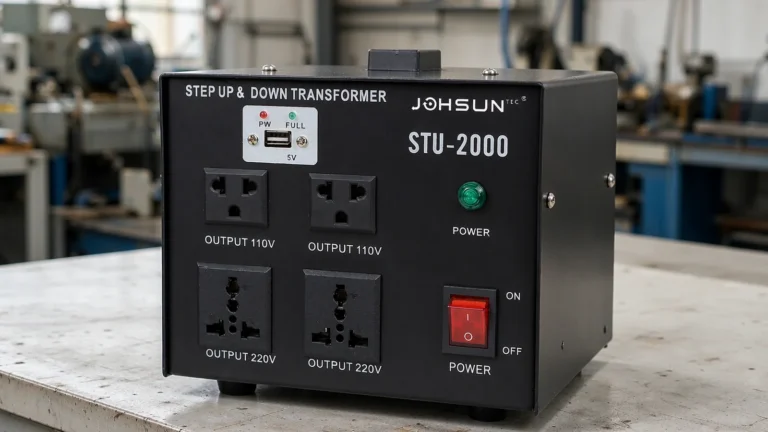
Yükseltici Gerilim Dönüştürücü ile Düşürücü Gerilim Dönüştürücü Arasındaki Farklar
Yayın tarihi: Yazar: Lisa
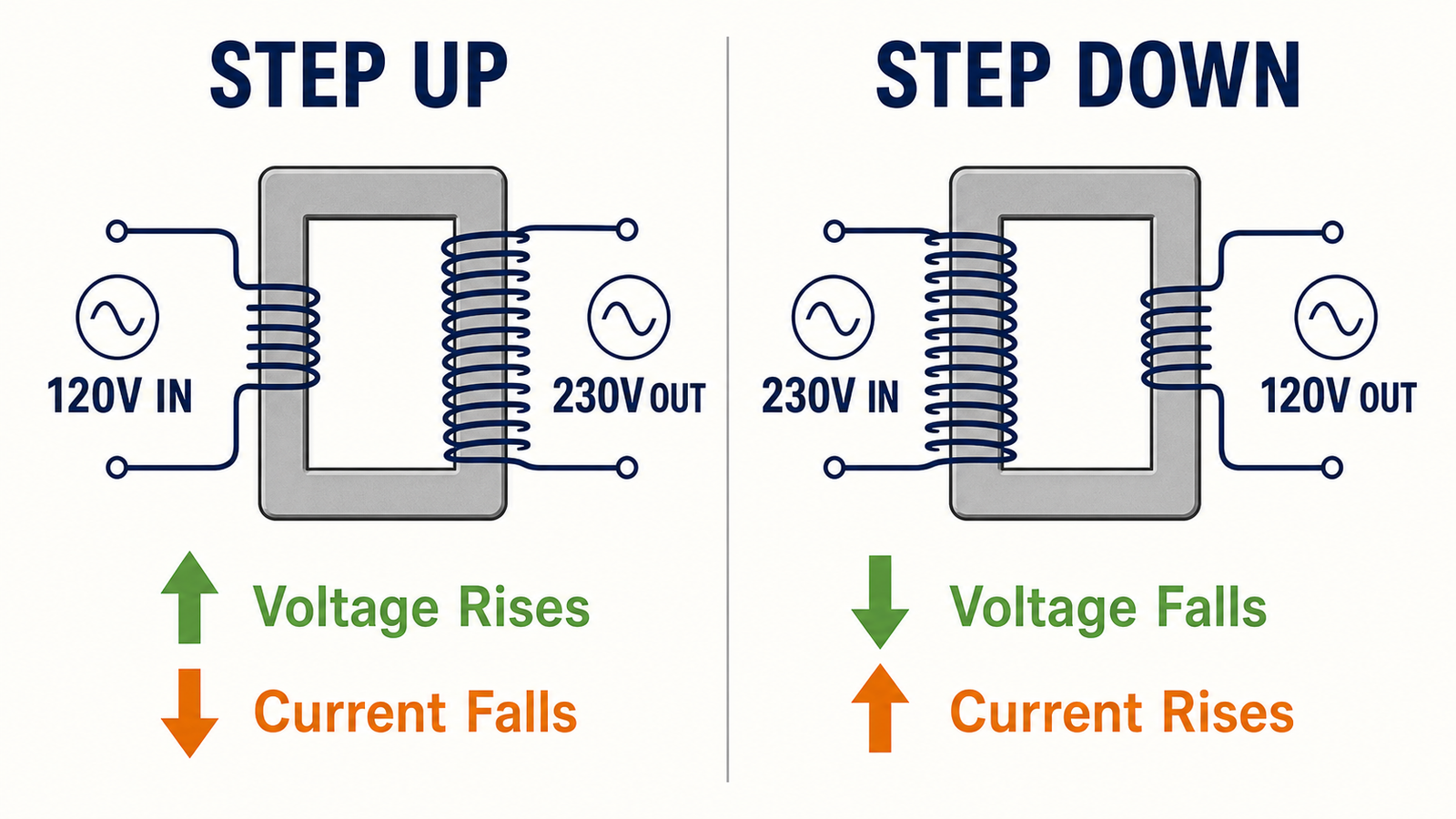
A yükseltici gerilim dönüştürücü düşük bir AC besleme gerilimini, bir cihazın gerektirdiği daha yüksek gerilime yükseltir. Bir düşürücü voltaj dönüştürücü ise tam tersini yapar: daha yüksek bir besleme voltajını, daha düşük voltajlı bir cihaz için uygun seviyeye indirir. Doğru seçim, yalnızca iki voltaj değerine bağlıdır — duvardan gelen voltaj ve ekipmanınızın üzerinde yazılı giriş voltajı — ancak güvenli bir seçim için doğru VA kapasitesi, frekans uyumluluğu, fiş konfigürasyonu, topraklama ve koruma özelliklerinin de dikkate alınması gerekir.
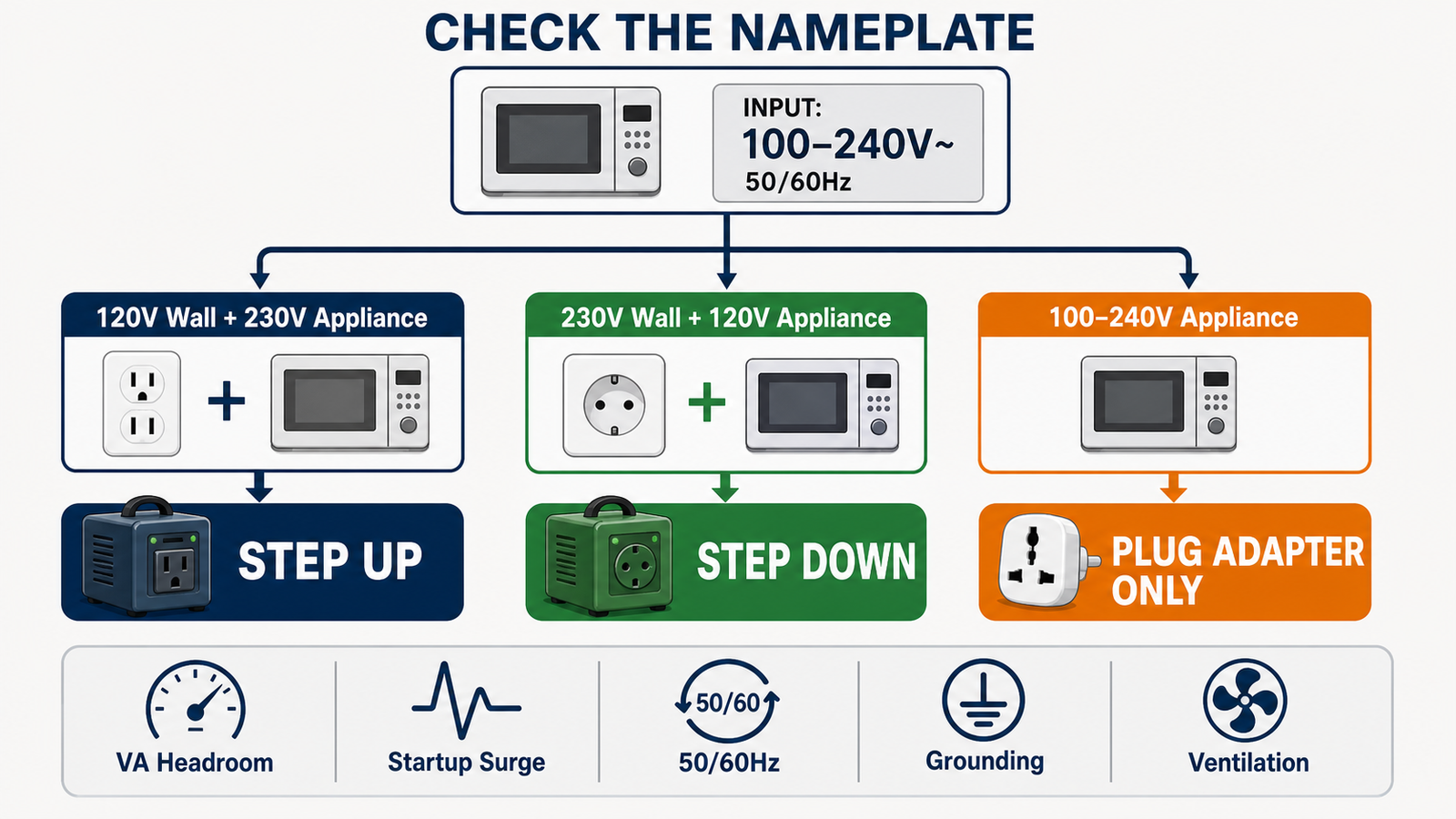
Genel kural basittir. Duvar prizi 110–120 V ise ve cihaz 220–240 V gerektiriyorsa, yükseltici bir dönüştürücü kullanın. Duvar prizi 220–240 V ise ve cihaz 110–120 V gerektiriyorsa, alçaltıcı bir dönüştürücü kullanın. Cihazın etiketinde “GİRİŞ: 100–240 V, 50/60 Hz” yazıyorsa, cihaz zaten çift voltajlıdır ve normalde sadece uygun bir fiş adaptörüne ihtiyaç duyar.
Yükseltici ve Düşürücü Gerilim Dönüştürücülere Genel Bakış
Karşılaştırma
Yükseltici gerilim dönüştürücü
Aşağı dönüştürücü
Fonksiyon
Alternatif akım gerilimini yükseltir
AC gerilimini düşürür
Yaygın birim dönüştürme
110–120 V – 220–240 V
220–240 V’dan 110–120 V’a
Tipik kullanım
120 V’luk bir ülkede 230 V’luk bir cihazı çalıştırmak
230 V’luk bir ülkede 120 V’luk bir cihazı çalıştırmak
İkincil sargı
Birinciden daha fazla tur
Birinciden daha az tur
İdeal akım değişimi
Gerilim arttıkça çıkış akımı azalır
Gerilim düştükçe çıkış akımı artar
Frekans dönüşümü
Genellikle hayır
Genellikle hayır
Yükseltici Gerilim Dönüştürücü Nasıl Çalışır?
Geleneksel bir AC transformatöründe, giriş sargısı çekirdekte alternatif bir manyetik akı oluşturur. Bu değişen akı, çıkış sargısında gerilim indükler. Gerilim oranı, sargı devir sayısına bağlıdır:
Vikincil ÷ Vbirincil ≈ Nikincil ÷ Nbirincil
Yükseltici transformatörün ikincil sargısında, birincil sargısına göre daha fazla sargı turu bulunur; bu nedenle çıkış gerilimi daha yüksektir. 110 V'tan 220 V'a dönüştüren bir ünitede ideal gerilim oranı yaklaşık 1:2'dir. Transformatör güç üretmediğinden, kullanılabilir çıkış akımı giriş akımından daha düşüktür ve elektriksel ve manyetik kayıplar nedeniyle gerçek çıkış gücü de biraz daha düşüktür.
Tipik bir kullanım örneği, Amerika Birleşik Devletleri, Kanada, Japonya veya şebeke gerilimi yaklaşık 100–120 V olan başka bir pazarda tek gerilimli 220 V’luk bir cihazı çalıştırmaktır. Örnekler arasında ithal laboratuvar aletleri, ses ekipmanları, küçük üretim makineleri ve belirli ev aletleri sayılabilir.
Aşağı Dönüşlü Gerilim Dönüştürücü Nasıl Çalışır?
Bir düşürme transformatörü, sargı ilişkisi tersine çevrilmiş halde aynı elektromanyetik prensibi kullanır. İkincil sargısında daha az tur bulunur, bu nedenle çıkış gerilimi giriş geriliminden daha düşüktür. 220 V'tan 110 V'a dönüştürücü, cihazın watt değeri, frekansı ve yük özellikleri uyumlu olduğunda, tek voltajlı bir Kuzey Amerika cihazının 220–240 V'luk bir besleme kaynağından çalışmasını sağlar.
İdeal bir transformatör ilişkisinde, daha düşük çıkış gerilimi, aynı görünür güç için daha yüksek çıkış akımı sağlar. Ancak yük, dönüştürücünün nominal VA değerini veya akımını aşamaz. Dönüştürücü, yalnızca cihazın talep ettiği akımı sağlar; doğru nominal değere sahip bir yüke aşırı akım zorla göndermez.
Hangi Yöne İhtiyacınız Var?
Asla sadece hedef ülkenin adına göre seçim yapmayın. Cihazın tip plakasını okuyun ve yerel besleme değerini doğrulayın. Ardından bu iki değeri karşılaştırın:
120 V duvar prizi + 230 V elektrikli cihaz: "Step Up" seçeneğini seçin.
230 V duvar prizi + 120 V elektrikli cihaz: "Adımı düşür" seçeneğini seçin.
100–240 V'luk cihaz: Gerilim dönüştürme genellikle gerekli değildir.
DC cihazı veya akü sistemi: Yalnızca gerilime göre seçilmiş bir şebeke transformatörü değil, doğru AC adaptörünü veya DC-DC dönüştürücüsünü kullanın.
Çift yönlü bir yükseltici/düşürücü transformatör, bu amaçla tasarlanmış ve etiketlenmişse her iki yönde de çalışabilir. Bununla birlikte, kullanıcı güç vermeden önce kaynağı ve yükü doğru terminallere veya soketlere bağlamalı ve varsa giriş seçiciyi ayarlamalıdır.
Yükseltici veya Düşürücü Dönüştürücünün Boyutu Nasıl Belirlenir?
1. Cihazın maksimum gücünü bulun
Tip plakasında veya üreticinin teknik özelliklerinde belirtilen watt değerini kullanın. Yalnızca gerilim ve akım değerleri verilmişse, W = V × A formülünü kullanarak watt değerini hesaplayın. Birden fazla cihaz söz konusu olduğunda, aynı anda çalışabilecek tüm cihazların maksimum watt değerlerini toplayın.
2. Sürekli yük marjı ekleyin
Yükle tam olarak aynı değerde bir dönüştürücü seçmeyin. Basit bir elektronik veya dirençli yük için, pratik bir başlangıç noktası, maksimum sürekli talebin en az 20–25% kapasite kadar üzerinde bir değerdir. Örneğin, 700 W'lık bir yük, 700 VA'lık bir dönüştürücüye bağlanmamalıdır; 1000 VA'lık bir modele geçmek, daha kullanışlı bir çalışma marjı sağlar.
3. Başlangıçtaki ani yük artışını hesaba katın
Motorlar, kompresörler, pompalar, elektrikli aletler, buzdolapları ve bazı ses amplifikatörleri, çalışma güçlerinden çok daha fazlasını kısa süreliğine çekebilir. Ekipman üreticisinin başlangıç watt değeri veya ani akım değerini kullanın. Bu değerler mevcut değilse, genel bir çarpan değerine güvenmek yerine cihaz veya transformatör tedarikçisine danışın.
4. Understand watts and VA
Transformer capacity is commonly stated in volt-amperes. For a purely resistive load, watts and VA are close. Motors and electronic power supplies can have a power factor below 1, so their VA demand may be higher than their real power in watts. When power factor is known:
Required VA ≈ watts ÷ power factor
Size against the converter’s continuous rating and confirm how the manufacturer defines short-term or surge capability. A large number printed on the enclosure is not useful unless the duty rating and test conditions are clear.
Frequency: The Difference a Transformer Does Not Fix
A normal step up voltage converter changes voltage but does not change 50Hz into 60Hz. The same is true for a standard step-down transformer. Many switch-mode power supplies and modern electronics accept both frequencies, but frequency-sensitive motors, clocks, turntables, tape machines, pumps, and timing equipment may run at the wrong speed, overheat, or perform poorly.
Check for “50/60Hz” on the appliance label. If the device is marked for only one frequency, confirm with its manufacturer whether it can operate on the local grid. When frequency must change, a true frequency converter or suitable regenerated power source is required.
Plug Adapter vs Voltage Converter
A plug adapter changes the physical shape of a plug so it fits a different socket. It does not increase or decrease voltage. A voltage converter changes the electrical voltage. Some travel products combine both functions, but you must verify the specifications rather than assume that a universal-looking socket provides voltage conversion.
Always preserve protective grounding for equipment that requires it. Avoid loose multi-adapter stacks, overloaded power strips, and daisy-chained converters. High-power and permanently installed equipment should be assessed by a qualified electrician.
Can One Transformer Step Voltage Up and Down?
Many transformer windings are electrically reversible, and purpose-built bidirectional products provide labeled connections for both 110–120V and 220–240V operation. However, reversibility does not mean every transformer can be safely connected backward. Protection, taps, wiring, insulation, connectors, and voltage selector design all matter.
Use only the directions listed by the manufacturer. Before connecting power, check the input setting, correct output socket, total load, fuse or breaker, and ventilation. Never change a voltage selector while the converter is energized.
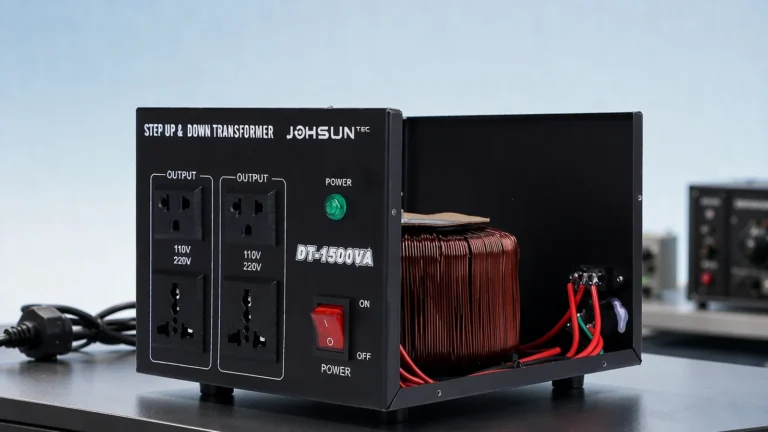
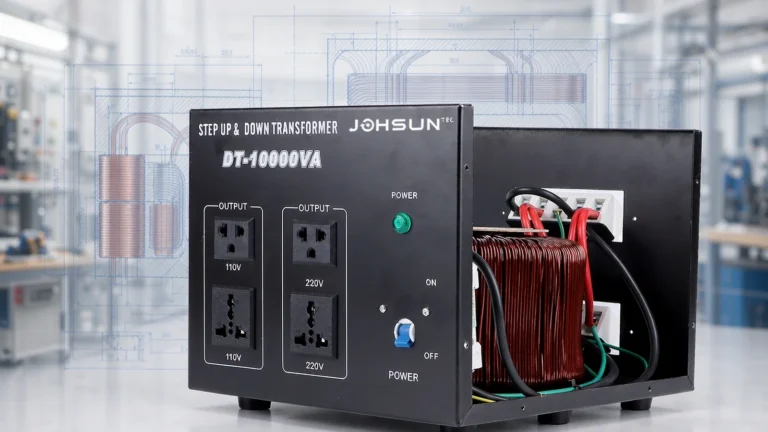
For still higher demand, review the DT-5000VA voltage converter transformer. These are comparison examples, not automatic recommendations. Confirm input/output voltage, continuous VA, surge requirements, frequency, outlet type, grounding, and the appliance manufacturer’s instructions before selecting a model.
Common Selection Mistakes
Reversing the logic: select from wall voltage to appliance voltage, not from appliance voltage to wall voltage.
Ignoring dual-voltage labeling: many chargers already accept 100–240V.
Matching capacity exactly: heat, power factor, and startup current require headroom.
Assuming voltage conversion changes frequency: standard transformers normally preserve input frequency.
Using a compact travel converter for any load: some are limited to short-duration resistive appliances.
Blocking ventilation: transformer losses create heat, even with no overload.
Using the wrong input selector position: this can damage the converter and connected appliance.
Choose a step up voltage converter when the available AC voltage is lower than the appliance requirement. Choose a step-down converter when the available voltage is higher. Then verify capacity, surge, frequency, grounding, sockets, protection, and duty rating before use.
Do I need step up or step down for a 220V appliance in the USA?
If the local supply is about 120V and the appliance accepts only 220–240V, you need a step-up converter. Also verify wattage and 50/60Hz compatibility.
Do I need step up or step down for a 110V appliance in Europe?
If the local supply is 220–240V and the appliance accepts only 110–120V, use a step-down converter with enough continuous and surge capacity.
Does a higher-VA converter send too much power to my appliance?
No. A correctly connected appliance draws the current it requires. A higher converter capacity provides available headroom; the voltage still must match the appliance.
Can a step up voltage converter run continuously?
Only when the model is rated for continuous duty at the actual load and has proper ventilation. Follow the manufacturer’s temperature, placement, and duty-cycle instructions.
Will a 110V-to-220V converter also change 60Hz to 50Hz?
No. A standard transformer changes voltage, not frequency. Use equipment rated for the local frequency or a suitable frequency-conversion solution.
An on-load tap changer regulates under load; an off-load tap changer needs a de-energized visit. Why an OLTC never fits 100 VA to 10 kVA units, plus real tap-selection math on a 1000 VA transformer.
A buyer-focused comparison of transformer winding types for 100VA-10kVA dry-type units: where layer, disc and foil windings each make sense, and what to specify on your next RFQ.
How to identify the LV and HV side of a transformer using the nameplate, H/X terminal markings, winding resistance, winding position and a safe low-voltage injection test.