100VA Transformer for Low-Power Applications: Features, Benefits & Uses
Ngày đăng: Tác giả: Lisa
A 100VA transformer is one of the most widely used ratings in low-power electrical equipment, yet its capabilities are often misunderstood. In simple terms, a 100VA transformer is a compact unit rated for 100 volt-amperes of apparent power, and it is the workhorse behind control circuits, low-voltage lighting, small appliances, and travel voltage conversion between 110V and 220V systems. This guide explains what a 100VA transformer is, the features and benefits that matter, where it is used, and how to select the right máy biến áp tăng áp và giảm áp for your job.
What Is a 100VA Transformer?
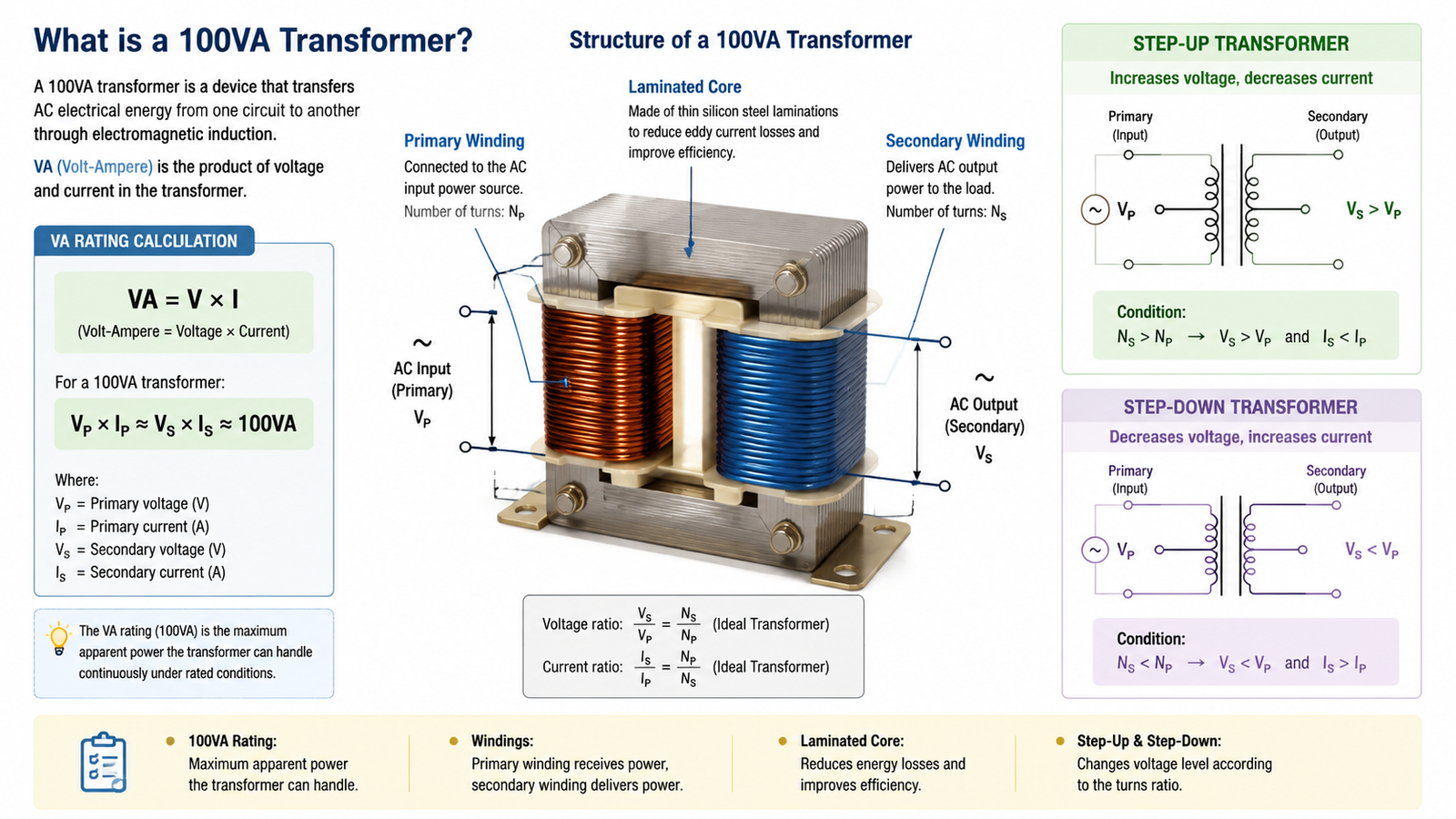
A 100VA transformer converts AC voltage from one level to another while delivering up to 100 volt-amperes of apparent power. VA is calculated as voltage multiplied by current (V × A), which means the same 100VA rating can supply different currents depending on the output voltage:
At 12V output: up to about 8.3A
At 24V output: up to about 4.2A
At 110V output: up to about 0.9A
At 220V output: up to about 0.45A
Because VA is apparent power, a transformer with a poor load power factor delivers less real power (watts) to the load than the VA figure suggests. For resistive loads such as heaters and incandescent lamps, VA and watts are nearly equal; for inductive loads such as motors and solenoids, you should keep the actual watts well below 100VA. The unit contains a primary winding and a secondary winding around a laminated core, and it can be wired to step voltage down, step it up, or isolate one circuit from another.
Key Features of a 100VA Transformer
Small power transformers in this range are built for reliability in continuous duty. The features that matter most include:
Kích thước nhỏ gọn – Small enough to mount inside control panels, equipment enclosures, or travel converters, saving valuable space.
Good efficiency – High-grade silicon steel cores and tightly wound copper or aluminum windings keep losses and heat low at partial load.
Galvanic isolation – The primary and secondary windings are electrically separated, protecting sensitive loads from line-side faults and noise.
Overload and thermal protection – Many units include thermal fuses or circuit protection to shut down safely under excessive current.
Dual-voltage flexibility – Common 100VA models offer 110V/220V primary taps or multiple secondary taps (12V, 24V, 110V, 220V), making one unit usable across different regions.
Low noise and low maintenance – With no moving parts, a properly sized unit runs quietly and needs little more than an occasional inspection.
These characteristics make the 100VA class a practical middle ground between tiny signal transformers and bulky higher-power units.
Benefits of Choosing a 100VA Transformer
For engineers and buyers, the 100VA rating balances cost, size, and capability. The main benefits are:
Cost-effectiveness – Lower material and shipping costs than larger transformers, with no wasted capacity when the load is genuinely small.
Reliability – A properly specified unit runs cool and stable for years, which matters in industrial control panels and always-on equipment.
Versatility – One transformer can serve a control circuit, indicator lamps, a doorbell, or a small appliance, depending on the voltage taps.
An toàn – Isolation and low secondary voltages (12V or 24V) reduce electric shock risk for operators and maintenance staff.
Easy integration – Standard mounting footprints and terminal layouts simplify panel design and replacement.
Common Applications of 100VA Transformers
Where do you actually find a 100VA transformer in the field? Typical low-power applications include:
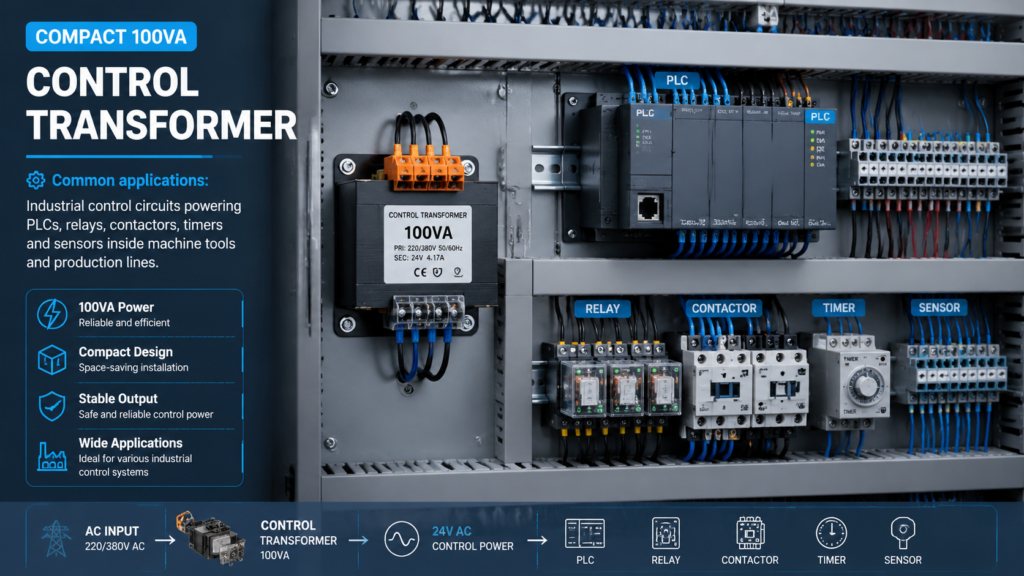
Industrial control circuits – Powering PLCs, relays, contactors, timers, and sensors inside machine tools and production lines. For these control applications, manufacturers commonly use dedicated units such as the JBK3 Series industrial control transformers .
Low-voltage lighting – Supplying 12V or 24V LED and halogen lighting, including work lamps and cabinet lighting.
Consumer electronics and small appliances – Doorbells, security systems, chargers, and other low-power devices that need a stepped-down supply.
Telecommunications and networking – Providing regulated low-voltage power to hubs, routers, and small communication equipment.
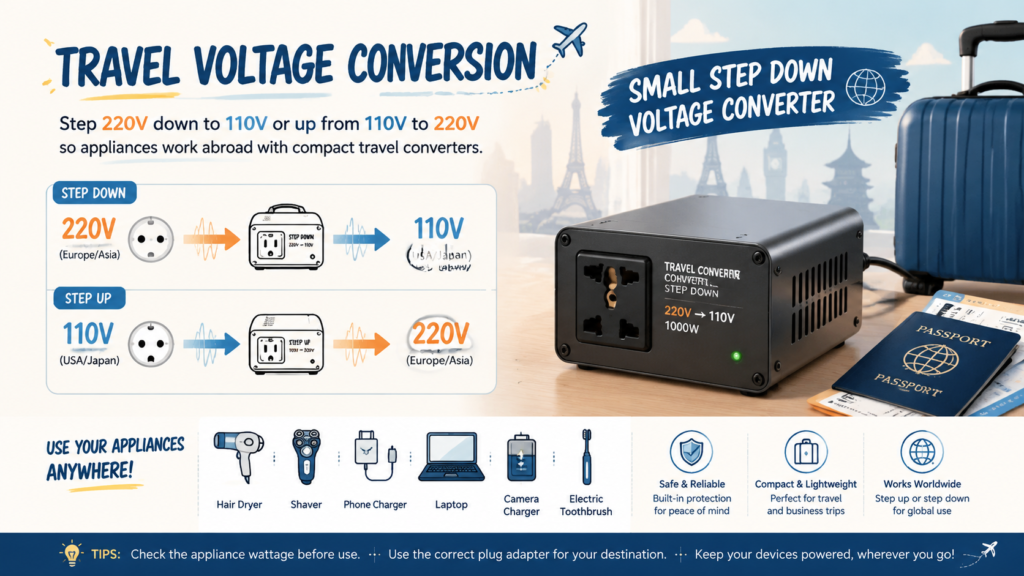
Travel voltage conversion – Stepping 220V down to 110V (or up from 110V to 220V) so appliances work abroad. Compact converter models like the DT/ST Series travel voltage converters (100VA–1500VA) are built for exactly this.
Auxiliary power in solar and inverter systems – Feeding control boards, displays, and standby circuits in renewable-energy equipment.
100VA Transformer vs Other Options
Choosing a 100VA unit makes sense only when the load fits the rating. The table below compares it with common alternatives:
Tiêu chí
100VA Transformer
500VA Transformer
Biến áp tự động
Switch-Mode Supply (SMPS)
Power handling
Up to 100VA
Up to 500VA
Depends on size
Very small units available
Kích thước và trọng lượng
Thiết kế nhỏ gọn
Lớn hơn và nặng hơn
Lighter than equivalent isolation type
Very compact and light
Galvanic isolation
Đúng
Đúng
Không
Tùy thuộc vào thiết kế
Typical efficiency
80–90%
80–90%
90–95%
85–95%
Noise and EMI
Thấp
Thấp
Thấp
May generate EMI
Best for
Control circuits, lighting, small loads
Heavier loads and high inrush
Voltage correction with minimal size
Compact electronics, DC output
If your equipment needs clean, isolated AC power at modest levels, a 100VA transformer is often the simplest and most robust choice. When you need more capacity across a wider range, series-based units such as the Máy biến áp hình xuyến dòng TC/THG (100VA–10KVA) let you scale up without changing the technology.
How to Choose the Right 100VA Transformer
Selecting the right 100VA model is straightforward if you check these points:
Match input and output voltage. Confirm the line voltage (for example 110V or 220V) and the voltage your load needs, including any taps for dual-voltage use.
Check the frequency. Most units support 50/60Hz, but verify it matches your local grid.
Apply the 80% load rule. Size the transformer so the continuous load does not exceed about 80% of its rating (80VA for a 100VA unit). This leaves headroom for inrush and heat.
Consider inrush current. Contactors, relays, and solenoids draw several times their holding current on energizing. If your control load is heavy on inrush, choose a slightly larger rating.
Decide on enclosure and protection. Panel-mounted open units need a protected enclosure; enclosed models suit harsher environments.
Verify certifications. Look for recognized safety marks and confirm the insulation class fits your operating environment.
To see whether 100VA fits your load, estimate the VA of each device and add them up:
Tải
Typical VA Draw
Fits a 100VA Unit?
PLC with a few I/O modules
15–40VA
Đúng
Two contactors + indicator lamps
10–25VA
Đúng
LED lighting (12V) strip, 3m
18–30VA
Đúng
Small pump or fan motor
60–90VA
Marginal – consider 150–300VA
1kW appliance (e.g., hair dryer)
≈1000VA
No – needs 1000VA+ unit
A 100VA transformer is not a substitute for a power converter rated in kilowatts. For appliances above roughly 100W, step up to a higher-rated model instead of overloading a small unit.
Safety and Installation Tips
Fuse the primary side. A correctly sized fuse or breaker protects both the transformer and the connected load against short circuits.
Keep it ventilated. Mount the unit away from heat sources and leave clearance for airflow; overheating accelerates insulation aging.
Never overload continuously. Sustained operation above the VA rating raises temperature and shortens service life.
Wire carefully. Follow terminal markings, tighten connections, and disconnect power before any maintenance.
Inspect periodically. Check for discoloration, loose terminals, or unusual hum in industrial environments.
Kết luận
A 100VA transformer is a small, efficient, and safe way to power control circuits, low-voltage lighting, and low-power appliances, and it is especially useful for 110V–220V conversion. The key is matching the voltage, frequency, and load so the unit runs at or below about 80% of its rating. When you need a dependable low-power transformer or a compact step up/down converter, browse the full transformer range at Johsun or contact us with your input and output voltages, and we will help you specify the right model.
Các câu hỏi thường gặp
What does 100VA mean on a transformer?
100VA is the apparent power rating, calculated as voltage × current. It indicates the maximum load the transformer can supply continuously without overheating.
Can a 100VA unit step up and step down voltage?
Yes. If the winding ratio matches the input and output voltages you need, the same unit can step 220V down to 110V or step 110V up to 220V. Check the specification before wiring.
How much current can a 100VA unit deliver?
It depends on the output voltage. At 12V it delivers about 8.3A, at 24V about 4.2A, at 110V about 0.9A, and at 220V about 0.45A.
Can I run a 1000W appliance on a 100VA unit?
No. A 1000W appliance needs roughly 1000VA, which is ten times the rating. Overloading causes overheating and can damage both the transformer and the appliance.
Will a 100VA unit work with both 110V and 220V mains?
Only if the unit has dual primary taps or the winding supports both voltages. Many compact converters are designed for both, but always confirm the input range on the label.
Why does my 100VA transformer get hot?
Common causes are continuous overload, poor ventilation, or a short circuit on the secondary side. Reduce the load, improve airflow, and check the wiring.
Recommended Models for 100VA Low-Power Applications
If you are specifying a unit rather than reading theory, start here. These models cover the capacity bands most often requested for 100VA low-power applications, and each links straight to its specification and price range.
Vui lòng cung cấp cho chúng tôi thông tin về điện áp đầu vào, điện áp đầu ra, pha và công suất kVA liên tục mà quý khách cần; chúng tôi sẽ xác nhận mẫu sản phẩm phù hợp, giá cả và thời gian giao hàng trong vòng một ngày làm việc. Các thông số kỹ thuật không theo tiêu chuẩn sẽ được xử lý thông qua Sản xuất máy biến áp theo yêu cầu theo mô hình OEM/ODM.
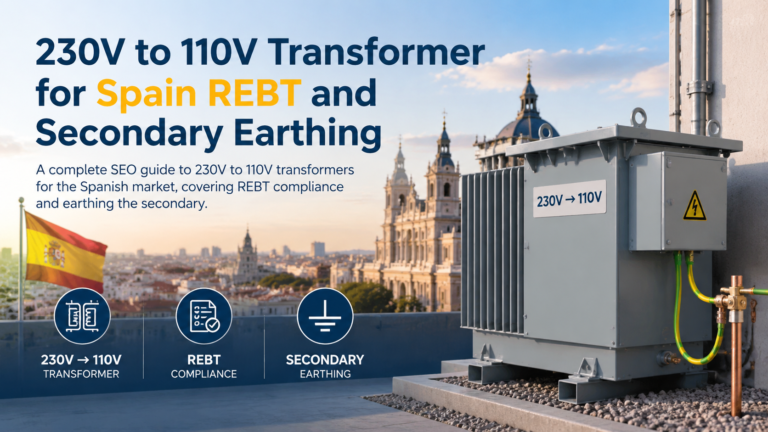
Biến áp 230V sang 110V dành cho Tây Ban Nha: Tuân thủ tiêu chuẩn REBT, ITC-BT-18 và ITC-BT-24, nối đất cho cuộn thứ cấp và tài liệu theo tiêu chuẩn UNE-EN IEC 61558.
Biến áp 230V sang 110V dành cho Hà Lan: Tiêu chuẩn NEN 1010, quy định về dòng rò 30 mA, sự khác biệt giữa công tắc ngắt dòng rò (aardlekschakelaar) và bộ ngắt tự động dòng rò (aardlekautomaat), cùng với hệ thống nối đất thứ cấp.
Biến áp 230V sang 110V dành cho Pháp: Tiêu chuẩn NF C 15-100, nối đất theo tiêu chuẩn TT, bảo vệ chênh lệch dòng điện 30 mA và khi nào cần nối đất cho cuộn thứ cấp.