Các loại máy biến áp tự điều chỉnh: Tăng áp, Giảm áp, Variac, 3 pha và các loại khác
Ngày đăng: Tác giả: Lisa
Biến áp tự động không phải là thiết bị “một cỡ phù hợp cho mọi trường hợp”. Chúng có nhiều loại riêng biệt, mỗi loại được thiết kế cho một phạm vi cụ thể về tỷ số điện áp, cấu hình pha, phương pháp điều khiển và môi trường ứng dụng. Việc lựa chọn đúng loại autotransformer đòi hỏi phải đảm bảo các đặc tính thiết kế này phù hợp với tải, nguồn cấp và điều kiện vận hành của bạn. Hướng dẫn này phân loại tất cả các loại autotransformer chính để bạn có thể nhanh chóng xác định loại nào phù hợp với dự án của mình.
Cách phân loại các loại autotransformer
Tất cả các máy biến áp tự động đều dựa trên cùng một nguyên lý cơ bản — một cuộn dây duy nhất với các phần sơ cấp và thứ cấp chung — nhưng thiết kế thực tế của chúng khác nhau theo năm tiêu chí phân loại:
Tỷ số cố định, biến thiên (Variac), chuyển nấc (tự động)
Theo số pha
Một pha, ba pha (kết nối hình sao, hình tam giác, hình zigzag)
Theo thiết kế lõi và cuộn dây
Loại hình vòng, lõi ghép lá EI, kiểu vỏ
Theo ứng dụng
Khởi động động cơ, phân phối điện, phòng thí nghiệm, âm thanh, đường sắt
Việc hiểu rõ các khía cạnh này sẽ giúp bạn nhanh chóng thu hẹp các lựa chọn. Các phần dưới đây sẽ hướng dẫn chi tiết về từng phân loại. Nếu bạn hoàn toàn mới làm quen với autotransformer, hãy bắt đầu với Giới thiệu về autotransformer là gì.
Các loại máy biến áp tự điều chỉnh theo chức năng điện áp
Phân loại cơ bản nhất là dựa trên tác động của máy biến áp đối với điện áp: làm tăng, làm giảm hay cả hai.
Biến áp tự điều chỉnh tăng áp
A máy biến áp tự động tăng áp làm tăng điện áp từ đầu vào đến đầu ra. Đầu vào được nối song song với một phần của cuộn dây (phần có điện áp thấp hơn), còn đầu ra được lấy từ toàn bộ cuộn dây. Do số vòng dây ở đầu ra nhiều hơn số vòng dây ở đầu vào, nên điện áp tăng lên theo tỷ lệ tương ứng.
Các cấu hình biến áp tăng áp phổ biến bao gồm 110V lên 220V để vận hành thiết bị của Bắc Mỹ trên mạng điện châu Âu/châu Á, hoặc 240V lên 480V cho máy móc công nghiệp. Tỷ số vòng dây quyết định trực tiếp mức tăng điện áp: khi kết nối đầu vào tại điểm nối 50% trên cuộn dây 220V, sẽ cho ra 440V tại các cực đầu ra của cuộn dây đầy đủ.
Máy biến áp tự động hạ áp
A máy biến áp tự động hạ áp giảm điện áp. Cuộn dây đầy đủ nhận điện áp đầu vào cao hơn, còn tải được kết nối với một điểm lấy điện nằm ở vị trí thấp hơn trên cuộn dây. Đây là cấu hình phổ biến nhất trong các bộ chuyển đổi điện áp dân dụng, dùng để hạ áp từ 220V–240V xuống 110V–120V cho các thiết bị gia dụng nhập khẩu.
Trong chế độ hạ áp, dòng điện trong phần cuộn dây chung bằng chênh lệch giữa dòng điện đầu vào và dòng điện đầu ra, điều này có nghĩa là tổn thất đồng ít hơn và nhiệt độ hoạt động thấp hơn. Đây là một trong những lý do khiến các máy biến áp tự động hạ áp hoạt động hiệu quả ngay cả khi chịu tải liên tục.
Biến áp tự điều chỉnh Buck-Boost
A máy biến áp tự động buck-boost là một loại biến áp chuyên dụng được thiết kế để thực hiện các điều chỉnh điện áp nhỏ — thường là từ 5% đến 20% — thay vì chuyển đổi toàn dải. Loại biến áp này có chức năng hạ áp (giảm) hoặc tăng áp (tăng) điện áp với mức tăng/giảm nhỏ. Các thiết bị này thường được sử dụng trong các hệ thống phân phối điện, nơi điện áp đường dây dao động nhẹ ngoài giới hạn cho phép và cần được điều chỉnh nhẹ mà không cần thay thế toàn bộ máy biến áp.
Hàm điện áp
Kết nối đầu vào
Kết nối đầu ra
Tỷ lệ điển hình
Sử dụng phổ biến
Nâng cấp
Dọc theo một đoạn đường uốn lượn
Trên toàn bộ đoạn đường uốn lượn
1:2 đến 1:3
Thiết bị hoạt động ở điện áp từ 110V đến 220V
Biến áp hạ áp
Trên toàn bộ đoạn đường uốn lượn
Dọc theo một đoạn đường uốn lượn
2:1 đến 3:1
Các thiết bị điện từ 220V sang 110V
Buck-Boost
Trên toàn bộ đoạn đường uốn lượn
Cả phép cộng/trừ nối tiếp và song song
0,8:1 đến 1,2:1
Điều chỉnh điện áp đường dây
Các loại máy biến áp tự điều chỉnh theo phương pháp điều khiển
Cách thiết lập điện áp đầu ra — cố định, có thể điều chỉnh thủ công hay được điều chỉnh tự động — sẽ quyết định loại hình điều khiển. Phân loại này có ảnh hưởng lớn nhất đến trải nghiệm sử dụng hàng ngày của bạn.
Máy biến áp tự động tỷ số cố định
A máy biến áp tự động tỷ số cố định Có các điểm lấy điện cố định, cung cấp điện áp đầu ra cụ thể cho một điện áp đầu vào đã biết. Sau khi được đấu dây, điện áp đầu ra sẽ không thay đổi trừ khi bạn thực hiện việc kết nối lại các cực với một điểm lấy điện khác. Các thiết bị này không có bộ phận chuyển động, không cần bảo trì và là loại đơn giản nhất, bền bỉ nhất.
Biến áp tự biến tỷ số cố định là lựa chọn tiêu chuẩn cho việc chuyển đổi điện áp tăng áp và giảm áp trong các thiết bị luôn hoạt động ở cùng một mức điện áp. Các Máy biến áp tự động dòng DT/ST của Johsun Tec là các thiết kế có tỷ lệ cố định, có dải công suất từ 100VA đến 10kVA với nhiều tổ hợp điện áp đầu vào/đầu ra khác nhau.
Biến áp tự điều chỉnh (Variac)
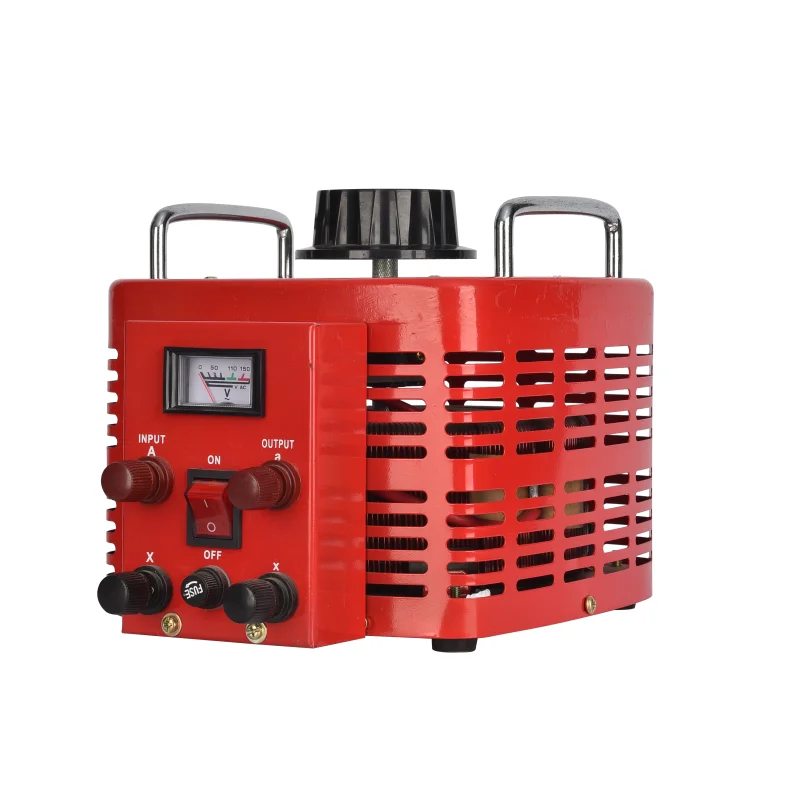
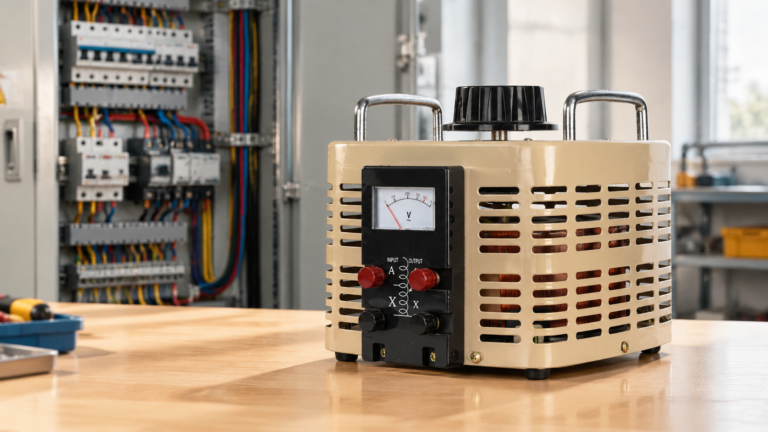
A máy biến áp tự động biến thiên, được biết đến rộng rãi với tên thương mại Variac, thay thế các điểm tiếp xúc cố định bằng một chổi than xoay trượt dọc theo một rãnh cuộn dây lộ ra ngoài. Khi xoay núm điều chỉnh, chổi than sẽ di chuyển dọc theo rãnh cuộn dây, cung cấp điện áp đầu ra có thể điều chỉnh liên tục từ 0 đến khoảng 117% so với điện áp đầu vào.
Máy biến áp tự động biến thiên là thiết bị không thể thiếu trong các phòng thí nghiệm, xưởng sửa chữa, bàn thử nghiệm và dây chuyền sản xuất – những nơi thiết bị phải được kiểm tra dưới các mức điện áp đầu vào khác nhau. Chúng tạo ra tín hiệu đầu ra dạng sóng sin sạch, không bị biến dạng do các bộ điều chỉnh độ sáng điện tử hoặc bộ điều khiển thyristor gây ra. Để biết thêm chi tiết, hãy tham khảo Danh mục sản phẩm máy biến áp biến thiên.
Cần lưu ý rằng máy biến áp tự động điều chỉnh (variac) không đảm bảo tính cách ly. Đầu ra của thiết bị này được kết nối điện với đầu vào nguồn điện lưới thông qua cuộn dây. Đối với các hệ thống thử nghiệm yêu cầu tính cách ly, cần phải lắp đặt một máy biến áp cách ly ở phía trước variac.
Máy biến áp tự điều chỉnh (Bộ điều chỉnh điện áp tự động)
A máy biến áp tự động chuyển cấp tự động điều chỉnh điện áp đầu ra bằng cách sử dụng bộ chọn bậc được điều khiển bằng động cơ hoặc chuyển mạch bằng rơle. Một mạch cảm biến điện áp theo dõi điện áp đầu ra và ra lệnh cho bộ chuyển bậc tăng hoặc giảm bậc để duy trì điện áp đầu ra ổn định bất chấp những dao động của điện áp đầu vào hoặc tải.
Các thiết bị này thường được sử dụng trong các mạng lưới phân phối điện, nơi các đường dây cấp điện nông thôn dài thường gặp hiện tượng sụt áp, cũng như trong các nhà máy công nghiệp, nơi các thiết bị nhạy cảm cần nguồn điện áp được điều chỉnh chặt chẽ. Bộ chuyển nấc tự động có thể hoạt động dưới tải (bộ chuyển nấc dưới tải, OLTC) hoặc yêu cầu ngắt điện trong thời gian ngắn (bộ chuyển nấc ngoài tải).
Loại điều khiển
Điều chỉnh
Các bộ phận chuyển động
Phù hợp nhất cho
Tỷ lệ cố định
Không có — được thiết lập khi cài đặt
Không có
Hệ thống chuyển đổi điện áp cố định
Biến áp (Variac)
Thủ công, liên tục
Bàn chải xoay trên trục cuộn
Thử nghiệm trong phòng thí nghiệm, Nghiên cứu và Phát triển (R&D), bàn sửa chữa
Chuyển chế độ (Tự động)
Tự động, theo từng bước
Công tắc chọn nấc có động cơ hoặc rơle
Quy định về phân phối điện, các tải công nghiệp nhạy cảm
Các loại máy biến áp tự động theo số pha
Số pha mà một máy biến áp tự động có thể xử lý là một trong những câu hỏi đầu tiên cần làm rõ khi lựa chọn thiết bị. Máy biến áp tự động một pha và ba pha có cấu trúc bên trong cũng như cách bố trí các đầu nối hoàn toàn khác nhau.
Máy biến áp tự điều chỉnh một pha
A máy biến áp tự động một pha có một cuộn dây liên tục trên một lõi từ duy nhất. Thiết bị này hoạt động với nguồn điện xoay chiều một pha tiêu chuẩn dành cho hộ gia đình và thương mại quy mô nhỏ. Đây là loại tự biến áp phổ biến nhất trong các bộ chuyển đổi điện áp dành cho người tiêu dùng, thiết bị kiểm tra nhỏ và ứng dụng điều chỉnh điện áp cho các thiết bị gia dụng.
Các thiết bị một pha có sẵn ở cả hai cấu hình tăng áp và giảm áp, dưới dạng các mẫu có tỷ số cố định hoặc tỷ số biến đổi. Công suất định mức của chúng dao động từ vài VA cho các tải điện tử nhỏ đến vài kVA cho việc chuyển đổi toàn bộ máy.
Biến áp tự điều chỉnh ba pha
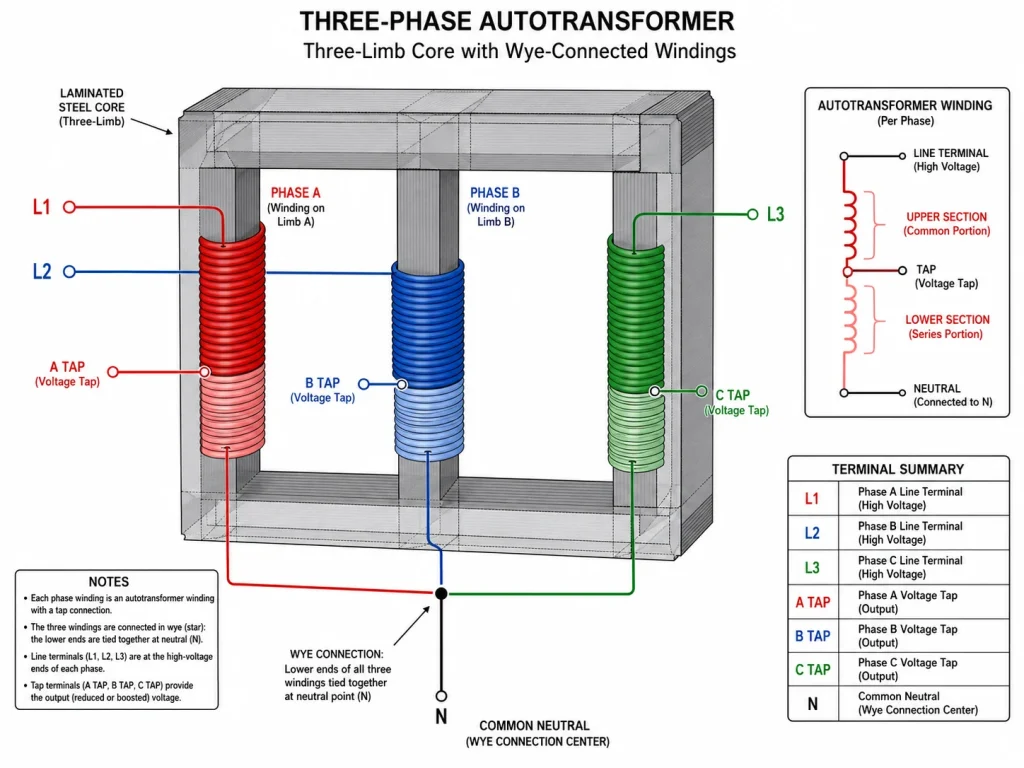
A máy biến áp tự động ba pha xử lý cả ba pha của nguồn điện xoay chiều công nghiệp. Thiết bị này có thể được chế tạo theo hai cách: ba bộ tự biến áp một pha riêng biệt được kết nối với nhau, hoặc một lõi từ ba nhánh duy nhất có các cuộn dây cho cả ba pha.
Biến áp tự động ba pha Các thiết bị này được sử dụng rộng rãi trong khởi động động cơ, chuyển đổi điện áp công nghiệp và kết nối truyền tải điện. Chúng có hai cấu hình kết nối cuộn dây chính như sau:
Kết nối Wye (Star): Ba cuộn dây này có chung một điểm trung tính. Mỗi cuộn dây pha đều có các điểm lấy điện riêng. Một máy biến áp tự động ba pha kết nối theo hình sao có thể cung cấp cả điện áp giữa các pha và điện áp giữa pha với trung tính, do đó trở thành lựa chọn ưu tiên khi cần có điểm trung tính.
Chuyến bay nối chuyến của Delta: Ba cuộn dây tạo thành một mạch kín không có điểm trung tính. Các thiết bị kết nối theo hình tam giác thường được sử dụng phổ biến hơn trong các ứng dụng khởi động động cơ và các hệ thống mà tải được phân bổ cân bằng trên cả ba pha.
Một biến thể chuyên dụng được gọi là máy biến áp tự động zigzag cung cấp một điểm tham chiếu nối đất lấy từ dây trung tính cho các hệ thống vốn không có kết nối dây trung tính. Các thiết bị này được sử dụng trong mạng lưới phân phối và được đánh giá cao nhờ khả năng xử lý dòng điện thứ tự không.
Cấu hình
Trung lập - Còn hàng
Ứng dụng điển hình
Yêu cầu cân bằng pha
Một pha
Không áp dụng
Nhà ở, thương mại quy mô nhỏ, thiết bị nhỏ
Không
Mạch ba pha nối sao
Đúng
Phân phối, chuyển đổi điện áp công nghiệp với tải trung tính
Trung bình
Kết nối tam pha theo hình tam giác
Không
Khởi động động cơ, tải công nghiệp cân bằng
Đúng
Zigzag ba pha
Có (được suy ra)
Nối đất hệ thống, giảm thiểu sóng hài
Không áp dụng
Biến áp tự điều chỉnh ba pha (Variac ba pha)
A Biến áp điều chỉnh 3 pha — còn được gọi là một máy biến áp ba pha có thể điều chỉnh hoặc Biến áp điều chỉnh 3 pha — chỉ đơn giản là ba bộ biến áp tự điều chỉnh có biến thiên được ghép nối với nhau trên cùng một trục. Chỉ cần xoay một núm điều chỉnh là có thể điều chỉnh điện áp đầu ra trên cả ba pha cùng lúc và theo tỷ lệ tương ứng.
Các thiết bị này được sử dụng trong thử nghiệm động cơ ba pha, điều khiển quy trình công nghiệp và các môi trường phòng thí nghiệm cần nguồn điện xoay chiều ba pha có thể điều chỉnh. Chúng tự động duy trì sự cân bằng pha nếu các pha đầu vào đã cân bằng. Điện áp đầu ra trên mỗi pha thường có thể được điều chỉnh từ 0 đến điện áp đường dây hoặc cao hơn một chút.
Khi lựa chọn một máy biến áp ba pha có thể điều chỉnh, xin xác nhận rằng:
Dòng điện định mức trên mỗi pha phải đáp ứng được tải một pha tối đa của bạn, chứ không chỉ là giá trị trung bình của ba pha
Điện áp đầu vào phù hợp với nguồn điện của bạn (208V, 380V, 400V, 415V hoặc 480V ba pha)
Thiết bị này được thiết kế để hoạt động liên tục ở mức điện áp đầu ra cao nhất mà bạn dự định sử dụng
Các loại máy biến áp tự điều chỉnh theo thiết kế lõi và cuộn dây
Cấu trúc vật lý của lõi từ và cuộn dây có ảnh hưởng đáng kể đến kích thước, trọng lượng, hiệu suất và độ ồn.
Biến áp tự biến hình xuyến
A biến áp tự động hình xuyến sử dụng lõi từ hình bánh rán với cuộn dây được phân bố đều quanh chu vi của lõi. Thiết kế này mang lại mật độ công suất cao nhất với trọng lượng thấp nhất. Máy biến áp tự động hình vòng có từ trường rò rỉ rất thấp, khiến chúng trở thành lựa chọn lý tưởng cho các thiết bị âm thanh và thiết bị đo lường nhạy cảm, nơi cần giảm thiểu nhiễu điện từ.
Thiết kế lõi hình xuyến rất phổ biến trong các bộ chuyển đổi điện áp dòng STU — những thiết bị nhỏ gọn, nhẹ, có khả năng chuyển đổi hiệu quả giữa 110V và 220V với mức nhiễu bức xạ thấp. Lõi hình xuyến cũng tạo ra tiếng ồn cơ học ít hơn so với các thiết kế lõi EI dạng lá, đây là một lợi thế cho các hệ thống lắp đặt tại nhà ở và văn phòng.
Máy biến áp tự động lõi nhiều lớp EI
Một Biến áp tự động EI-core sử dụng các lá thép silic xếp chồng lên nhau có hình chữ E và chữ I. Đây là hình dạng lõi máy biến áp truyền thống và vẫn chiếm ưu thế đối với các mức công suất lớn, nơi việc quấn dây theo hình vòng (toroidal) trở nên không khả thi về mặt cơ học. Các thiết bị có lõi EI dễ sản xuất hơn ở các mức kVA cao, đảm bảo khả năng tản nhiệt tốt và dễ dàng tích hợp nhiều điểm lấy điện.
Các máy biến áp tự động tăng áp và giảm áp dòng DT sử dụng lõi thép lá dạng EI, đảm bảo cấu trúc chắc chắn cần thiết cho môi trường công nghiệp và khả năng hoạt động liên tục với công suất lên đến 10kVA.
Loại lõi
Hiệu quả
EMI/Tiếng ồn
Trọng lượng
Dải công suất tối ưu
Hình xuyến
Cao nhất
Rất thấp
Nhẹ nhất
Tối đa 5 kVA
EI nhiều lớp
Cao
Trung bình
Nặng hơn
Từ 100VA đến 10kVA trở lên
Các loại máy biến áp tự điều chỉnh theo ứng dụng
Một số loại máy biến áp tự động được thiết kế chuyên dụng cho một nhiệm vụ cụ thể. Việc hiểu rõ các thiết kế dành riêng cho từng ứng dụng sẽ giúp bạn tránh sử dụng loại máy biến áp không phù hợp với nhu cầu của mình.
Máy biến áp tự động khởi động động cơ
Biến áp tự động khởi động động cơ cung cấp chế độ khởi động giảm áp cho các động cơ cảm ứng công suất lớn. Chúng có các điểm lấy điện áp tại 50%, 65% và 80% so với điện áp đường dây. Trong quá trình khởi động, động cơ nhận điện áp giảm để hạn chế dòng điện khởi động. Khi động cơ đạt gần tốc độ định mức, một công tắc tơ sẽ bỏ qua hoàn toàn biến áp tự động và kết nối động cơ trực tiếp với đường dây. Đây là phương pháp khởi động Korndorfer.
Các máy biến áp tự động khởi động động cơ được thiết kế theo chu kỳ làm việc (không phải liên tục), có nghĩa là chúng chỉ có thể hoạt động trong giai đoạn khởi động trước khi cần phải làm mát. Việc sử dụng máy biến áp tự động khởi động động cơ để chuyển đổi điện áp liên tục sẽ dẫn đến quá nhiệt và hỏng hóc.
Máy biến áp tự động phân phối
Đây là các thiết bị ba pha cỡ lớn được sử dụng trong hệ thống điện công cộng để kết nối các mạng truyền tải hoạt động ở các mức điện áp khác nhau. Một ví dụ điển hình là máy biến áp tự động 220kV/132kV dùng để kết nối đường dây truyền tải điện áp cao với mạng lưới truyền tải phụ có điện áp thấp hơn. Các máy biến áp tự động trong hệ thống phân phối thường được trang bị bộ chuyển đổi nấc tải (OLTC) để điều chỉnh điện áp tự động.
Máy biến áp tự động dùng trong phòng thí nghiệm và thử nghiệm
Các máy biến áp tự điều chỉnh trong phòng thí nghiệm hầu như luôn thuộc loại có thể điều chỉnh (Variac). Chúng cung cấp nguồn điện xoay chiều có thể điều chỉnh để kiểm tra hiệu suất thiết bị trong một dải điện áp đầu vào, hiệu chuẩn các dụng cụ đo lường và mô phỏng các điều kiện đường dây bất thường. Nhờ có đầu ra hình sin tinh khiết, chúng được ưa chuộng hơn so với các nguồn điện xoay chiều điện tử trong nhiều phép đo chính xác.
Biến áp tự động điều chỉnh trở kháng âm thanh
Trong các hệ thống âm thanh, các tự biến áp nhỏ có điểm lấy tín hiệu được sử dụng để cân bằng trở kháng giữa đầu ra của bộ khuếch đại và tải loa. Một tự biến áp duy nhất có thể chuyển đổi giữa các đường truyền cân bằng và không cân bằng, đồng thời thích ứng với các tiêu chuẩn trở kháng khác nhau. Đây là các thiết bị công suất thấp được thiết kế dành cho các ứng dụng liên quan đến mức tín hiệu chứ không phải mức công suất.
Cách chọn loại autotransformer phù hợp
Việc thu hẹp các loại máy biến áp tự động xuống loại phù hợp với dự án của bạn sẽ trở nên đơn giản khi bạn trả lời các câu hỏi sau theo thứ tự:
Một pha hay ba pha? Hãy đảm bảo cấu hình nguồn cấp và tải phù hợp với nhau. Các tải ba pha cần phải sử dụng máy biến áp tự động ba pha.
Tăng hay giảm? Hãy kiểm tra xem điện áp đầu ra của bạn cao hơn hay thấp hơn điện áp đầu vào. Đối với các điều chỉnh nhỏ dưới 20%, mạch buck-boost có thể là đủ.
Công suất cố định hay biến đổi? Nếu tải của bạn luôn hoạt động ở một mức điện áp cố định, thì thiết bị có tỷ số cố định sẽ đơn giản hơn, rẻ hơn và đáng tin cậy hơn. Nếu bạn cần đầu ra có thể điều chỉnh, hãy chọn một máy biến áp tự động có tỷ số thay đổi.
Công suất định mức là bao nhiêu kVA? Tính tổng công suất kVA và thêm biên độ an toàn 20-25%. Việc chọn công suất lớn hơn một chút không tốn nhiều chi phí nhưng lại đảm bảo tuổi thọ sử dụng lâu dài.
Nó sẽ được lắp đặt ở đâu? Trong môi trường trong nhà, có thể sử dụng các vỏ bảo vệ kiểu khung hở hoặc có hệ thống thông gió. Trong môi trường ngoài trời hoặc nhiều bụi, cần sử dụng các vỏ bảo vệ kín đạt tiêu chuẩn NEMA 3R hoặc IP54.
Câu hỏi thường gặp về các loại máy biến áp tự động
Các loại autotransformer chính là gì?
Biến áp tự động chủ yếu được phân loại theo chức năng điện áp (tăng áp, hạ áp, buck-boost), phương pháp điều khiển (tỷ số cố định, biến thiên/Variac, chuyển mạch đầu ra) và số pha (một pha, ba pha nối sao, ba pha nối tam giác). Hầu hết các thiết bị thực tế đều kết hợp các đặc tính này — ví dụ như một autotransformer hạ áp một pha tỷ số cố định dùng để chuyển đổi từ 220V sang 110V.
Biến áp tự động 3 pha là gì?
A Biến áp tự động 3 pha là một máy biến áp tự động được thiết kế dành cho các hệ thống điện xoay chiều ba pha. Thiết bị này sử dụng ba cuộn dây — có thể được quấn trên một lõi ba nhánh chung hoặc dưới dạng ba đơn vị một pha riêng biệt — được kết nối theo sơ đồ hình sao hoặc hình tam giác. Các thiết bị này được ứng dụng trong việc khởi động động cơ công nghiệp, chuyển đổi điện áp cho thiết bị ba pha, và kết nối phân phối điện giữa các mạng truyền tải.
Sự khác biệt giữa variac và autotransformer cố định là gì?
A Variac (biến áp tự động có thể điều chỉnh) cung cấp điện áp đầu ra có thể điều chỉnh liên tục thông qua một chổi than xoay trượt dọc theo cuộn dây. Biến áp tự động cố định có các điểm nối đã được cài đặt sẵn và cung cấp một điện áp đầu ra cụ thể cho một mức điện áp đầu vào nhất định. Các thiết bị Variac rất lý tưởng cho các ứng dụng thử nghiệm và cần điều chỉnh; trong khi đó, các thiết bị cố định phù hợp hơn cho các hệ thống lắp đặt cố định, nơi yêu cầu về điện áp ổn định.
Tôi có thể sử dụng biến áp điều chỉnh điện áp ba pha cho các tải một pha không?
Đúng vậy, nhưng mỗi lần chỉ trên một pha. A máy biến áp ba pha có thể điều chỉnh Với đầu ra dạng Y, thiết bị có thể cấp điện cho các tải một pha giữa bất kỳ pha nào và dây trung tính, miễn là không vượt quá dòng điện định mức cho mỗi pha. Tuy nhiên, việc cấp điện cho các tải một pha không cân bằng từ một biến áp điều chỉnh ba pha có thể dẫn đến hiện tượng mòn chổi than không đều theo thời gian.
Loại autotransformer nào được sử dụng để khởi động động cơ?
Các máy biến áp tự động khởi động động cơ là các thiết bị có tỷ số cố định với các điểm lấy điện áp ở mức 50%, 65% và 80% so với điện áp đường dây. Chúng được thiết kế theo chu kỳ làm việc (không liên tục) và chỉ được kết nối trong giai đoạn khởi động động cơ trước khi được chuyển sang chế độ bypass bằng một công tắc tiếp điểm. Các So sánh giữa máy biến áp tự điều chỉnh và máy biến áp điều khiển giải thích khi nào thì nên sử dụng từng loại.
Loại autotransformer nào có hiệu suất cao nhất?
Các máy biến áp tự động lõi hình xuyến luôn đạt được hiệu suất cao nhất — thường trên 98% — do cách phân bố cuộn dây đồng đều của chúng giúp giảm thiểu từ thông rò rỉ và tổn thất đồng. Trong số các loại biến áp tỷ số cố định và biến áp tỷ số biến đổi, các thiết bị tỷ số cố định có hiệu suất cao hơn so với các thiết bị tỷ số biến đổi ở cùng mức công suất định mức vì chúng không có tổn thất do điện trở tiếp xúc của chổi than.
Phạm vi kVA thực tế cho các loại máy biến áp tự động khác nhau là bao nhiêu?
Các thiết bị một pha có tỷ số cố định có công suất dao động từ 50VA đến 15kVA. Các máy biến áp tự động có tỷ số biến đổi thường có công suất lên đến 5kVA trên mỗi pha đối với loại một pha, hoặc tổng công suất 15kVA đối với các thiết bị ba pha được ghép nối. Các máy biến áp tự động ba pha cấp phân phối dành cho các ứng dụng của ngành điện có công suất lên đến hàng trăm MVA.
Tổng quan về các loại máy biến áp tự điều chỉnh
Loại
Điện áp
Giai đoạn
Điều chỉnh
Phù hợp nhất cho
Biến áp hạ áp tỷ số cố định
Đầu ra < Đầu vào
1 pha
Không có
Chuyển đổi điện áp thiết bị
Tăng áp tỷ lệ cố định
Đầu ra > Đầu vào
1 pha
Không có
Sử dụng thiết bị trên mạng điện có điện áp cao hơn
Buck-Boost
Một chỉnh sửa nhỏ
1 pha
Không có
Điều chỉnh điện áp đường dây
Biến áp (Variac)
0-117% đầu vào
1 pha
Hướng dẫn sử dụng liên tục
Kiểm tra trong phòng thí nghiệm, sửa chữa, điều chỉnh độ sáng
Biến áp điều chỉnh 3 pha
Điện áp đường 0
3 pha
Liên tục theo nhóm
Thử nghiệm động cơ công nghiệp, Nghiên cứu và phát triển (R&D) về động cơ 3 pha
Thay đổi chế độ gõ
Được quản lý
1 pha hoặc 3 pha
Tự động theo từng bước
Điều chỉnh điện áp phân phối
Khởi động động cơ
Vòi 50/65/80%
3 pha
Vòi nước cố định
Khởi động mềm cho động cơ cảm ứng
Hình xuyến
Bất kỳ tỷ lệ nào
1 pha
Cố định hay biến đổi
Âm thanh, bộ chuyển đổi nhỏ gọn, khu vực ít tiếng ồn
Nếu bạn cần một loại autotransformer cụ thể nhưng chưa chắc chắn mẫu nào phù hợp với các yêu cầu về điện áp, pha và kVA của mình, hãy tham khảo dòng sản phẩm máy biến áp đầy đủ hoặc liên hệ với đội ngũ của chúng tôi để nhận được lời khuyên phù hợp với thông số kỹ thuật tải của bạn.
How a buck-boost transformer works: series-winding polarity, differential kVA sizing with single-phase and three-phase examples, and the five limits that decide when it is the wrong tool.
How to size a step-up transformer for a motor: locked-rotor current, kVA code letters, starting kVA by method, voltage-dip and thermal-duty checks, plus the traps most guides miss.
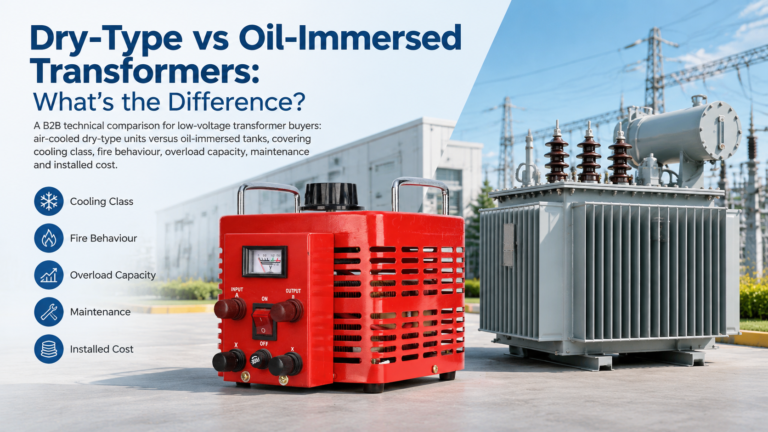
A practical dry-type vs oil-immersed transformer comparison for low-voltage buyers: cooling class, fire safety, overload, maintenance and installed cost, plus a ten-minute selection sequence.