Comprendre les transformateurs élévateurs et abaisseurs de tension dans les réseaux électriques
Publié le : Auteur : Johsuntech
Transformateur élévateur et abaisseur Ce sont des dispositifs électriques qui transfèrent de l'énergie entre des circuits sans pièces mobiles, tout en modifiant le niveau de tension selon les besoins. Ils adaptent la tension d'entrée (primaire) à une valeur différente du côté de la sortie (secondaire) afin que l'énergie puisse être transmise efficacement et utilisée en toute sécurité.
Que sont les transformateurs élévateurs et abaisseurs ?
A montée en puissance Le transformateur augmente la tension d'entrée et fournit cette tension plus élevée à la charge. Il est utilisé lorsque l'énergie à basse tension provenant des générateurs doit être transformée en haute tension pour permettre un transport efficace sur de longues distances, car le transport en haute tension réduit les pertes sur les lignes. Dans les pays où l'électricité est produite à environ 11 kV, comme c'est le cas dans de nombreuses centrales en Inde, des transformateurs élévateurs installés dans les centrales électriques augmentent ce niveau en vue du transport.
Un transformateur élévateur est donc principalement utilisé du côté du transport du réseau électrique. Il prépare l'électricité produite en vue de son acheminement sur les réseaux de transport à haute tension, afin que l'énergie puisse être acheminée sur de longues distances avec un minimum de pertes.
A réduction progressive Le transformateur fait l'inverse : il abaisse la haute tension à un niveau que les utilisateurs finaux et les appareils peuvent supporter en toute sécurité. Les circuits de distribution domestiques classiques peuvent fonctionner à environ 230 V ou 110 V, mais de nombreuses charges individuelles, telles que les appareils électroniques basse tension ou les circuits de commande, peuvent nécessiter des tensions plus proches de 16 V. Les transformateurs abaisseurs réduisent la tension d’alimentation afin de l’adapter aux besoins de chaque appareil.
Dans les habitations et les entreprises, les différents éléments du réseau électrique fonctionnent souvent à la même fréquence, mais nécessitent des tensions différentes. C'est pourquoi les plus petits Série DT/ST DT-100VA à DT-10KVA Transformateur élévateur et abaisseur sont intégrés à de nombreux appareils afin de fournir la tension exacte dont ils ont besoin. Ces transformateurs peuvent être conçus pour une alimentation monophasée ou triphasée, en fonction du réseau d'alimentation et de l'application. De manière générale, les transformateurs élévateurs et abaisseurs sont fabriqués dans diverses configurations afin de répondre aux besoins spécifiques en matière d'électricité et de sécurité de chaque installation.
A Série STU STU-100VA à STU-5000VA Transformateurs élévateurs et abaisseurs fonctionne selon le principe de l'induction électromagnétique, à l'aide de deux enroulements distincts enroulés autour d'un noyau magnétique commun. Le champ magnétique variable au sein du noyau relie ces enroulements et permet de transférer la tension et le courant d'un côté à l'autre sans contact électrique direct.
Les principaux éléments et leurs rôles
Un transformateur comporte deux bobines principales :
Enroulement primaire (A) : reçoit l'énergie électrique provenant de la source.
Enroulement secondaire (B) : fournit de l'énergie électrique à la charge.
Les deux enroulements sont placés sur un noyau de fer commun, mais les fils eux-mêmes ne se touchent jamais. Le noyau est constitué de fines lamelles de matériau magnétique doux empilées les unes sur les autres (lamelles). Cette structure laminée réduit les pertes d'énergie à l'intérieur du noyau lorsque le champ magnétique varie, ce qui contribue à éviter la surchauffe et l'endommagement du matériau du noyau.
Fonctionnement d'un transformateur
Lorsque vous connectez une alimentation en courant alternatif à l'enroulement primaire, un courant alternatif le traverse. Ce courant génère un champ magnétique variable dans le noyau de fer. Une partie de ce champ magnétique traverse l'enroulement secondaire. Comme ce champ est variable, il induit une tension dans l'enroulement secondaire par induction mutuelle.
Si une charge est raccordée au côté secondaire, cette tension induite provoque le passage d'un courant dans le circuit secondaire. De cette manière, la puissance est transférée du côté primaire vers le côté secondaire par l'intermédiaire du champ magnétique présent dans le noyau, même si les enroulements sont isolés électriquement.
Relations entre la tension et le courant
La tension aux bornes du transformateur dépend du nombre de spires de chaque enroulement. La relation fondamentale est la suivante :
Où ?
: tension appliquée à l'enroulement primaire
: tension au niveau de l'enroulement secondaire (de charge)
: nombre de spires de l'enroulement primaire
: nombre de spires de l'enroulement secondaire
: courant dans l'enroulement primaire
: courant dans l'enroulement secondaire
Si le secondaire comporte plus de spires que le primaire, le transformateur augmente la tension (transformateur élévateur). Si le secondaire comporte moins de spires, il réduit la tension (transformateur abaisseur).
Schéma d'un transformateur montrant les enroulements primaires (A), les enroulements secondaires (B) et le noyau magnétique (C)
Principe de fonctionnement d'un transformateur élévateur
Un transformateur élévateur augmente la tension à sa sortie tout en réduisant le courant, ce qui permet de maintenir la puissance pratiquement inchangée des deux côtés. Pour ce faire, il utilise un nombre de spires plus élevé dans l'enroulement secondaire que dans l'enroulement primaire.
Principe du transformateur élévateur de tension
Dans un transformateur élévateur, le nombre de spires de l'enroulement secondaire est supérieur à celui de l'enroulement primaire. On en déduit que :
Ici, et sont les tensions primaire et secondaire, et sont les spires primaires et secondaires, et et sont les courants primaire et secondaire. L'augmentation de la tension s'accompagne d'une diminution du courant, de sorte que la puissance d'entrée et la puissance de sortie restent (idéalement) égales.
Comme la puissance est conservée (en négligeant les pertes), lorsque la tension augmente, le courant doit diminuer. C'est pourquoi un transformateur élévateur réduit toujours le courant du côté secondaire par rapport au côté primaire.
Conception et caractéristiques techniques des bobines
L'épaisseur du fil d'enroulement dépend de l'intensité du courant qu'il doit supporter en toute sécurité. L'enroulement primaire d'un transformateur élévateur supporte un courant plus élevé que l'enroulement secondaire ; on utilise donc un fil de cuivre plus épais et bien isolé. L'enroulement secondaire supporte un courant plus faible à une tension plus élevée ; on utilise donc un fil de cuivre isolé plus fin.
La puissance nominale des transformateurs est généralement exprimée en puissance apparente, en kVA (kilovolt-ampères), qui correspond au produit de la tension par le courant. Cette valeur indique la charge maximale que le transformateur peut supporter sans surchauffer ni subir de dommages.
Exemple de calcul
Considérons un transformateur présentant un rapport de transformation de 1:10 (primaire : secondaire), alimenté en 10 V du côté primaire :
N1=1
N2=10
V1 = 10 V
En utilisant la formule :
La tension secondaire est donc dix fois supérieure à la tension primaire.
Avantages
Facile à entretenir.
Rendement élevé en matière de transmission de puissance.
Il est possible de le mettre en marche et de l'utiliser rapidement.
Convient à la transmission d'énergie sur de longues distances.
Inconvénients
Il faut un système de refroidissement efficace pour évacuer la chaleur.
Fonctionne uniquement avec du courant alternatif (CA), et non avec du courant continu (CC).
Souvent volumineux et lourds, surtout lorsqu'ils fonctionnent à des puissances élevées.
Principe de fonctionnement d'un transformateur abaisseur de tension
Un transformateur abaisseur réduit la tension de sortie tout en augmentant le courant de sortie, de sorte que la puissance totale des deux côtés reste (idéalement) la même. Pour ce faire, il utilise moins de spires de fil dans l'enroulement secondaire que dans l'enroulement primaire.
Principe du transformateur abaisseur de tension
Dans un transformateur abaisseur, la bobine secondaire comporte moins de spires que la bobine primaire ; par conséquent :
Ici, et sont les tensions primaire et secondaire, et sont les nombres de spires sur le primaire et le secondaire, et et sont les courants primaire et secondaire. Lorsque la tension diminue du côté secondaire, le courant augmente de sorte que la puissance (en négligeant les pertes) reste pratiquement constante.
Comme la puissance est approximativement conservée, une baisse de tension à la sortie implique une augmentation du courant. C'est pourquoi un transformateur abaisseur augmente toujours le courant du côté secondaire par rapport au côté primaire.
Conception et utilisation des bobines
Dans un transformateur abaisseur, l'enroulement secondaire transporte plus de courant que le primaire. C'est pourquoi on utilise, du côté secondaire, un fil de cuivre isolé plus épais afin de supporter ce courant plus élevé en toute sécurité, tandis que du côté primaire, on utilise un fil isolé plus fin.
Les transformateurs abaisseurs sont largement utilisés comme transformateurs basse tension, par exemple dans l'éclairage paysager et d'autres applications où la tension du réseau doit être réduite à un niveau plus sûr.
Exemple de calcul
Considérons un transformateur présentant un rapport de transformation de 100:1 (primaire : secondaire), alimenté par une tension de 10 V au niveau du primaire :
En utilisant la relation suivante :
Ainsi, la tension secondaire est 100 fois inférieure à la tension primaire.
Avantages
Grande durabilité et fiabilité de fonctionnement.
Coût inférieur à celui de nombreuses autres solutions de conversion de puissance.
Rendement élevé pour la conversion des niveaux de tension.
Peut fournir différents niveaux de tension pour de nombreuses applications courantes dans le domaine des appareils ménagers et des petits appareils.
Inconvénients
Nécessite un entretien régulier pour garantir un fonctionnement sûr et efficace.
Fonctionne uniquement avec du courant alternatif (CA), et non avec du courant continu (CC).
Si votre entreprise recherche des solutions de transformateurs élévateurs et abaisseurs, contactez-nous dès aujourd'hui pour demander un catalogue de produits ou un devis adapté à vos besoins.
Réversibilité du fonctionnement d'un transformateur
Un seul transformateur Il peut remplir à la fois les fonctions d'un transformateur élévateur et d'un transformateur abaisseur ; son rôle dépend uniquement de l'enroulement que vous utilisez comme côté entrée. Lorsque vous alimentez l'enroulement basse tension, il agit comme un transformateur élévateur, et lorsque vous alimentez l'enroulement haute tension, il se comporte comme un transformateur abaisseur.
Utilisation d'un seul transformateur dans les deux sens
Si l'alimentation est raccordée à l'enroulement basse tension, la tension de sortie apparaît sur l'enroulement haute tension ; l'appareil fonctionne alors comme un transformateur élévateur.
Si l'alimentation est raccordée au bobinage haute tension, la sortie est prélevée du côté basse tension, ce qui fait que le transformateur fonctionne alors comme un transformateur abaisseur.
La structure interne reste inchangée ; seul le choix de l'enroulement considéré comme “ primaire ” détermine si le transformateur augmente ou réduit la tension.
Applications des transformateurs élévateurs de tension
Alimentation en très haute tension (par exemple, 11 kV ou plus) pour des charges spéciales telles que les appareils à rayons X, les systèmes à micro-ondes et les installations de centrales électriques.
Augmenter la tension pour le transport à longue distance afin que l'énergie électrique puisse être distribuée efficacement via des lignes de transport à haute puissance.
Augmenter les niveaux de tension dans certains appareils électroniques qui nécessitent une tension de fonctionnement supérieure à celle fournie par l'alimentation.
Applications des transformateurs abaisseurs
Les appareils ménagers courants, tels que les lecteurs audio ou multimédia, les téléviseurs et les sonnettes, pour lesquels la tension du réseau doit être réduite à un niveau plus bas et plus sûr.
Stabilisateurs de tension et onduleurs destinés à ajuster ou à réguler la tension de sortie des appareils électroménagers.
Les réseaux de distribution d'électricité, où les hautes tensions de transport sont progressivement abaissées jusqu'à des niveaux utilisables.
Chargeurs de téléphones portables et adaptateurs similaires, qui réduisent la tension du secteur à de faibles niveaux de courant continu après un processus supplémentaire de redressement et de régulation.
Tronçons de lignes de transport et de distribution où la tension doit être réduite pour s'adapter aux besoins locaux en matière de charge.
Transformateur élévateur et abaisseur Ils jouent un rôle essentiel dans les réseaux électriques modernes en régulant de manière sûre et efficace les niveaux de tension destinés au transport et à l'utilisation quotidienne. Les transformateurs élévateurs augmentent la tension et réduisent le courant afin de minimiser les pertes d'énergie sur de longues distances, rendant ainsi le transport d'électricité à haute tension à la fois pratique et économique. À l'inverse, les transformateurs abaisseurs réduisent les hautes tensions de transport à des niveaux plus sûrs, augmentent le courant selon les besoins et fournissent la tension exacte requise par les foyers, les entreprises et les appareils individuels.
Les deux Transformateurs élévateurs et abaisseurs Ces différents types fonctionnent selon le même principe d'induction électromagnétique et se distinguent principalement par la manière dont les enroulements sont raccordés et conçus pour supporter le courant. Ensemble, ils permettent de transporter l'électricité produite dans les centrales électriques à travers de vastes réseaux, puis de l'adapter avec précision aux besoins des équipements électroniques sensibles et des appareils électroménagers courants.
FAQ
Quel est le principe scientifique fondamental qui régit le fonctionnement d'un transformateur ?
Un u003cstrongu003etransformateur élévateur et abaisseuru003c/strongu003e fonctionne selon le principe de l'induction mutuelle, selon lequel une bobine parcourue par un courant génère un champ magnétique proportionnel, et inversement.
Faut-il un type de transformateur différent pour u003cstrongu003e« les transformateurs élévateurs et abaisseurs »u003c/strongu003e ?
Le même type de transformateur peut être utilisé dans les deux cas. Le rôle d'un transformateur dépend de la manière dont il est intégré dans un circuit.
Si votre entreprise recherche des solutions de transformateurs élévateurs et abaisseurs, contactez-nous dès aujourd'hui pour demander un catalogue de produits ou un devis adapté à vos besoins.
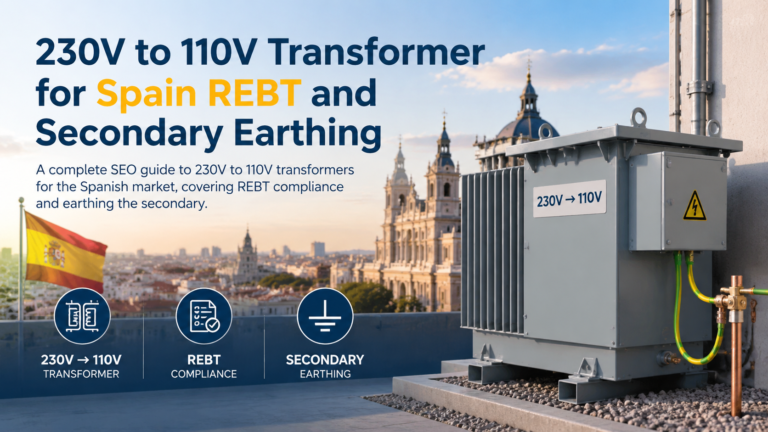
Transformateur 230 V à 110 V pour l'Espagne : conformité à la norme REBT, aux normes ITC-BT-18 et ITC-BT-24, mise à la terre du secondaire et documentation conforme à la norme UNE-EN CEI 61558.
Transformateur 230 V vers 110 V pour les Pays-Bas : norme NEN 1010, règles relatives aux disjoncteurs différentiels de 30 mA, « aardlekschakelaar » ou « aardlekautomaat » et mise à la terre secondaire.
Transformateur 230 V vers 110 V pour la France : norme NF C 15-100, mise à la terre TT, protection différentielle de 30 mA et quand mettre le secondaire à la terre.