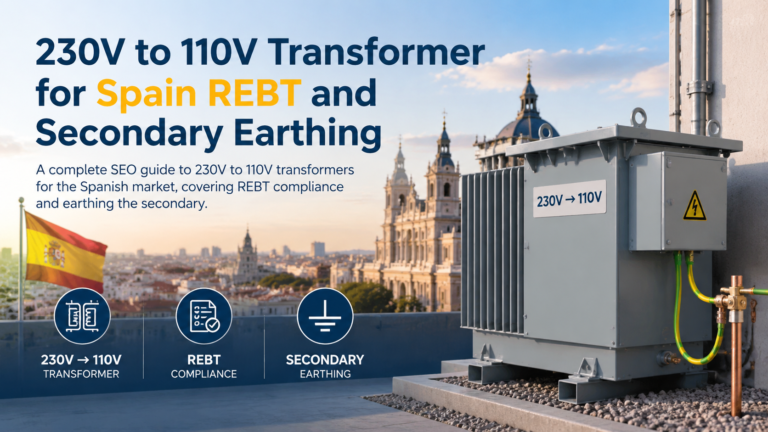







230V to 110V Transformer for Spain: REBT and Secondary Earthing
230V to 110V transformer for Spain: REBT compliance, ITC-BT-18 and ITC-BT-24, earthing the secondary and UNE-EN IEC 61558 documentation.
Read More
 English
Low voltage transformers are designed to operate at lower secondary voltages (typically ≤1 kV) and serve end‑use loads directly, while “ordinary” or general power transformers usually work at higher voltage levels in transmission or primary distribution and focus on long‑distance, high‑power transfer. For B2B buyers, this difference translates into very different design standards, installation environments, budgets, and maintenance strategies.
In most industrial and commercial standards, a low voltage transformer (LV transformer) handles primary or secondary voltages up to around 1,000 V and steps power down to service-level voltages for equipment, lighting, and control systems. Typical products in this class include dry‑type distribution transformers, control transformers in cabinets, and low voltage lighting transformers for LED or landscape systems.
From a B2B perspective, low voltage transformers are the devices your team touches most often in real projects: they sit in power distribution panels, machine control panels, telecom cabinets, and building services rooms. They bridge the gap between the upstream grid or medium‑voltage transformer and your real loads such as motors, PLCs, servers, HVAC, and lighting.
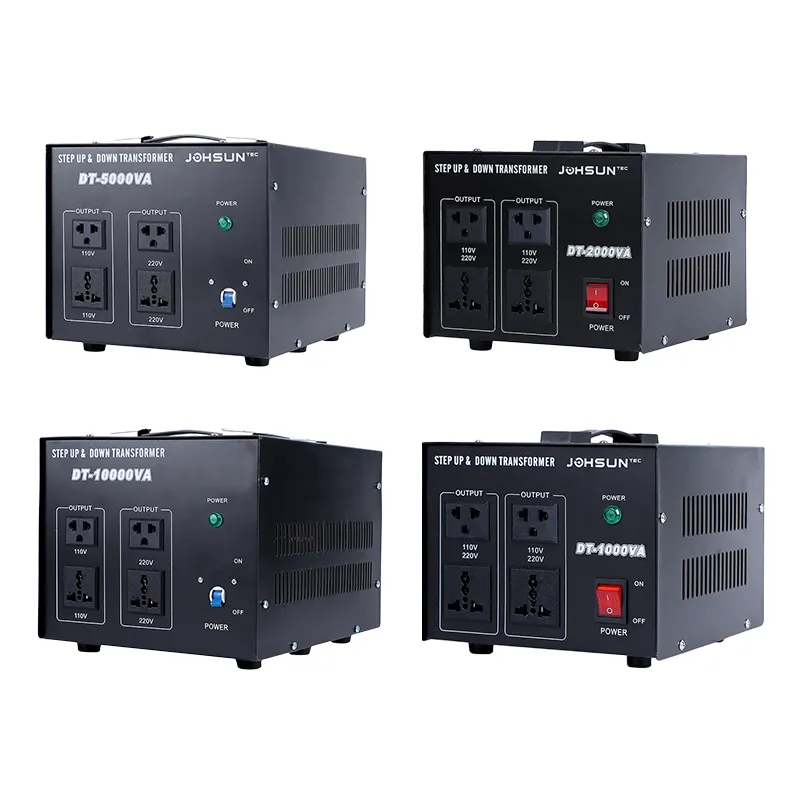
The voltage range is the first obvious difference between low voltage transformers and higher‑voltage “ordinary” power transformers. This affects insulation type, clearances, cooling methods, and even the building space you need around the equipment.
If your project is at the “last mile” of power delivery—data hall PDUs, production line cabinets, retail or office floors—you are almost always in the low voltage transformer space. If your scope includes incoming utility substations or plant‑wide primary distribution, then you are dealing with medium or high voltage transformers instead.
Because low voltage transformers operate at lower voltage levels, their internal design can be simpler than that of medium‑ or high‑voltage transformers. Lower insulation stress allows more compact windings, shorter creepage distances, and often ventilated dry‑type enclosures suitable for indoor use.
In contrast, ordinary power transformers designed for higher voltages require more complex insulation systems, larger clearances, and often oil‑filled tanks or specialized dry‑type technologies. This raises cost, footprint, and the level of engineering and testing needed.
For B2B buyers, design details translate directly into lifecycle cost, safety, and maintainability. The table below highlights the main construction differences you should care about.
These structural differences also mean different procurement and project workflows. Low voltage transformers are often catalog products with short lead times and modular options. Higher‑voltage transformers are more often engineered‑to‑order assets with longer delivery cycles and more complex approvals.
In real projects the easiest way to distinguish low voltage transformers from ordinary power transformers is to look at where they sit in the electrical one‑line diagram. Low voltage units are downstream: they take the output from a medium‑voltage or utility transformer and feed building or process loads.
Typical low voltage transformer applications for B2B customers include feeding:
Higher‑voltage “ordinary” transformers are usually placed at:
For OEMs, panel builders, EPCs, and facility owners, low voltage transformers are directly tied to equipment protection, uptime, and energy cost. These companies care less about cross‑country transmission and more about safe, efficient, and flexible delivery of low voltage power to their assets.
If your project involves panels, cabinets, and final distribution, you are firmly in the low voltage transformer decision space—exactly where well‑selected LV transformers can differentiate your solution in safety, efficiency, and total cost. When you are ready to specify, sending a load list and single‑line diagram for review is often the fastest way to get a matching LV transformer proposal and quotation.
Both low voltage and ordinary power transformers aim for high efficiency, but they do so in different operating windows and standards. At high ratings and voltages, utilities push for very high efficiency (often above 99%) because even small losses translate into large energy costs over time.
Low voltage transformers used in buildings and factories may have lower absolute efficiency figures, but standards and technologies are catching up. For example, modern low voltage distribution transformers are designed to meet or exceed energy‑efficiency regulations and can significantly reduce no‑load and load losses in B2B installations.
From a business perspective, the key is balancing purchase price against lifetime energy cost. Efficiency and losses directly influence:
If your facility runs 24/7, choosing an energy‑efficient low voltage transformer can pay back the premium quickly through reduced power losses and HVAC requirements. Many B2B buyers now include efficiency and loss data in their RFQs to ensure a fair comparison among LV transformer suppliers.
Because low voltage transformers sit closer to people, equipment, and daily operations, safety and compliance are crucial selection factors. They are typically designed to reduce shock risk, limit touch‑safe voltages, and comply with relevant installation codes and product standards.
Higher‑voltage transformers also follow strict safety standards but focus more on insulation coordination, clearances, protection against arc‑flash events, and environmental risk associated with oil‑filled units. Maintenance procedures, protective relaying, and testing requirements are therefore more complex on these ordinary power transformers.
For low voltage transformers, B2B buyers usually look for:
When you draft specifications for low voltage transformers, aligning with your local electrical code and efficiency mandates will protect your project and simplify inspections. If you would like, a tailored LV transformer spec can be created based on your country, industry, and typical load profile so your purchasing team can send RFQs immediately.
One of the biggest practical differences between low voltage transformers and ordinary power transformers is the business model around them. Low voltage transformers are often purchased in batches, integrated into cabinets, and replaced or upgraded more frequently as facilities change.
Ordinary higher‑voltage transformers are long‑term assets with decades‑long lifecycles, usually procured through capital projects and rigorous tender processes. They demand detailed engineering studies, network impact assessments, and specialized installation teams.
For low voltage transformers, B2B customers typically prioritize:
If your production schedule is tight or your project has fixed commissioning dates, working with a responsive low voltage transformer supplier can prevent costly delays. Sending your forecasted consumption or annual project volume can also help secure better pricing and stock commitments for LV transformers.
Leveraging these questions inside your internal specs or procurement checklists can make your RFQs clearer and your vendor dialogue more productive. If any of these topics match your current project, sharing a brief description of your loads and environment will make it easier to recommend the right LV transformer variant and rating.
A low voltage transformer works at voltages up to about 1,000 V and feeds end‑use loads directly, while ordinary power transformers usually operate at higher voltages for transmission or primary distribution. They differ in design, insulation, efficiency targets, and installation environment.
Use low voltage transformers whenever you need safe, efficient power distribution to equipment, lighting, control systems, or IT loads inside buildings or machinery. They are ideal for switchboards, OEM cabinets, LED systems, and control circuits.
Yes, especially for 24/7 facilities, because reduced core and load losses cut power bills and air‑conditioning costs over the lifetime of the transformer. Many regions now enforce minimum efficiency levels, making high‑efficiency LV units the default choice for new projects.
Magnetic low voltage transformers use traditional coils and operate at line frequency, while electronic low voltage transformers use electronic circuitry to raise frequency and reduce size. Magnetic units are more robust and common in commercial applications; electronic types are lighter but can be more sensitive to heat and loading.
Prepare your input and output voltages, kVA rating, load type, installation environment, and any special requirements such as enclosure type, efficiency class, or certifications. Sharing this data with your supplier helps you receive an accurate low voltage transformer proposal and pricing without delays.