






230V to 110V Transformer for Spain: REBT and Secondary Earthing
230V to 110V transformer for Spain: REBT compliance, ITC-BT-18 and ITC-BT-24, earthing the secondary and UNE-EN IEC 61558 documentation.
Read More
 English
A transformer is an electrical device that changes alternating current (AC) from one voltage level to another. A low voltage transformer specifically reduces the main power supply voltage to a lower level, typically between 12 and 15 volts.
The efficiency of this voltage conversion determines how accurately the transformer maintains the output voltage and how much energy is used during the process. Low voltage transformers are commonly found in various applications, such as outdoor landscape lighting systems and everyday household appliances.
This article covers the operating voltage range, construction, working principle, common uses, and methods to diagnose faults in low voltage transformers.
A low voltage transformer is an electrical device designed to step down higher input voltages to a lower, safer voltage level, typically below 600 volts according to ANSI standard C84.1-1989. These transformers are commonly used in household appliances like refrigerators and washing machines, where they reduce the voltage to around 12 volts to minimize the risk of electric shocks and short circuits.
Unlike high voltage transformers used in power plants and substations, low voltage transformers serve everyday applications by ensuring electrical safety and compatibility within homes and commercial settings. Examples include providing lower voltages for lighting, consumer electronics, and control systems in industrial and residential environments.
Specifically, a low voltage transformer converts an input voltage, often from standard mains voltage (e.g., 230V or 120V), down to a lower output voltage (for instance, 12V or 24V), which is safer for direct use or for powering devices that require less voltage. The classification of voltage levels by ANSI standard includes:
A low voltage transformer primarily serves to reduce the main supply voltage—typically 120 volts in the US or 230 volts in Europe—to a much lower and safer level. This step-down process significantly lowers the risk of electric shock, making electrical systems safer for use in homes and commercial buildings.
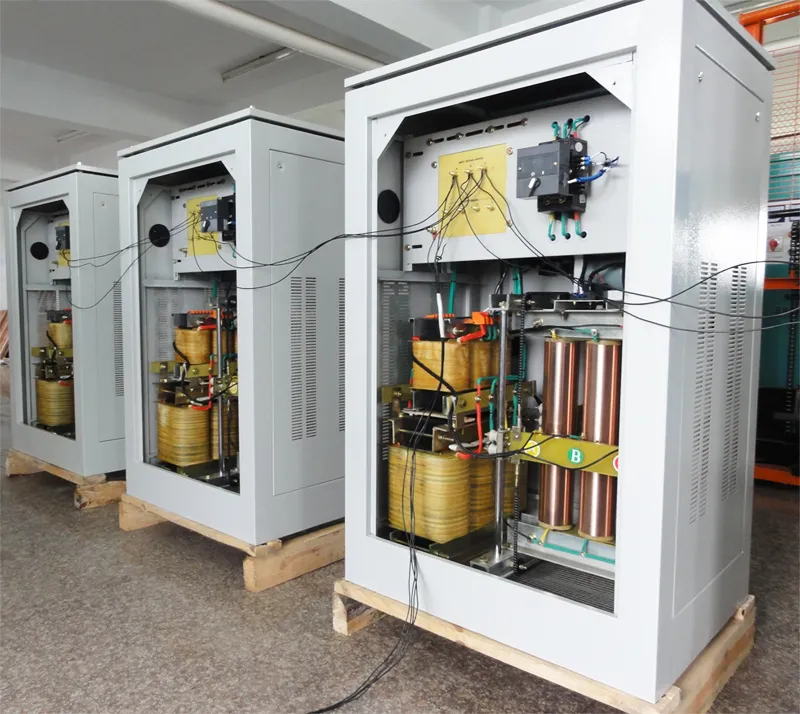
Thus, any transformer stepping down voltage to below 600V falls under the low voltage category, like a 230V to 14V transformer, which is typical for many household and light commercial uses.
Low voltage transformers improve safety, regulate voltage for sensitive equipment, and isolate circuits to prevent electric hazards. They are essential in applications such as landscape lighting, consumer electronics, industrial automation, and telecommunication systems.
The voltage output from these transformers usually ranges between 12 and 24 volts, a level that does not normally produce heat during operation. Because of this low voltage, tasks such as installing a light bulb can be done safely even while the power remains on, enhancing user safety and convenience.
In summary, a low voltage transformer converts higher voltages to lower, safer voltages through electromagnetic induction, relying on the turns ratio and a shared magnetic core to transfer energy without direct electrical contact between the input and output coils. This ensures electrical safety and efficiency in applications such as household appliances and lighting systems.
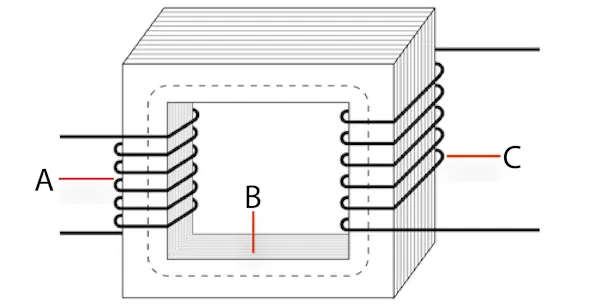
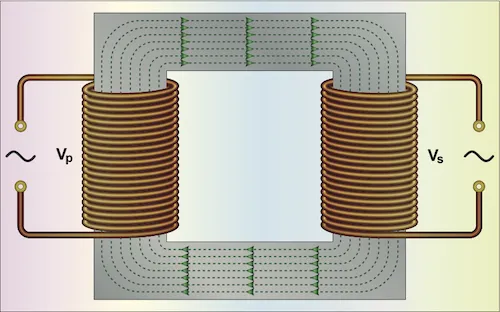
A low voltage transformer operates on the principle of electromagnetic induction. This principle means that when an alternating current (AC) flows through a conductor (the primary winding), it generates a magnetic field around it. The transformer has two coils: the primary winding that receives power, and the secondary winding that delivers power. Both are wrapped around a laminated magnetic iron core, which reduces energy loss (called core loss) by minimizing magnetic instability.
When the primary winding is connected to the AC power supply, current flows through it, creating a magnetic field. This field induces a voltage in the secondary winding by mutual induction. The voltage in the secondary coil depends on the ratio of turns in the primary coil to those in the secondary coil, expressed as V1/V2 = N1/N2, where V is voltage and N is the number of turns.
Since a low voltage transformer decreases voltage from a higher level to a much lower level, the secondary winding has fewer turns than the primary winding. For example, stepping down from 120V to 12V requires the primary coil to have ten times more turns than the secondary coil. The magnetic core made from laminated soft iron links both windings magnetically but electrically isolates them.
The voltage and frequency of the main power supply differ by country—120V/60Hz in the US and 230V/50Hz in Europe—so transformers are designed accordingly to work efficiently with these specifications.
Low voltage transformers are mainly divided into two categories: magnetic and electronic types.
These are the most common low voltage transformers. They use two coils—primary and secondary—to reduce mains voltage (typically 120V in the US or 230V in Europe) to a lower level through electromagnetic induction.
Magnetic transformers are further split into two types:
Advantages of Magnetic Transformers:
Disadvantages:
These transformers use advanced circuitry and an inverter to perform voltage reduction. The inverter increases the operating frequency from about 50-60Hz to 20kHz or more, allowing the use of a smaller core, which makes the transformer lightweight and compact.
ELVs are suitable for indoor applications where space is limited.
Advantages of Electronic Transformers:
Disadvantages:
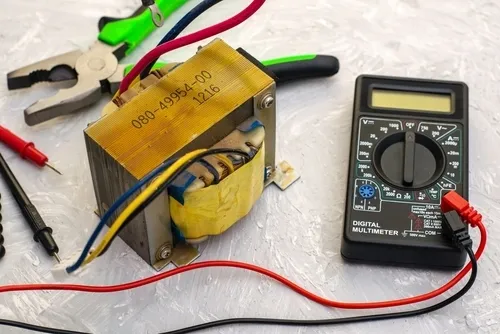
Before testing with a multimeter, visually inspect the transformer for these issues:
No-load current is the current that flows through the primary winding when the secondary winding is open (no load connected). It is important for assessing transformer health, as it should not exceed about 10-15% of the full-load current, which is the maximum current the transformer can handle when fully loaded.
Steps to measure no-load current:
Example:
A 25kVA transformer operating at 230V has a full-load current calculated as:
(25,000 VA) ÷ 230 V = 108.7A
The no-load current should be less than 15% of 108.7A, which is approximately 16.3A. If it exceeds this, the transformer may be faulty.
Testing continuity can reveal breaks in the windings. To do this:
Note: A digital multimeter will show “OL” (open line) on the screen for infinite resistance.
This method allows you to quickly check the transformer’s condition without specialized equipment, ensuring safe and reliable operation in electrical systems.
Low power transformers are widely used in several practical settings:
Whether for home or business, low voltage transformers enhance electrical safety and performance. Discover the ideal transformer that fits your requirements now!
The number of lights depends on the transformer’s maximum current capacity and the total wattage of the lights. For instance, a 300-watt transformer can power either 300 lights at 1 watt each or 6 lights at 50 watts each. To ensure safe and reliable operation, it’s best to keep the connected load below 80% of the transformer’s rated wattage. So for a 300-watt transformer, avoid exceeding 240 watts of lighting.
Magnetic low voltage transformers generally have a long lifespan, lasting around 15 to 20 years. In contrast, electronic low voltage transformers typically last about 5 to 6 years. The difference arises because magnetic transformers are built with more robust components, while electronic ones are more compact but have a shorter service life.