Best Step Up Step Down Transformer for 110V–220V Conversion and Export Projects
Published: Author: Lisa
When you choose the wrong step up or step down transformer, you risk overheating, nuisance tripping, product returns, and serious safety issues in the field.
For manufacturers, distributors, and engineering companies dealing with 110V and 220–240V markets, selecting the best step up step down transformer is not just a technical detail—it directly affects warranty costs, customer satisfaction, and project profitability.
This guide walks you through how step up and step down transformers work, how to size them correctly, when to use autotransformers or isolation types, and how to evaluate a reliable manufacturer in China for bulk orders, OEM, and ODM projects.
What Is a Step Up and Step Down Transformer?
A step-up transformer increases the voltage from the primary side to the secondary side, while a step-down transformer does the opposite and reduces the voltage to a lower level. In a typical 110V–220V scenario, a step-up transformer will convert 110V to 220V, and a step-down transformer will convert 220–240V to 110–120V so that imported equipment can run safely.
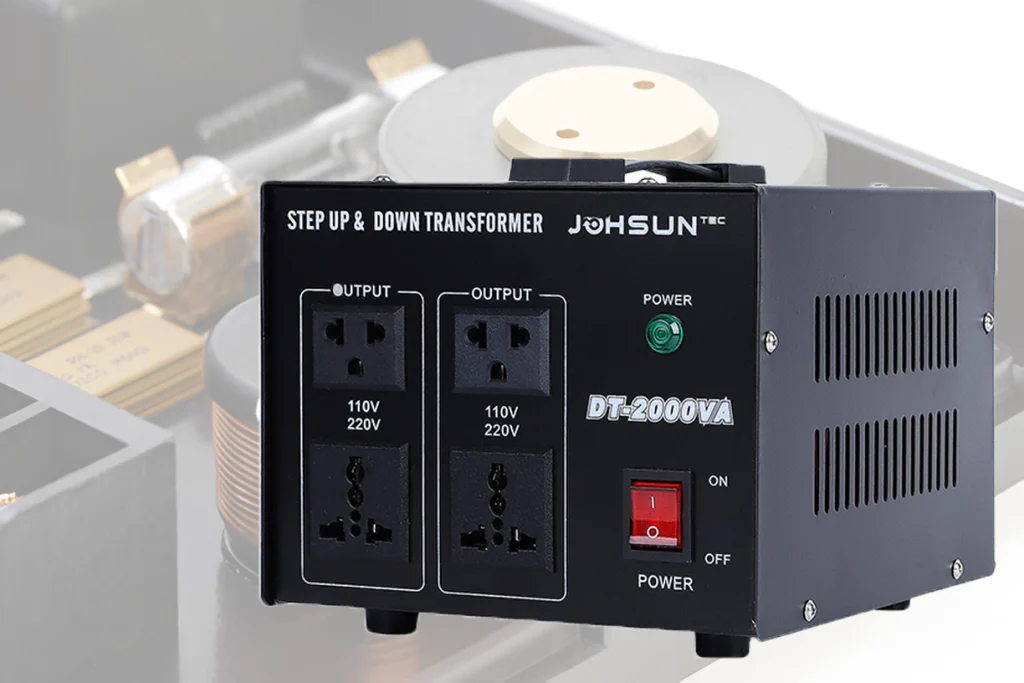
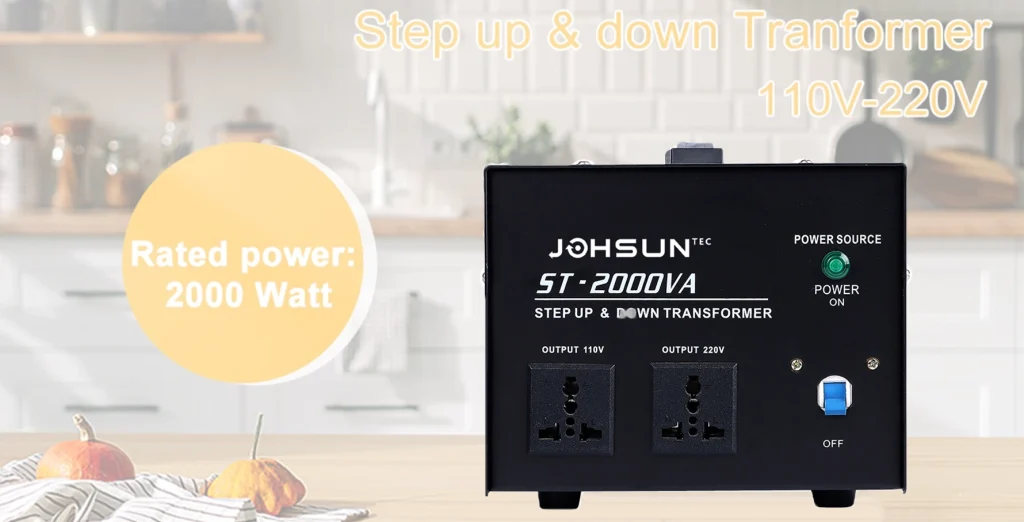
A “step up and step down transformer” combines both directions in one unit, allowing you to handle either 110V or 220–240V input and provide the opposite output depending on how you connect it. For global trade and OEM projects, this is highly practical: one model can serve multiple markets and voltage standards with minimal configuration changes.
From an electrical point of view, the transformer adjusts voltage according to the turns ratio between the primary and secondary windings. The primary coil is connected to the incoming mains voltage, and the secondary coil delivers the required output voltage to your load.
Step-Up vs Step-Down at a Glance
Type
Typical Input → Output
Typical Use Case
Step-up
110V → 220–240V
Running 220V equipment in 110V countries
Step-down
220–240V → 110–120V
Running 110V equipment in 220V–240V countries
When you see queries like “difference between step up and step down transformer class 10,” the concept is the same: both rely on the turns ratio, but one increases voltage and the other decreases it. The “class 10” wording usually comes from educational or exam contexts and focuses on basic working principles rather than practical sizing and sourcing.
Types of Step Up and Step Down Transformers for B2B Buyers
In real projects, you do not just pick “a transformer”—you choose among different structures, mounting styles, and protection levels. For B2B buyers such as manufacturers, distributors, and engineering companies, understanding these types helps you match the right product to your application and budget.
Auto Transformer vs Isolation Type
An autotransformer uses a single winding with taps to provide different voltage levels. Because part of the winding is common to both input and output, it is more compact, more efficient, and typically more cost-effective than a full isolation transformer.
By contrast, an isolation transformer has separate primary and secondary windings with no direct electrical connection, providing galvanic isolation. This improves safety, reduces electrical noise transfer, and is often preferred where standards or project specifications explicitly require isolation.
Here is a practical comparison you can use during supplier discussions:
In many B2B scenarios, autotransformers are suitable where the voltage ratio is moderate and isolation is not mandatory. However, for medical, test, or safety-critical equipment, an isolation type may be required by design standards or end-customer specifications.
Portable vs Panel-Mounted Solutions
For OEMs and exporters of small appliances or office equipment, compact portable units are common. These units are easy for end-users to plug in and are ideal for small power ranges such as 100VA to 3kVA.
Panel-mounted or cabinet-type transformers are more suitable for control panels, machinery, and fixed industrial installations. They typically feature terminals instead of sockets, easier integration into distribution boards, and better compatibility with professional installation practices.
Johsun Tec’s ST and STU series cover a range of portable and compact step up and step down transformers that are practical for home, office, and light industrial loads, from STU-100VA up to STU-3kVA and STU-5kVA. These models allow distributors and wholesalers to offer a clear product line to retailers and end-users in different voltage regions.
For a broader capacity range, including more demanding applications and export projects, a DT/ST series covering 100VA to 10kVA gives manufacturers and panel builders more flexibility in matching load requirements.
How to Size the Best Step Up Step Down Transformer (kVA and Voltage)
The most common mistake in transformer selection is focusing only on voltage and ignoring capacity. If the kVA rating is too low, the transformer will overheat, trip protection devices, or fail prematurely, especially with motor or inductive loads.
Step 1: Define Input and Output Voltage
Start by confirming the mains voltage and the equipment’s rated voltage. A few typical combinations are:
220–240V mains → 110–120V equipment (step-down)
110–120V mains → 220–240V equipment (step-up)
230V mains → 110V or 220V equipment (depending on the design)
For global exporters, this often means one device must be usable in both 110V and 220–240V markets, making a step up and step down transformer a very practical option.
Step 2: Convert Load Power to kVA
Transformers are rated in kVA, while many devices specify power in watts (W). A simple estimation is:
For most resistive and mixed loads, you can treat 1kW ≈ 1kVA as a starting point.
For motor or inductive loads, consider a higher margin because of inrush and power factor.
For example, if a piece of equipment is rated at 600W and has a moderate inrush current, a 1kVA transformer might work in theory, but a 1.5kVA or 2kVA unit is safer in practice. This extra margin protects you from nuisance issues when a customer connects more devices than originally planned.
Step 3: Choose a Safety Margin
A common rule of thumb for electronic or mixed loads is to multiply the total load by 1.5 to 2. For heavier motor loads or high inrush devices, a higher factor may be needed depending on starting characteristics.
So if your total connected load is 800W, you might select a 1.5kVA or 2kVA transformer rather than a 1kVA unit. This approach reduces overheating and extends the service life of both the transformer and the connected equipment.
Practical Example with Johsun Tec Series
Assume your customer wants to run a 700W device designed for 110V in a 220–240V country. You would:
Confirm you need a 220V to 110V step down configuration.
Apply a safety factor of 1.5–2 on 700W → about 1–1.5kVA.
Select a step up and step down transformer from a series such as Johsun Tec’s DT/ST line that covers 100VA to 10kVA, and choose a rating around 1.5kVA or 2kVA for reliable operation.
For a full overview of capacity options and technical data, you can refer to Johsun Tec’s DT/ST Series (DT-100VA to DT-10kVA).
Application Scenarios for Step Up and Step Down Transformers in Global Trade
B2B buyers rarely purchase transformers in isolation—they select them as part of a solution for real-world projects. Below are typical scenarios where a step up and step down transformer becomes essential.
Exporting Household and Small Appliances
Manufacturers that export 220–240V appliances from China or other regions to 110V markets (such as North America or Japan) need reliable step-down solutions. Distributors and trading companies often want one standard transformer model they can bulk purchase and bundle with different devices.
For this segment, compact portable models in the 100VA to 3kVA or 5kVA range are very common. Johsun Tec’s STU Series (STU-100VA to STU-3kVA and STU-100VA to STU-5kVA) are good examples of how a single series can cover a wide range of small appliances and office devices.
Lab and Test Equipment for Multiple Voltage Regions
Laboratory and test equipment manufacturers frequently sell to customers in Europe, North America, and Asia. These OEMs often need a transformer that can handle both 110V and 220–240V inputs and outputs so the same product design can be deployed globally.
In such cases, a step up and step down transformer with multiple sockets or tap settings is helpful. Typical capacity requirements might range from 500VA up to several kVA, depending on the test bench size and number of instruments.
Factory Integration of Imported Machines
When a factory imports machinery from another voltage region, the machine’s nameplate voltage may not match the local grid. Using a correctly sized step-up or step-down transformer allows facilities to run foreign equipment without changing the internal wiring of the machine.
In countries or regions with unstable supply voltage or frequent sags and surges, combining a transformer with a voltage stabilizer is often the best strategy. For example, a factory might use a step up and step down transformer for voltage matching and a TND series voltage stabilizer (3kVA to 10kVA) to smooth out fluctuations for sensitive loads.
Scenario–Type–Capacity Overview
Scenario
Typical Voltage Need
Typical Capacity Range
Recommended Approach
Small appliances export
220–240V ↔ 110–120V
100VA–3kVA/5kVA
Portable STU/ST series
Lab / test benches
Multi-country voltage use
500VA–5kVA
Step up & down DT/ST or STU series
Imported machinery in factories
Local grid ≠ machine spec
1kVA–10kVA+
Panel-type DT/ST series
Unstable grid with sensitive equipment
Voltage match + stability
1kVA–10kVA+
Transformer + TND voltage stabilizer combo
Autotransformer vs Isolation Type: Which Is Better for Your Project?
The question “auto transformer step up and step down or isolation transformer?” comes up frequently in project design and RFQs. Your choice depends on safety requirements, voltage ratio, and budget.
Key Differences That Affect B2B Projects
Autotransformers share part of the winding between input and output, which makes them smaller and more efficient for the same kVA rating. They are often used where the voltage difference is moderate and where electrical isolation is not strictly required.
Isolation transformers use separate primary and secondary windings, creating a galvanic barrier between the mains and the load. This improves safety, reduces noise transfer, and is often required by standards in certain industries or for certain equipment categories.
Here is a decision-oriented comparison:
Factor
Autotransformer
Isolation Transformer
Safety isolation
No
Yes
Cost
Lower
Higher
Size
More compact
Bulkier
Efficiency
Higher
Slightly lower
Use when
Cost/space sensitive, isolation not required
Safety/standard compliance is critical
If you are a panel builder or OEM designing equipment for multiple markets, clarify early whether your customer or their local code requires isolation. If isolation is mandatory, a non-isolated solution could fail inspections or create liability for both the manufacturer and the distributor.
Johsun Tec can support both approaches and provide guidance on whether an autotransformer or isolation type is more appropriate for a given voltage and kVA range.
Common Mistakes When Sourcing Step Up and Step Down Transformers from China
Even experienced buyers can run into issues when sourcing transformers across borders. Below are frequent mistakes that lead to complaints, returns, or safety incidents.
Mistake 1: Only Comparing Price, Ignoring kVA Margin
Selecting the smallest kVA to win on price may look attractive in a quotation sheet, but it often leads to overheating and early failures. For resellers and distributors, this quickly becomes a warranty and reputation issue.
Mistake 2: Treating All Loads as the Same
Many buyers do not differentiate between resistive and inductive loads when choosing transformer capacity. In reality, motors, compressors, and some power supplies draw much higher inrush currents and need a larger transformer than the nameplate power suggests.
Mistake 3: Confusing Autotransformers with Isolation Transformers
Using an autotransformer where an isolation transformer is required can create serious safety problems. This is especially critical in environments with sensitive electronics, medical equipment, or strict regulatory frameworks.
Mistake 4: Ignoring Voltage Fluctuations
In regions with unstable grids, specifying only a transformer without any voltage stabilizer can leave the equipment exposed to under-voltage or over-voltage for long periods. This affects equipment life, increases the chance of failure, and can cause nuisance tripping.
A simple way to keep these risks under control is to use a checklist approach:
Mistake
Possible Consequence
How to Avoid
Too small kVA
Overheating, failure, complaints
Add 1.5–2× margin, consider inrush current
Ignoring load type
Tripping on startup, poor performance
Classify loads as resistive / inductive / motor
Wrong transformer structure
Safety risks, non-compliance
Confirm if isolation is required in specification
No stabilizer in unstable grids
Shorter equipment life, more failures
Use transformer + stabilizer (e.g., TND series)
When working with a manufacturer, share as much information as possible about your load type, environment, and end market so they can recommend the right configuration.
How to Evaluate the Best Step Up Step Down Transformer Supplier in China
Finding “China’s best supplier of step-up and step-down transformers” is not about a single company name—it is about choosing a manufacturer that fits your technical, commercial, and branding needs. Here are practical criteria you can use when comparing factories, exporters, and wholesalers.
1. Real Manufacturer, Not Just a Trading Company
For long-term OEM and ODM cooperation, you should work directly with a factory or a manufacturer with its own production and testing capabilities. This gives you more control over quality, customization, and lead times.
Check whether the supplier can show factory photos, production lines, and testing equipment, and whether they can handle bulk purchase programs and stable yearly volumes.
2. Product Range and Technical Depth
A strong supplier should offer a complete range of step up and step down transformers from small portable units to higher kVA models for industrial use. They should also provide related solutions such as auto transformers, isolation transformers, and, when needed, voltage stabilizers for markets with poor grid quality.
This is important for distributors and wholesalers who want to consolidate sourcing with one company instead of managing multiple factories.
3. OEM, ODM, and Private Label Capability
For many B2B companies, branding and packaging are just as important as technical performance. Ask whether the manufacturer can support:
Custom voltage and frequency combinations
Different sockets and plugs for various regions
Private label / white label branding on the product and packaging
Custom housings and color schemes
Johsun Tec, for example, focuses on B2B exports and supports OEM, ODM, and private label projects with step up and step down transformers, voltage stabilizers, and related power products.
4. Quality Control, Testing, and Certifications
Reliable transformer suppliers should have documented testing procedures, including load tests, temperature rise tests, and insulation tests. If your target market requires CE marking or other standards, ensure that the manufacturer understands and meets those requirements.
For larger distributors and engineering companies, it is worth asking for sample reports or qualification data, not just marketing statements.
5. Pricing, Lead Time, and Communication
Price remains important for any importer, wholesaler, or distributor, but focusing solely on unit cost can be misleading. Evaluate total value: stable quality, on-time delivery, flexible MOQs, and responsive technical support can easily outweigh a small price difference.
If you need a supplier that can scale with your business, check their production capacity and typical lead times for bulk orders. Clear and fast communication on technical questions is also a strong indicator of a reliable partner.
Johsun Tec positions itself as a China-based manufacturer and exporter of step-up and step-down transformers, auto transformers, voltage stabilizers, UPS systems, inverters, and battery chargers. With in-house R&D and OEM/ODM capability, the company supports bulk purchase, custom voltages, and private label branding for distributors and project companies worldwide.
You can explore Johsun Tec’s step up and step down transformer product range, including the DT/ST Series (DT-100VA to DT-10kVA), ST/ STU Series, and related TND stabilizers directly on their product pages to align with your project requirements.
Choosing the best step up step down transformer is ultimately about matching voltage, kVA capacity, load type, and safety requirements to your real application. By understanding how transformers work, applying a sensible capacity margin, and selecting between autotransformer and isolation types, you can avoid typical pitfalls like overheating, non-compliance, and premature failures.
For manufacturers, distributors, and engineering companies sourcing from China, working with a capable factory that understands bulk purchasing, OEM/ODM, and private label is just as important as the technical specification itself. If you share details such as input and output voltage, total load in kW or kVA, load type, and target market, a supplier like Johsun Tec can propose a suitable step up and step down transformer configuration—often including options from the DT/ST and STU series—and provide a detailed quotation for your project.
FAQ
What is the best step up step down transformer for 220V to 110V appliances?
The “best” transformer for 220V to 110V appliances is one that matches the appliance power, provides enough kVA margin, and is built by a reliable manufacturer with proper testing and certification.u003cbru003eFor small household or office devices, a portable unit in the ST or STU series with 1.5–2 times the total load power is usually a safe choice.
How do I calculate the right kVA size for a step up and step down transformer?
Start by summing the rated power of all connected devices in watts, then convert to kVA by dividing by 1000 and applying a safety factor of 1.5–2.u003cbru003eFor inductive or motor loads, consider a higher factor to account for inrush current and continuous duty.
What is the difference between a step up and step down transformer in Class 10 level terms?
At a basic level, a step-up transformer increases voltage from primary to secondary, while a step-down transformer decreases it.u003cbru003eBoth rely on the ratio of turns between the windings, but one is used when the equipment needs a higher voltage and the other when it needs a lower voltage than the mains supply.
When should I use an autotransformer instead of an isolation step up and step down transformer?
Use an autotransformer when isolation is not required, the voltage ratio is modest, and you want a more compact, cost-effective solution.u003cbru003eUse an isolation transformer when safety standards, sensitive equipment, or project specifications call for galvanic isolation between the mains and the load.
How can I choose a reliable step up and step down transformer manufacturer in China for bulk orders?
Look for a real factory with a complete product range, documented testing, and experience with exporters, distributors, and OEM/ODM projects.u003cbru003eCheck their ability to support custom voltages, plugs, private label, and consistent quality over repeated orders, not just their unit price.
Can I use one step up and step down transformer for multiple devices with different power ratings?
Yes, as long as the total power of all connected devices stays below the transformer’s kVA rating with a comfortable safety margin.u003cbru003eHowever, mixing very different load types on one transformer can complicate sizing, so it is often better to group similar loads or keep critical devices on dedicated units.
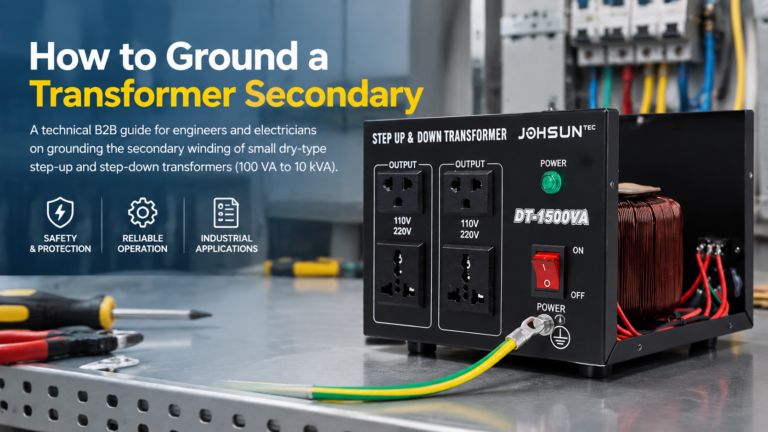
A practical guide to grounding the secondary of small dry-type step-up and step-down transformers — which conductor to bond, how to verify it, and mistakes to avoid.
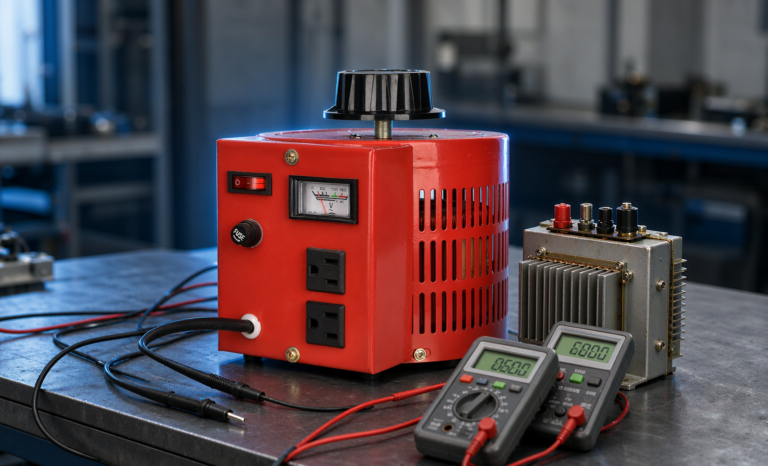
A practical guide to transformer turns ratio testing on low voltage units - the applied-voltage method with a variac, tolerance limits, tap checks, and when to call for a ratio tester.
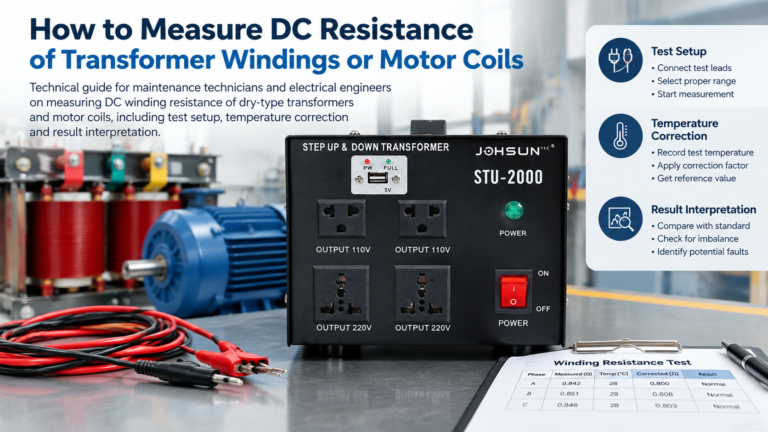
A practical guide to measuring the DC resistance of transformer windings and motor coils, covering four-wire setup, test current selection, temperature correction and pass/fail limits.