Choosing a Voltage Converter Step Up and Step Down Transformer
Published: Author: Lisa
When equipment is sourced across markets with different mains standards, voltage compatibility becomes a practical purchasing issue—not a minor accessory decision. A 220V machine connected directly to a 110V supply may fail to start or operate below specification. A 110V device connected to a 220V supply can be damaged immediately.
A Voltage Converter Step Up and Step Down Transformer addresses this mismatch by converting AC voltage between 110V/120V and 220V/230V/240V. However, selecting the right unit requires more than matching a number on a product label. Buyers need to confirm voltage direction, load type, continuous power, startup current, frequency, plug configuration, and destination-market requirements before placing an order.
This guide explains how to select a step up & step down transformer for B2B sourcing, wholesale distribution, OEM projects, and export applications.
What Does a Step Up and Step Down Transformer Do?
A step up and step down transformer changes the voltage level supplied to an AC load.
A step-up configuration increases voltage. For example, a Voltage Converter 110v to 220v allows equipment designed for 220V operation to be used where the available supply is 110V or 120V.
A step-down configuration decreases voltage. For example, it allows a 110V appliance, control device, or commercial machine to operate from a 220V, 230V, or 240V supply.
Selection Question
Step-Up Transformer
Step-Down Transformer
Available input supply
110V / 120V
220V / 230V / 240V
Required output
220V / 230V / 240V
110V / 120V
Typical use case
Operating 220V equipment in a 110V market
Operating 110V equipment in a 220V market
Main confirmation point
Equipment input-voltage label
Equipment input-voltage label
The key point is simple: select the conversion direction based on the local supply voltage and the rated input voltage printed on the equipment nameplate. Do not choose based only on the country where the equipment was purchased.
A transformer changes voltage, but it does not convert AC frequency. A 50Hz input remains 50Hz, and a 60Hz input remains 60Hz. Equipment with frequency-sensitive motors, clocks, pumps, compressors, or timing circuits should therefore be checked for 50Hz/60Hz compatibility before installation.
Voltage Converter vs. Voltage Stabilizer: Which One Is Needed?
Voltage conversion and voltage stabilization solve different problems.
A transformer is required when the local nominal voltage is wrong for the connected equipment. For example, a 220V-rated device cannot be supplied directly from a 110V outlet, even if the voltage supply is stable.
A voltage stabilizer is needed when the nominal voltage is correct but fluctuates beyond the equipment’s acceptable range. For example, a 220V machine may need stabilization if local mains voltage repeatedly falls or rises enough to affect performance.
Factor
Step Up & Step Down Transformer
Voltage Stabilizer
Main function
Changes voltage level
Controls voltage fluctuation
Typical problem
110V equipment used on 220V mains
220V supply varies too much
Output result
Converts to another nominal voltage
Maintains voltage within a controlled range
Frequency conversion
No
No
Purchase priority
Cross-voltage use
Unstable power conditions
Some projects require both functions. An importer may need to convert a 220V supply to 110V for an imported machine, while also protecting that machine from unstable mains voltage.
Where the equipment already matches the local voltage but the incoming supply fluctuates, a stabilizer may be more appropriate than a conversion transformer. Buyers evaluating this situation can review the SVC-TND Series 3KVA–10KVA voltage stabilizer as a reference for single-phase voltage regulation.
How to Size a Step Up and Down Transformer Correctly
Transformer sizing is where many purchasing mistakes occur. A unit that is too small may overheat, trip protection, produce an unstable output under load, or fail to start motor-driven equipment.
Start with the Equipment Nameplate
Before contacting a manufacturer, supplier, or exporter, collect these figures:
Rated input voltage
Rated power in watts or VA
Rated current
Frequency requirement
Load type
Starting current, where applicable
Continuous operating hours
Plug, socket, or terminal connection requirement
Do not estimate load size from product appearance. A compact appliance with a heating element can consume more power than a larger electronic device. A motor-driven product can require several times its running current during startup.
Understand VA, W, and kVA
Watts measure actual power consumption. VA measures apparent power. kVA means 1,000 VA.
For resistive loads such as heaters, hot plates, and some heating equipment, wattage and VA may be relatively close. For electronic loads, motors, compressors, fans, and pumps, the relationship can differ because of power factor and startup demand.
That is why a 3000VA 2550W step up & step down transformer 220V to 110V should not be selected by assuming that the remaining nominal capacity is always sufficient. The buyer should verify whether the connected equipment has a high inrush current or a low power factor.
Load Type
Examples
Main Sizing Consideration
Common Risk
Resistive load
Heater, warming equipment
Rated watts plus margin
Running too close to full capacity
Electronic load
Printer, computer, audio equipment
VA rating and peak demand
Ignoring power factor
Motor load
Pump, fan, compressor
Startup current and running current
Transformer cannot start the motor
Mixed commercial load
Equipment bundle or workstation
Total load and simultaneous-use factor
Adding all rated watts without usage analysis
Allow Margin for Continuous and Startup Loads
For a continuous load, avoid selecting a transformer that runs at its maximum rating for long periods. A reasonable capacity margin improves thermal performance and reduces stress on winding insulation.
For motor-driven equipment, the margin should be larger. A compressor, pump, fan, or refrigeration appliance may have a startup surge that is substantially higher than its normal running power.
This is particularly important for searches such as step up and down transformer 5000w or step up step down transformer 10000 watts. A 5000W or 10000W rating may look sufficient on paper, but the final selection depends on whether the connected load is resistive, electronic, motor-driven, or mixed.
Match the Product Range to the Load Profile
For compact equipment and low-to-medium power requirements, buyers can review the DT/ST Series 100VA–1500VA voltage converter when the application requires a smaller conversion range.
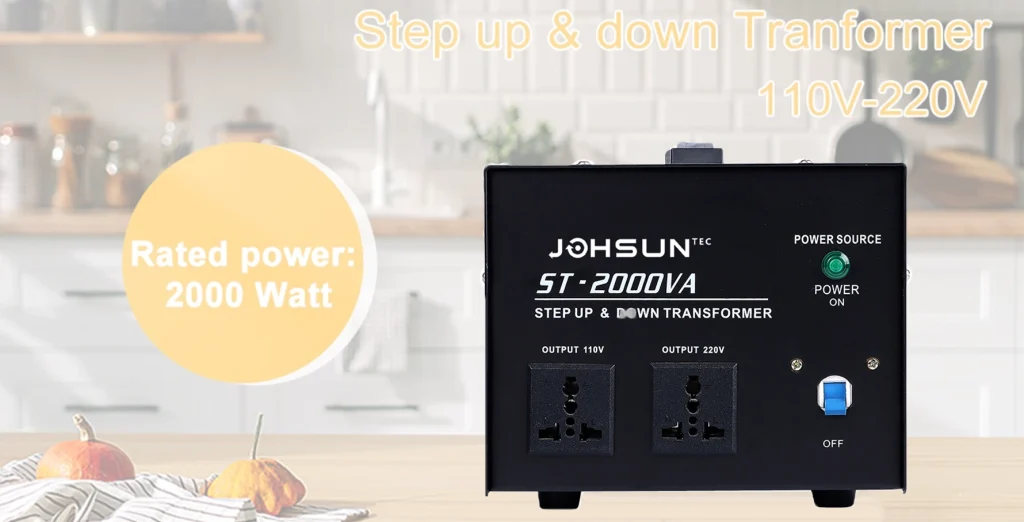
For projects requiring up to 3000VA, the STU Series 100VA–3000VA transformer provides a useful reference point for commercial equipment, testing stations, and distributor product programs.
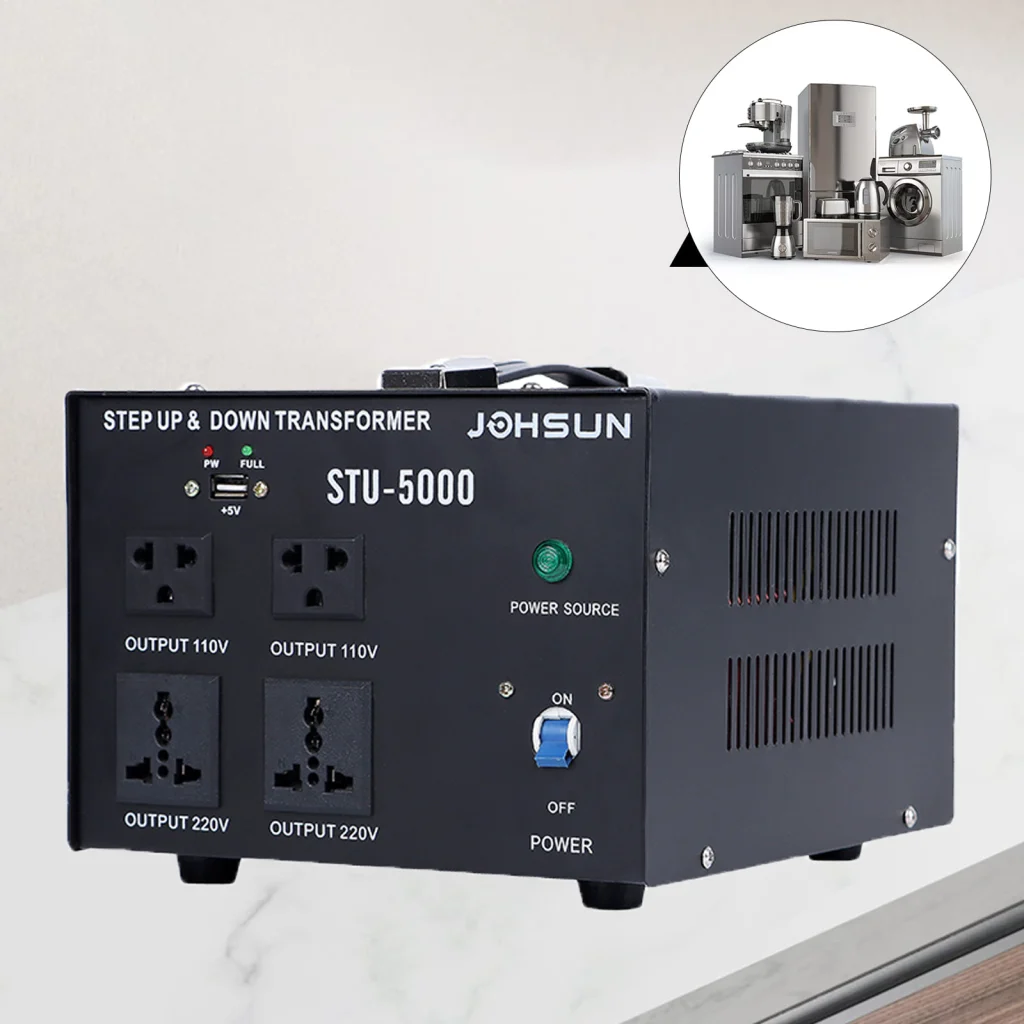
For buyers comparing a step up step down transformer 5000 watts configuration, the STU Series 100VA–5000VA range may be more relevant, provided that startup demand and continuous load are checked before quotation.
For larger capacity requirements, including 5000W and 10000W sourcing projects, review the DT/ST Series 100VA–10KVA step-up and step-down transformer and confirm the exact voltage direction, outlet configuration, protection method, and load conditions.
Technical Details to Confirm Before Ordering
The following checklist helps procurement teams, distributors, and OEM buyers submit a clearer RFQ.
Information Required
Why It Matters
Local input voltage
Determines whether step-up or step-down conversion is required
Equipment rated voltage
Confirms required output voltage
Rated power in W or VA
Determines transformer capacity
Load type
Identifies startup-current risk
Frequency requirement
Confirms 50Hz/60Hz compatibility
Plug and socket standard
Supports destination-market use
Required quantity
Supports wholesale and packaging planning
Branding requirement
Supports OEM, ODM, private-label, or white-label projects
Also confirm whether the product will be portable, desktop-mounted, rack-installed, or integrated into a control cabinet. This affects enclosure design, cable routing, protection requirements, ventilation, and user-accessible sockets.
For export projects, plug type, outlet type, warning labels, language on manuals, carton markings, and destination-market electrical standards should be included in the inquiry. These details are often more important than a small difference in unit price.
Common Applications for Step Up & Down Transformers
A step up & down transformer is commonly specified in practical cross-voltage scenarios such as:
Importing 110V equipment into countries with 220V, 230V, or 240V mains power.
Exporting 220V equipment to 110V or 120V markets.
Factory test benches used to simulate destination-market voltage before shipment.
Distributor programs that bundle converters with imported appliances or equipment.
Commercial facilities operating printers, food-service devices, audio products, control systems, or specialized office equipment from another voltage region.
OEM projects requiring custom voltage taps, socket configurations, branding, packaging, and manuals.
Maintenance departments supporting legacy equipment imported from another electrical market.
Each application should be reviewed separately. A small office printer, a heating appliance, and a compressor-based machine may all require voltage conversion, but they do not have the same capacity or startup-current profile.
Common Selection Mistakes
Choosing by Watts Only
A transformer may be rated in VA, while the connected load is marked in watts. Treating the two figures as identical can create sizing errors, especially with electronic or motor-based loads.
Ignoring Startup Current
A running load may appear modest, but startup current can exceed transformer capacity. This often causes protection trips, output sag, or failure to start.
Assuming Voltage Conversion Changes Frequency
A standard transformer does not change 50Hz to 60Hz or 60Hz to 50Hz. Frequency-sensitive equipment must be evaluated separately.
Using a Plug Adapter Instead of a Transformer
A plug adapter only changes the mechanical plug interface. It does not reduce or increase voltage. Using a plug adapter in place of a voltage converter can damage equipment.
Buying a Transformer When the Actual Problem Is Voltage Fluctuation
If the equipment is already designed for the local nominal voltage, but supply quality is poor, a stabilizer may be the correct solution rather than a step up & down transformer.
How to Evaluate a Voltage Converter Supplier
For B2B sourcing, selecting a Voltage Converter Supplier involves more than comparing a catalog price.
A suitable manufacturer or factory should be able to clarify capacity range, voltage direction, socket configuration, protection options, packaging, and customization limits. A distributor, wholesaler, or importer should also ask whether the supplier can support bulk purchase quantities, private-label branding, white-label packaging, OEM requirements, or ODM development.
Johsun Tec is a leading manufacturer committed to providing high-quality power products that meet the ever-changing needs of various industries, offering comprehensive solutions including voltage regulators, transformers, UPS systems, inverters, and battery chargers.
When comparing China suppliers or exporters, make sure every quotation covers the same technical scope:
Same input and output voltage
Same rated capacity
Same socket and plug configuration
Same protection method
Same enclosure and packaging requirement
Same branding and labeling requirement
Same order quantity and delivery terms
A lower price is not meaningful if one supplier quotes a basic configuration while another includes fuse or MCB protection, custom outlets, export cartons, labeling, or product testing.
For an OEM or private-label project, provide your target market, expected annual quantity, preferred brand presentation, required voltage range, load category, plug standard, and packaging requirements at the beginning of the discussion. This gives the supplier enough information to recommend a technically appropriate solution instead of quoting a generic model.
Final Selection Checklist
Before purchasing a Voltage Converter Step Up and Step Down Transformer, confirm the following:
What is the local power supply voltage?
What voltage does the equipment require?
Is step-up or step-down conversion needed?
What are the equipment’s rated watts, VA, and current?
Is the load resistive, electronic, motor-driven, or mixed?
What startup current or surge demand must be considered?
Is the equipment compatible with the local 50Hz or 60Hz frequency?
What plug, socket, protection, and installation configuration is needed?
For wholesale or OEM procurement, what branding, packaging, quantity, and export-market requirements apply?
The correct transformer is not automatically the largest available model. It is the model that matches the voltage direction, actual load profile, startup demand, operating duration, and market-specific configuration.
Johsun for wholesale, OEM, or export projects, share your voltage direction, required capacity, load type, destination market, and branding requirements to confirm the most suitable transformer configuration before bulk purchase. Contact us now.
FAQ
What is a voltage converter step up and step down transformer?
It is an AC transformer designed to convert voltage between 110V/120V and 220V/230V/240V. It can be used in step-up mode or step-down mode depending on the local supply and the equipment’s rated input voltage.
Can I use a 220V appliance on a 110V supply?
Yes, but you normally need a step-up transformer that converts 110V or 120V to the voltage required by the appliance. Confirm the appliance power rating, startup current, plug format, and frequency compatibility before use.
Is a 3000VA transformer the same as a 3000W transformer?
Not necessarily. VA is apparent power, while watts represent real power. The difference becomes important for loads with a power factor below 1 or equipment with substantial startup current.
What size transformer do I need for a 5000W load?
The answer depends on the load type. A resistive load may need a practical margin above 5000W, while a motor, compressor, pump, or mixed load may require a significantly larger capacity to handle startup current.
Does a step up and step down transformer change 50Hz to 60Hz?
No. A standard transformer changes voltage but does not convert frequency. Verify that the connected equipment is suitable for the local 50Hz or 60Hz supply.
Where can I get a step up and step down transformer PDF for procurement review?
A product catalog or technical PDF should include voltage configurations, capacity options, dimensions, protection features, socket choices, and customization details. For distributor or OEM sourcing, request the latest document together with the intended voltage direction and load specification.
How a buck-boost transformer works: series-winding polarity, differential kVA sizing with single-phase and three-phase examples, and the five limits that decide when it is the wrong tool.
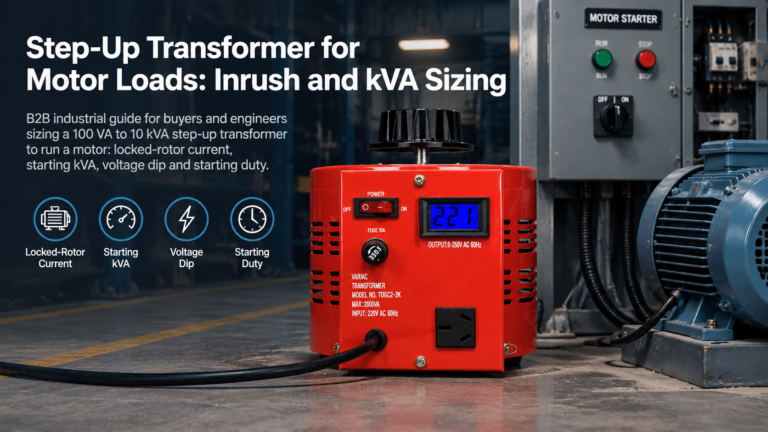
How to size a step-up transformer for a motor: locked-rotor current, kVA code letters, starting kVA by method, voltage-dip and thermal-duty checks, plus the traps most guides miss.
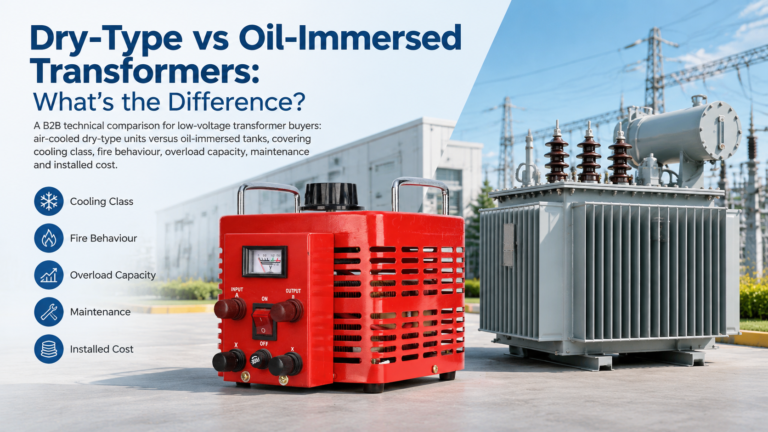
A practical dry-type vs oil-immersed transformer comparison for low-voltage buyers: cooling class, fire safety, overload, maintenance and installed cost, plus a ten-minute selection sequence.