






230V to 110V Transformer for Spain: REBT and Secondary Earthing
230V to 110V transformer for Spain: REBT compliance, ITC-BT-18 and ITC-BT-24, earthing the secondary and UNE-EN IEC 61558 documentation.
Read More
 English
Choosing the right step up and step down transformer is not only a physics question, but also a real-world decision that affects safety, equipment life, and your cost as a buyer or distributor. If you misjudge the voltage, power rating, or transformer type, you can easily damage your appliances, face overheating issues, or sacrifice reliability in front of customers.
This guide explains the difference between step up and step down transformers at a class 10 level, then turns that theory into practical selection and B2B purchasing logic.
A transformer is an electrical device that changes AC voltage from one level to another using electromagnetic induction between two coils: the primary and the secondary. A changing current in the primary coil creates a changing magnetic field, which induces a voltage in the secondary coil. The ratio between the number of turns in these coils largely decides whether the voltage goes up or down.
A step up transformer increases the voltage from primary to secondary. In simple terms, the secondary coil has more turns than the primary coil, so the output voltage is higher than the input. This is often used when you need to power higher-voltage equipment from a lower-voltage supply.
A step down transformer does the opposite: it decreases the voltage from primary to secondary. The primary coil has more turns than the secondary coil, so the output voltage is lower than the input. This is the typical solution when you have a high-voltage supply but your device is designed for a lower voltage.
A step up and step down transformer combines both functions in one device. For example, a step up down transformer 220V to 110V can usually also handle 110V to 220V, depending on how you set the input and output. This is why many travel and export-oriented products use step up & down transformer models such as ST 1000, ST 5000, or DT-3000VA.
Basic Types Overview
| Transformer type | Coil turns relation | Voltage change direction | Typical use cases |
|---|---|---|---|
| Step up transformer | Secondary > primary | Low voltage → high voltage | Power plants, some industrial systems, special equipment |
| Step down transformer | Primary > secondary | High voltage → low voltage | Home electronics, office devices, tools, control circuits |
| Step up and step down unit | Configurable windings/tap | Both up and down (selective) | 220V↔110V devices, export products, small machines, travel |
This simple picture helps class 10 students and entry-level technicians connect the physics concept with everyday equipment and B2B applications.
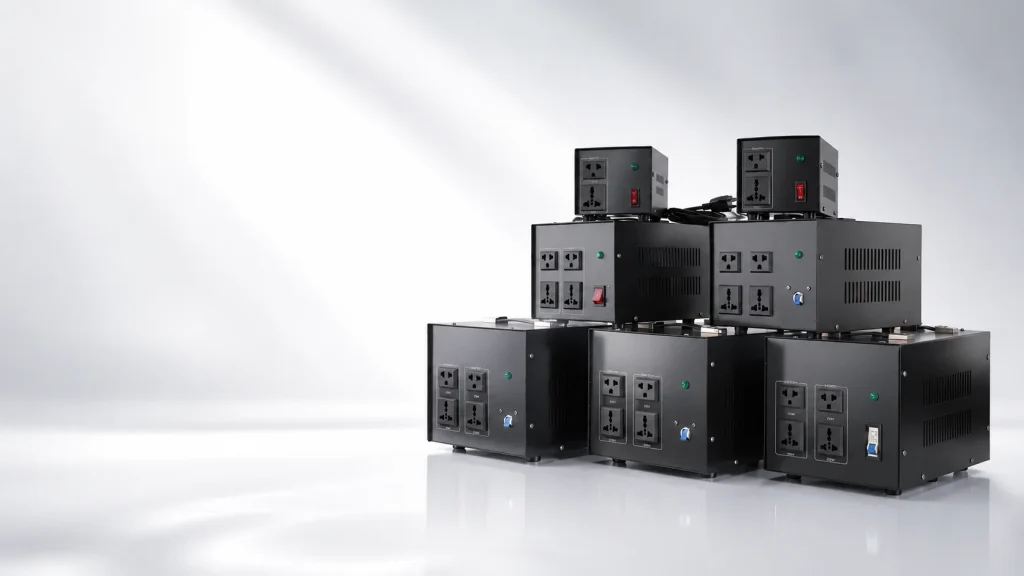
Even at a class 10 level, you can clearly distinguish step up and step down transformers by looking at the coil turns, voltage behavior, and typical applications.
In a step up transformer, the secondary coil has more turns than the primary. As a result, the secondary voltage is higher, but the current on the secondary side is lower for a similar power level. This type is used when you need high voltage, such as in parts of the power transmission system.
In a step down transformer, the primary coil has more turns than the secondary, so the secondary voltage is lower but the current can be higher. This is what you usually see feeding your home electronics, phone chargers, and low-voltage control circuits in machines and panels.
In both step up and step down transformers, the power on each side stays almost the same, except for some losses. That means if voltage goes up, current goes down, and if voltage goes down, current goes up. Understanding this simple trade-off helps students and junior engineers avoid unrealistic expectations when they size a transformer.
Step Up vs Step Down vs Step Up & Down
| Feature | Step up transformer | Step down transformer | Step up & down transformer |
|---|---|---|---|
| Turns ratio (secondary/primary) | Greater than 1 | Less than 1 | Configurable / multiple taps |
| Voltage direction | Increases output voltage | Decreases output voltage | Can increase or decrease depending on connection |
| Current behavior | Lower current on output side | Higher current on output side | Depends on direction and load |
| Common class 10 example | From 110V to 220V for special loads | From 220V to 110V for home appliances | 220V↔110V conversion with one unit |
| Typical buyer | Industrial users, special machines | Home users, small businesses | Exporters, distributors, travelers, small manufacturers |
For a student studying “difference between step up and step down transformer class 10”, this table answers the typical exam-style comparison while also hinting at how real buyers use these devices.
Most real questions on Google are not “what is a transformer” but “how do I run my 110V device on 220V power” or “how do I use a 220V machine in a 110V country”. This is where step up and step down transformer products become practical tools, not just textbook diagrams.
If you live in a 220V country and buy a 110V appliance (for example from the US or Japan), you need a step down transformer. The transformer takes 220V from the wall and outputs 110V to match your device. This is a classic “step up down transformer 220V to 110V” scenario used by many homeowners, small offices, and labs.
If you live in a 110V country and import a 220V device, you need a step up transformer. In this case, the transformer takes 110V and raises it to 220V so your equipment can run safely. This is common for imported kitchen appliances, special tools, and certain industrial instruments.
A step up & down transformer combines both directions in one product. By switching input and output settings, or by using dedicated sockets, you can support both 220V→110V and 110V→220V. Models like step up & down transformer ST 1000 or ST 5000 are popular for multi-device use in homes, small workshops, and export-oriented test benches.
Simple Scenario-Based Guidance
| Scenario | Supply voltage | Device voltage | Recommended transformer type | Typical VA range |
|---|---|---|---|---|
| EU/Asia user with one 110V mixer or blender | 220–240V | 110–120V | Step down or step up & down transformer | 500–1000VA |
| US user with one 220V rice cooker | 110–120V | 220–240V | Step up or step up & down transformer | 1000–1500VA |
| Small office with mixed-voltage equipment | 220V and 110V | Mixed | Multi-output step up & down transformer | 1500–3000VA (or multiple) |
| Small workshop exporting tools to different markets | Varies | Mixed | Several step up & down transformer units | 1000–5000VA depending load |
In B2B practice, distributors, exporters, and panel builders often stock step up & down transformer units in standard capacities such as 1000VA, 3000VA, and 5000VA, because these ratings cover most household and light commercial loads.
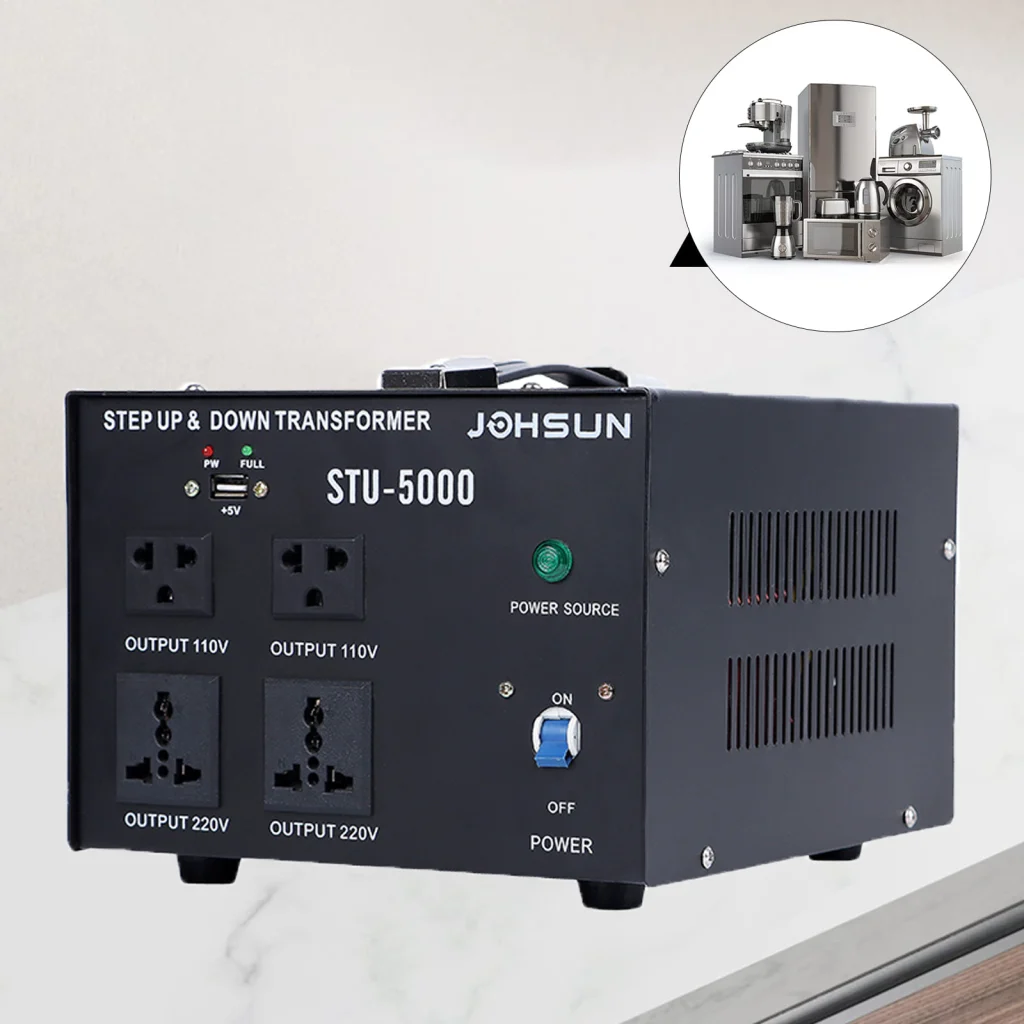
Once you understand the basics, the real challenge is selection. For manufacturers, exporters, wholesalers, and distributors, the wrong choice can mean product returns, overheating complaints, or even warranty disputes. Below is a simple checklist you can use before you place a purchase order or confirm a model for your customers.
The first step is to match the transformer input to the local mains voltage, and the output to your device voltage. Typical pairs include 220–240V↔110–120V, but some markets use slightly different nominal values.
Always read the nameplate on the device. If your country supply is 230V and the appliance is rated 110–120V, you clearly need a step down function. If the supply is 120V and the machine is rated 220–240V, you need a step up function. A step up and step down transformer can handle both, which is useful when you serve multiple export destinations.
Power rating is where many users make mistakes. Most step up and step down transformers are rated in VA (volt-ampere). For purely resistive loads, VA is roughly equal to watt, but for motor or inductive loads, VA can be significantly higher than watt.
A simple rule for buyers:
For example, if you have a 700W mixer and a 300W coffee machine, that is 1000W total. For safety, you might choose a 1500VA or even 2000VA step up & down transformer, rather than a 1000VA unit that will run hot or trip.
A manufacturer or supplier can help you interpret your load list and recommend whether an ST 1000, ST 5000, or DT-3000VA model is more appropriate for your application.
The same rated power can mean very different stress on the transformer, depending on load type and duty cycle.
If the transformer will be used continuously for several hours per day, you should be more conservative with the VA rating. For example, a factory tool that runs all day on a step up and step down transformer needs more headroom than a hobby tool used 10 minutes per week.
Many step up and step down transformer products have multiple outlets and can power several devices at once. This is convenient for homes, offices, and small labs, but you must still respect the total VA rating.
If you are a distributor or wholesaler, it is often better to group devices by type and duty when you design bundles. One high-quality 3000VA or 5000VA step up & down transformer can support a group of home appliances, while smaller ST 1000 units can be offered for single appliances.
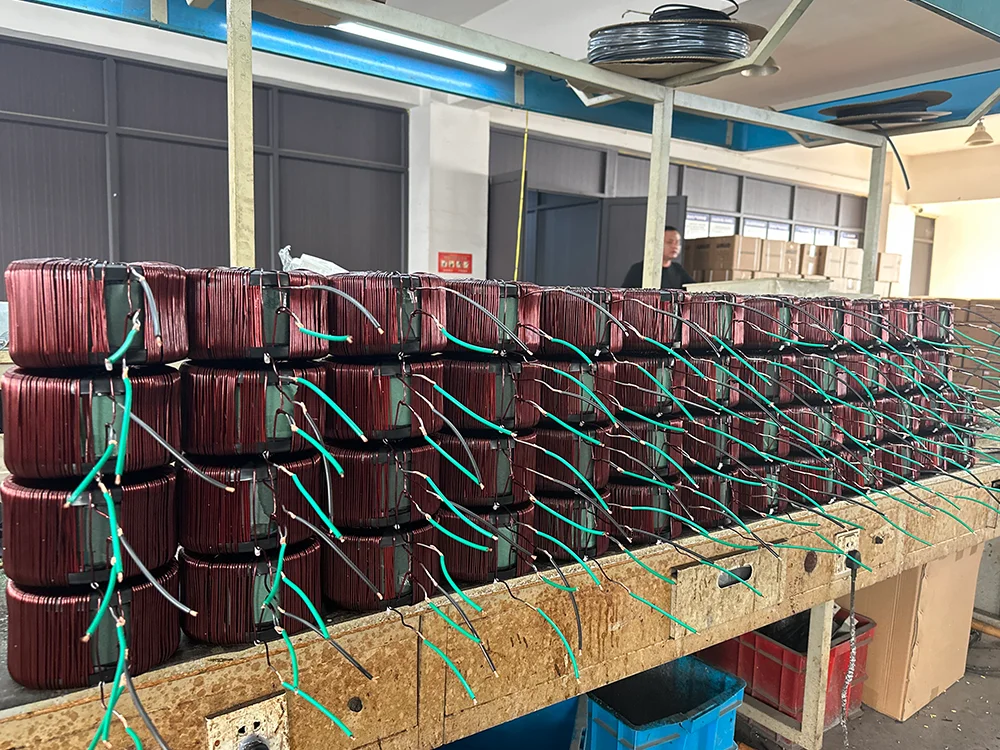
Johsun Tec DT-ST Series (DT-100VA to DT-10KVA) provides a wide range of step up and step down transformer capacities that cover single-device use up to small workshop or office loads. For smaller and mid-range capacities, STU Series and ST models let manufacturers, exporters, and distributors match transformer size to actual usage more precisely.
| Device type | Typical wattage range | Suggested transformer rating (VA) | Example use for ST/DT/STU series |
|---|---|---|---|
| Phone charger, laptop, small gadget | 20–200W | 300–500VA | STU 100–500VA for single devices |
| Kitchen mixers, TVs, game consoles | 300–800W | 800–1500VA | ST 1000–1500VA, STU 1–2KVA |
| Small power tools, office equipment | 800–2000W | 2000–3000VA | STU 2–3KVA, DT/ST or STU 3KVA models |
| Multiple home appliances / small lab | 2000–4000W | 5000–6000VA | ST 5000 or similar high-capacity unit |
Always treat these numbers as a starting point; final selection should be confirmed with your supplier using your exact load list.
Even experienced buyers sometimes overlook key details, especially when they combine theory with real devices and customers.
Many people choose a transformer simply because it says “220V to 110V”. If the power rating is too low, the unit will run hot, trip, or fail early. This is one of the most common reasons for complaints and product returns for retailers and distributors.
Devices with motors or compressors (air conditioners, large mixers, drills) draw much higher current at startup. If you size the transformer only for the running wattage, you may see voltage drop, nuisance tripping, or overheating during starting. In B2B projects, this can cause serious downtime.
Running a transformer at 100% of its VA rating for long periods reduces its lifespan and can create safety risks. A good rule is to treat the nameplate rating as a limit for occasional peaks, not the continuous target. This is especially important when you install a step up and step down transformer inside a closed cabinet with limited airflow.
Transformers generate heat during normal operation. If users place them in closed, dusty, or very hot spaces, temperature rise will be much higher than expected. For distributors and manufacturers, clear installation guidance is part of good after-sales service and reduces support costs.
Small ST or STU desktop units are usually designed for indoor, clean, and dry conditions. Using them in humid workshops, near splashing water, or in dusty construction sites is beyond their intention and may create safety hazards. For more demanding environments, buyers should consider alternative enclosures or different transformer designs.
Once you know what you need technically, the next question is where to source it. Many B2B buyers, importers, and distributors work with China-based transformer manufacturers because of flexible capacity, OEM/ODM capability, and competitive pricing in bulk orders.
When evaluating a step up and step down transformer manufacturer, consider:
Many distributors, trading companies, and retailers prefer to sell under their own brands. In this case, you need a supplier who can support:
Johsun Tec is a China-based manufacturer and exporter focused on power products such as voltage stabilizers, step up and step down transformers, UPS systems, inverters, and battery chargers. For step up and step down transformer applications, Johsun Tec DT-ST Series (DT-100VA to DT-10KVA) and STU/ ST models cover a wide range of capacities and common 220V/110V use cases.
For example, if you are a manufacturer, distributor, or wholesaler who needs a stable supply of step up and step down transformer units for export markets, you can consider the DT-ST Series (DT-100VA to DT-10KVA) as a reference product line that supports bulk purchasing, OEM branding, and long-term cooperation.
This kind of cooperation allows you to focus on your own products, channels, and branding, while relying on a dedicated transformer factory for design, production, and technical support.
A step up transformer increases the voltage from input to output by using more turns on the secondary coil, while a step down transformer decreases the voltage by using fewer turns on the secondary coil. In practice, step up units are used when your supply voltage is lower than your device voltage, and step down units are used when your supply voltage is higher than your device voltage.
Look at your local mains voltage and the device nameplate. If your mains is 220–240V and the device is 110–120V, you need step down. If your mains is 110–120V and the device is 220–240V, you need step up. If you often handle both types of devices, or you are a distributor serving multiple markets, a step up and step down transformer is usually more flexible.
Add the wattage of all devices you plan to connect, then add a safety margin. For simple resistive loads, a 20–30% margin is often enough. For mixed or motor loads, a 50% margin or more is safer to handle inrush and continuous operation. When in doubt, share your load list with your manufacturer or supplier and ask them to recommend a suitable VA rating.
Yes, many step up and step down transformer units are designed to power several devices, as long as the total power stays within the VA rating. However, you must still consider startup currents, duty cycle, and ventilation. In B2B applications, it is common to size the transformer generously when several devices may be running at the same time.
It can be safe if the transformer is correctly sized, properly ventilated, and used within its rated conditions. For high-wattage or long-duration loads, select a transformer with enough headroom, follow installation guidelines, and avoid using small desktop models in harsh environments. B2B buyers should confirm thermal performance and protection features with the manufacturer.
You should review voltage and power coverage, product certifications, quality control processes, OEM/ODM capabilities, and lead times. It is also helpful to check sample build quality and documentation before committing to bulk purchases. A manufacturer that can support custom branding, stable production, and technical support will simplify your role as a distributor, exporter, or equipment manufacturer.