Hollanda için 230 V - 110 V Transformatör: NEN 1010 Kılavuzu
Yayın tarihi: Yazar: Lisa
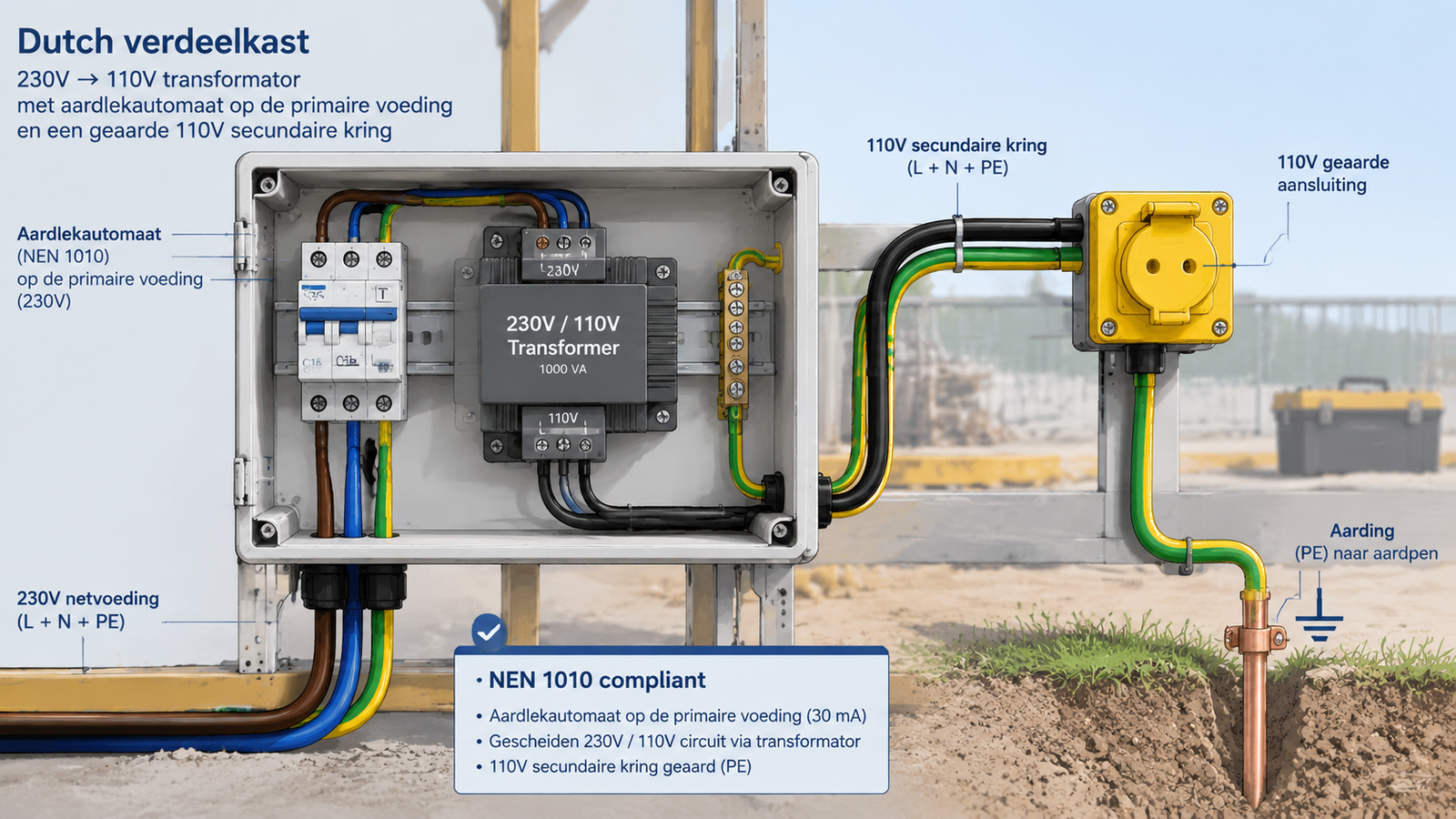
Hollanda’da, 230 V’tan 110 V’a dönüştürme transformatörleri konusundaki kurallar iki belgeyle belirlenmiştir: kurulum için NEN 1010 ve ürün için IEC 61558 serisi. Bunları doğru yaparsanız gerisi basit bir hesaplama meselesidir. Yanlış yaparsanız, boyutları doğru olan bir transformatör elde edersiniz ancak koruma cihazı 110 V tarafındaki arızayı algılayamadığı için transformatör denetimden geçemez. Bu kılavuzda şunlar ele alınmaktadır: 230 V - 110 V transformatör Hollanda’daki bir web sitesinde yerine getirmesi gereken şartlar.
Bu kitap, Hollanda’daki elektrik tasarımcıları, makine üreticileri ve satın alma sorumluları için yazılmıştır. Hollandaca versiyonu için bkz. Gerilim Dönüştürücü 230 V – 110 V.
Hollanda’daki başlangıç noktası: NEN 1010
NEN 1010, alçak gerilim tesisatları için Hollanda güvenlik standardıdır ve IEC 60364 standardının ulusal uygulamasını oluşturur. Birleşik Krallık'ta BS 7671, ABD'de ise NEC standardı geçerliyken, Hollanda'da NEN 1010 standardı uygulanmaktadır — özellikle toprak kaçağı koruması konusunda, temel standarttan bazı noktalarda daha katı olan yerel değişiklikler de bulunmaktadır.
Bir düşürme transformatörü kurulumunda dikkate alınması gereken hususlar:
Alan
NEN 1010 standardının gereklilikleri
Transformatör kurulumuna etkisi
Toprak kaçağı koruması
Maksimum devre kesme akımı 30 mA olan bir RCD ile korunan genel kullanım amaçlı priz devreleri
Birincil besleme, diğer devreler gibi korunur; ikincil besleme için ise kendine özgü bir koruma düzeni gereklidir
Topraklama
Sürekli koruma iletkeni, tanımlanmış topraklama elektrotu direnci
Muhafaza ve terminal kutusu, istisnasız olarak topraklama rayına bağlanmalıdır
Aşırı akım koruması
İletken ve yüke uygun cihaz
Birincil koruma, tam yük akımı × 1,25 olarak derecelendirilmiştir
İzolasyon ve anahtarlama
Her devre, TN-C ve TN-S sistemlerine ilişkin belirlenen istisnalar dışında, tüm aktif iletkenlerden izole edilebilir
Trafo kendisini değil, yukarı akıştaki anahtarlı kesiciyi etkiler
Devre gruplandırma
30 mA’lık bir RCD başına nihai devre sayısına ilişkin sınırlamalar
Trafo, mevcut sayaç dolabına yeni bir grup eklediğinde geçerlidir
Gruplama sınırını gözden kaçırmak kolaydır. Birçok son devreyi kapsayan tek bir 30 mA’lık RCD, anahtarlamalı güç kaynaklarından kaynaklanan kapasitif kaçak akımı biriktirir ve transformatörle beslenen bir grubun eklenmesi, bu değeri devre kesme eşiğinin üzerine çıkarabilir. Hollanda’daki güncel uygulamada tercih edilen yöntem şudur: patates otomatı tek bir ortak devre yerine devre başına akım kesici, tam da gereksiz devre kesilmelerini önlemek için.
Aardlekschakelaar mı, yoksa aardlekautomaat mı — burada hangisi önemli?
Cihaz
Fonksiyon
Ne zaman doğru seçim olur?
Aşırı akım kesici (RCD)
Yalnızca toprak kaçağı
Ayrı MCB’lere sahip mevcut bir sayaç dolabına sonradan takılmalıdır; dört devrelik gruplama sınırına tabidir
Aardlekautomaat (RCBO)
Tek bir modülde toprak kaçağı ve aşırı akım
Yeni devreler; transformatör beslemesindeki bir arızanın tüm tesisatı devre dışı bırakmasını önler
Yeni bir 110 V besleme hattı için bir “aardlekautomaat” belirleyin. Bu cihaz, transformatörün ihtiyaç duyduğu aşırı akım korumasını ve NEN 1010 standardının gerektirdiği 30 mA kaçak akım korumasını tek bir modül genişliğinde bir araya getirir ve bir arızanın etkilerini tek bir gruba sınırlar.
En önemli teknik nokta: Birincil RCD, ikincil RCD’yi algılayamaz
Bu, doğru bir şekilde yapılması gereken en önemli husustur ve Hollanda’daki kurulumlarda en sık gözden kaçan unsurdur.
Ayrı sargılara sahip bir düşürme transformatörü, elektriksel olarak yalıtılmış bir ikincil devre oluşturur. Bir arıza akımı koruyucu cihaz, içinden geçen iletkenlerdeki hat akımı ile nötr akımı arasındaki dengeyi izler. İkincil tarafta meydana gelen bir arıza, bu birincil iletkenler üzerinden geri dönmez; topraklama sistemi üzerinden topraklama elektroduna geri döner. RCD herhangi bir dengesizlik algılamaz ve devreye girmez.
Sonuç: İzole bir transformatörün 230 V besleme hattında bulunan 30 mA’lık bir toprak kaçağı koruyucu şalteri şunları sağlar: hayır 110 V devresi için toprak kaçağı koruması. Sorunu çözmek için seçenekler:
İkincil devreyi tek bir noktadan toprağa bağlayın — bu durumda arıza akımı koruma iletkeni sistemi üzerinden geri dönebilir ve ikincil devredeki bir RCD devreye girer.
Bunun yerine bir ototransformatör kullanın — ortak bir sargı kullanıldığında, birincil ve ikincil devreler aynı iletkeni paylaşır; dolayısıyla birincil RCD, ikincil devreyi de korur. Bu durum, uygulamanın ayrıştırma gerektirmediği hallerde geçerlidir.
İkincil sistemi izole halde bırakın ve izlemeye devam edin — Bir yalıtım izleme cihazı, ilk arızada alarm verir. Test tezgahları ve laboratuvarlar için uygundur; sıradan üretim devreleri için uygun değildir.
Sezgilere aykırı olan bu sonucun tekrar edilmesi gerekir: Sürekli kullanımda olan, tamamen izole edilmiş bir ikincil devrede, tek bir yalıtım arızası tamamen fark edilmez. Bu arıza, ikinci bir arıza ortaya çıkana kadar görünmez kalır; bu noktada koruma cihazı zamanında devreye girmeyebilir. Doğrulama yöntemi şu belgede yer almaktadır: Bir transformatörün ikincil sargısı nasıl topraklanır?. Dağıtım panosundaki kablolama, NEN 1010 standardına uygun olarak çalışan yetkili bir kişi tarafından yapılmalıdır.
Ayırma işleminin gerekli olmadığı kritik olmayan yükler
Topraklı, yalıtılmış ikincil devre
Tek bir noktadan toprağa bağlanmış nötr
İkincil RCD aracılığıyla
Kalıcı 110 V dağıtım sistemi
İzole edilmiş ve izlenmekte olan
Yüzer tip, yalıtım izleme özellikli
İlk arızada alarm
Laboratuvar, test tezgahı, teşhis çalışmaları
Hollanda’daki alçak gerilim tesisatları ağırlıklı olarak TT tipindedir; bu nedenle topraklama elektrotu ve koruyucu iletken sistemi, arıza akımının geri dönüş yolunu oluşturur. Bu da aynı sonucu pekiştirir: ikincil bir referans olmadan, 110 V’luk bir arıza için geri dönüş yolu bulunmaz ve dolayısıyla otomatik kesinti de gerçekleşmez.
NEN-EN-IEC 61558 ve KEMA sertifikası
Uygulama
Hollandaca ad
Kapsam
Genel şartlar ve testler
NEN-EN-IEC 61558-1
Seri için temel güvenlik standardı
Ayırma transformatörleri (izolasyon)
NEN-EN-IEC 61558-2-4
Ayrı sargılar, genel uygulamalar
Güvenlik transformatörleri (güvenlik izolasyonlu)
NEN-EN-IEC 61558-2-6
Çıkış gerilimi ve akımı üzerindeki ek sınırlamalar
Tasarruf transformatörleri (otomobil)
NEN-EN-IEC 61558-2-13
Yükseltme ve düşürme otomatik yapılandırmaları
Tıbbi izolasyon transformatörleri
NEN-EN-IEC 61558-2-15
Muayene ve tedavi odaları
CE işareti
LVD 2014/35/AB ve EMC 2014/30/AB
AB uygunluk beyanı
Hollandalı alıcılar sık sık KEMA hakkında soru soruyorlar. Aslında KEMA, bir standarttan ziyade bir sertifikasyon kuruluşudur ve KEMA işareti, AB pazarına sunulan bir transformatör için yasal bir zorunluluk değildir — geçerli bir CE beyanı ise zorunludur. Bununla birlikte, tanınmış bir kuruluş tarafından hazırlanan bağımsız bir test raporu, ithal ürünler açısından, özellikle de NEN-EN-IEC 61558-2-15 standardının geçerli olabileceği tıbbi uygulamalara yakın alanlarda, riski azaltmaya yönelik yararlı bir göstergedir.
İnşaat seçeneği
İnşaat
Ayrılık
Tipik bir Hollanda uygulaması
Tasarruf transformatörü
Yok
Isıtma, aydınlatma, basit motor yükleri
Ayırma transformatörü
Tam galvanik
Makine kontrolü, ölçümler, gürültü filtreleme
Güvenlik transformatörü
Tam, sınırlı çıkış
Taşınabilir aletler, nemli veya dar alanlar
Halka çekirdekli transformatör
Modele bağlı
Ses, laboratuvar, düşük sızıntı alanı
Bir makine veya dağıtım panosunda kesintisiz çalışma için DT/ST serisi, 100 VA ile 10 kVA aralığını tutarlı bir terminal şemasıyla kapsar: DT/ST serisi transformatörler, 100VA–10KVA. Güç aralığı boyunca tek bir seriye bağlı kalmak, bir makine imalatı programında yedek parça ve terminal etiketlemesini öngörülebilir kılan unsurdur.
VA'da Hollanda makine yapımı ve tesisat tekniği için boyutlandırma
Transformatörlerin nominal değerleri watt değil, VA cinsindendir. Hollandalı makine üreticileri, güç faktörü düşük veya ani akım yükü yüksek olan servo sürücüler, anahtarlamalı güç kaynakları ve soğutma kompresörleriyle sık sık çalışmaktadır.
Dirençli yük (ısıtma, aydınlatma): +20 %
Motor yükü: +100 % (faktör 2) — kompresörün zorlu çalıştırma durumlarında daha yüksek
Anahtarlamalı güç kaynakları ve sürücü girişleri: +30 ila +50 %
Sürekli çalışma: Anma VA değerinin –80’i (%) seviyesinde tutun
Aynı anda birden fazla yük: nominal değerleri toplayın; en büyük yükü referans olarak almayın
Birincil aardlek’in 110 V tarafını kapsadığını varsayarsak
İkincil toprak arızaları hiçbir zaman giderilmedi
Ayırma gerekmediğinde ikincil devreyi kullanın veya bir ototransformatör kullanın
Kalıcı kullanımda kalan ikincil sol yüzer eleman
İlk arıza tespit edilemedi
İkincil devreyi tek bir noktadan bağlayın ya da yalıtım izleme sistemi kurun
Çok fazla gruba tek bir 30 mA’lık RCD paylaşılıyor
Transformatör grubu eklendiğinde istenmeyen devre kesintileri yaşanıyor
Her devre için bir aardlekautomaat kullanın
Cihazların watt değerini VA olarak okumak
Boyutu yetersiz transformatör, termal devre kesintileri
Gerçek marj ile VA rakamını kullanın
Koruyucu iletken devamlılık kontrolü yapılmadı
Doğru tasarıma rağmen koruma etkisiz
Güç vermeden önce muhafaza ile topraklama rayı arasındaki sürekliliği kontrol edin
Bir sonraki adım
Hollanda’daki projelerde, uygunluk, doğru sırayla alınan iki karara dayanır: önce ayırma gerekliliğine uyan yapı seçilir, ardından ikincil devrenin topraklama şekli belirlenir ve son olarak da ani akım için bir pay bırakılarak VA cinsinden boyutlandırma yapılır. NEN 1010 standardı kablolamayı, IEC 61558 standardı ise ürünü düzenler; belgeler her ikisini de kanıtlar.
Besleme gerilimini, frekansı, yük profilini ve topraklama düzenini bize gönderin; size uygun modeli size bildireceğiz: Bize ulaşın.
SSS
230 V'tan 110 V'a dönüştüren bir transformatörde toprak kaçağı koruması gerekli midir?
230 V birincil besleme hattı, NEN 1010 standardı kapsamında diğer tüm devreler gibi koruma altına alınmalıdır — genel kullanım amaçlı priz devreleri için maksimum 30 mA. 110 V ikincil devre ise kendine özgü bir düzenlemeye ihtiyaç duyar; zira birincil devredeki bir artık akım koruyucusu, yalıtılmış bir ikincil devredeki arızayı algılayamaz.
Aardlekschakelaar ile aardlekautomaat arasındaki fark nedir?
Bir toprak kaçağı şalteri yalnızca toprak kaçağı koruması sağlar. Bir toprak kaçağı otomatı ise toprak kaçağı ve aşırı akım korumasını tek bir modülde birleştirir. Transformatörden beslenen yeni bir devre için toprak kaçağı otomatı en pratik seçimdir.
Hollanda'da 230 V'tan 110 V'a dönüştürme işlemi için bir ototransformatör kullanılabilir mi?
Evet, uygulamanın galvanik izolasyon gerektirmediği durumlarda. Birincil ve ikincil devreler aynı sargıyı paylaştığı için, birincil koruma cihazı ikincil devreyi de kapsar; bu da mevzuata uyumu önemli ölçüde kolaylaştırır. İzolasyonun gerekli olduğu durumlarda — tıbbi uygulamalar, laboratuvarlar, belirli makine güvenlik işlevleri — bir izolasyon transformatörü zorunludur.
KEMA sertifikası gerekli mi?
Hayır. KEMA bir sertifikasyon kuruluşudur, yasal bir zorunluluk değildir. Gerekli olan, Düşük Gerilim ve EMC Direktifleri kapsamında geçerli bir CE uygunluk beyanıdır. Bununla birlikte, bağımsız bir test raporu, ithal edilen ekipmanların ürün kalitesine dair yararlı bir göstergedir.
Transformatörün kendisi için hangi standart geçerlidir?
IEC 61558 standardının Hollanda’daki uygulaması olan NEN-EN-IEC 61558 — 2-4 ayrıştırma transformatörleri, 2-6 güvenlik transformatörleri, 2-13 tasarruf transformatörleri ve 2-15 tıbbi izolasyon transformatörleri için geçerlidir.
Bir transformatörün marjı ne kadar olmalıdır?
Sürekli çalışma için nominal VA değerinin –80’i kadar boyutlandırın. Akım dalgalanmasını karşılamak üzere, dirençli yüklerde , motor yüklerinde 2 kat ve anahtarlamalı güç kaynağı yüklerinde –50 ekleyin.
How a buck-boost transformer works: series-winding polarity, differential kVA sizing with single-phase and three-phase examples, and the five limits that decide when it is the wrong tool.
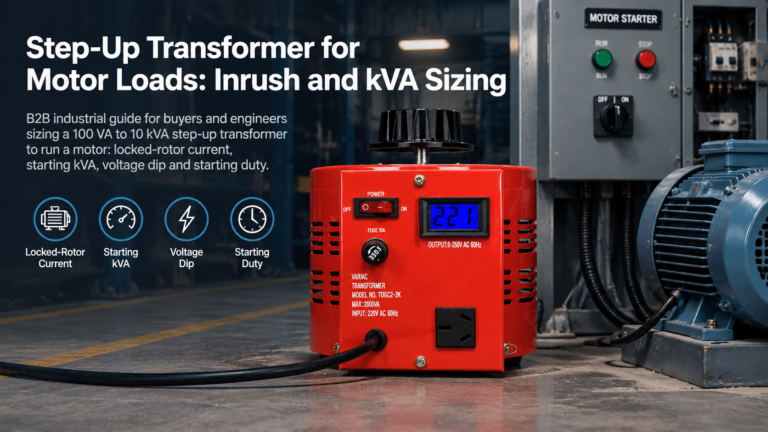
How to size a step-up transformer for a motor: locked-rotor current, kVA code letters, starting kVA by method, voltage-dip and thermal-duty checks, plus the traps most guides miss.
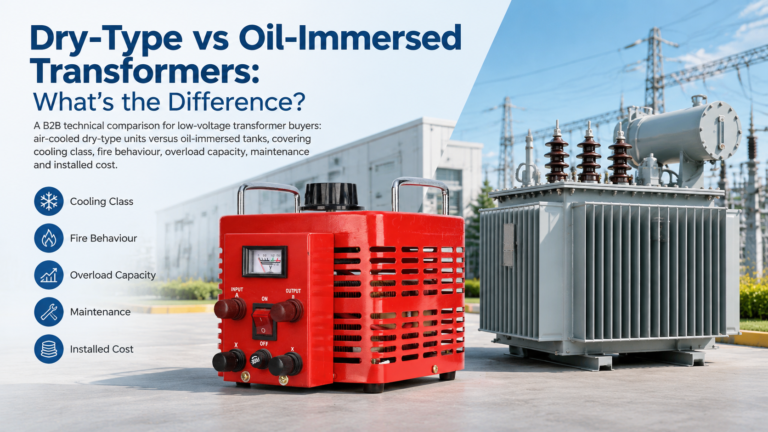
A practical dry-type vs oil-immersed transformer comparison for low-voltage buyers: cooling class, fire safety, overload, maintenance and installed cost, plus a ten-minute selection sequence.