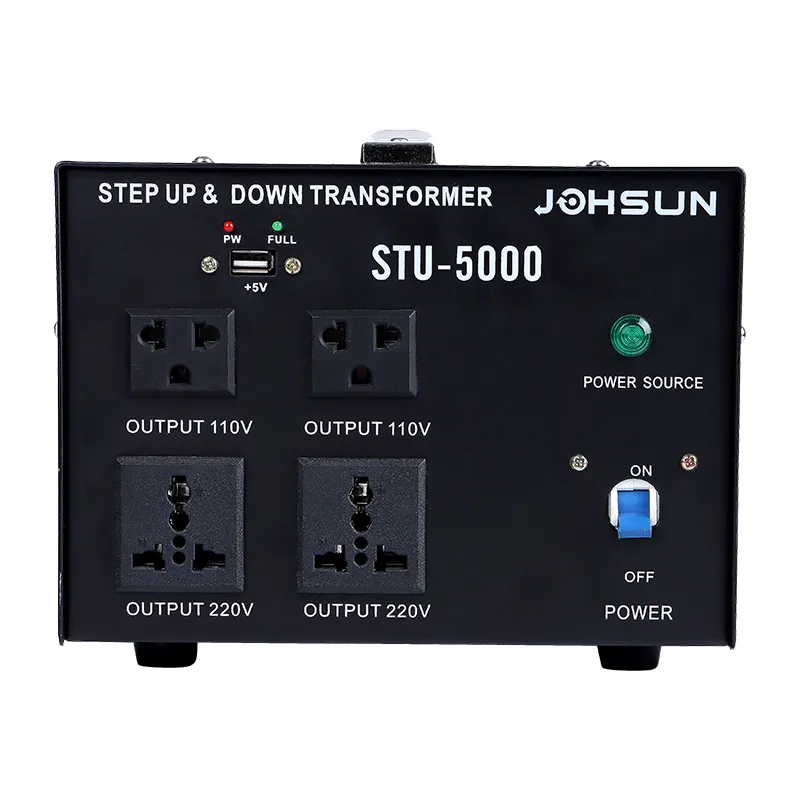
A simple analysis of step-up and step-down transformer
Published: Author: Johsuntech
A transformer is a device that moves electrical energy from one circuit to another using mutual induction. There are two main types of transformers, classified by the number of coil windings: step-up and step-down transformer.
Transformers serve many functions. They raise the voltage from electric generators, making it possible to send electricity over long distances. They also lower voltage in standard power lines so that low-voltage devices, such as doorbells and toy trains, can operate safely. Transformers help reduce power loss caused by changes in line resistance. This article will focus on step-up and step-down transformers.
Structure of a Transformer
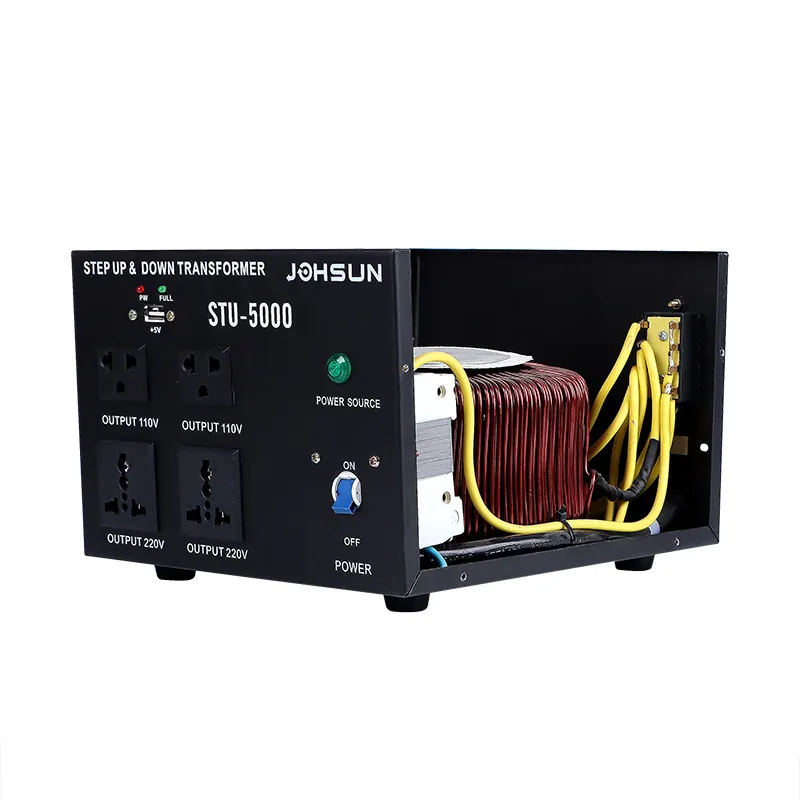
A transformer is built from two main windings: the primary winding and the secondary winding. Both windings are made of insulated copper or aluminum wire and are wrapped around a shared iron core, but they are not electrically connected to each other. The core is typically constructed from thin, laminated sheets of steel to reduce energy losses caused by eddy currents.
The primary winding receives alternating voltage from the power source. This alternating current generates a changing magnetic field in the core. The magnetic field then passes through the secondary winding, which induces a voltage in it through the process of mutual induction. The amount of voltage produced in the secondary winding depends on the ratio of turns between the primary and secondary coils. If the secondary has more turns than the primary, the transformer increases the voltage (step-up). If it has fewer turns, the voltage is reduced (step-down).
The windings are often separated by layers of insulation and lamination to prevent electrical contact and minimize losses. The transformer’s core can be shaped in different ways, such as closed-core or shell-core designs, depending on the application.
Step-up and step-down transformer are rated in kilovolt-amperes (kVA), which is the product of the voltage and current they can handle. The core and coil assembly is carefully constructed to ensure efficient transfer of energy while maintaining electrical isolation between the input and output circuits.
In summary, a transformer’s structure consists of:
Primary and secondary windings, made of insulated wire
A laminated iron core to guide the magnetic field
Electrical insulation and lamination between windings
Connections and tap leads for voltage adjustment, if needed
The voltage output is determined by the turns ratio between the windings, and the transformer operates efficiently by transferring energy through electromagnetic induction without direct electrical connection between the circuits.
Step-Up Transformer
A step-up transformer is designed to increase voltage from the primary side to the secondary side. It features more turns of wire in the secondary winding than in the primary winding. This difference in the number of turns is crucial: the voltage output is directly proportional to the ratio of turns between the secondary and primary coils. As a result, the secondary voltage is higher than the primary voltage, while the current on the secondary side is lower than on the primary.
The core idea behind a step-up transformer is electromagnetic induction. When alternating current flows through the primary winding, it generates a changing magnetic field in the core. This magnetic field induces a voltage in the secondary winding. Because the secondary winding has more turns, the induced voltage is increased, making the transformer suitable for applications that require higher voltage output.
N2 > N1
I2 < I1
V2 > V1
Step-up transformers play a vital role in electrical power transmission. At power stations, they raise the voltage of electricity generated at low levels to much higher levels—sometimes from thousands to hundreds of thousands of volts. This increase in voltage allows electricity to travel long distances through transmission lines with minimal energy loss, as higher voltage means lower current and thus reduced heat loss in the wires.
In summary:
The secondary winding has more turns than the primary winding.
The output voltage is higher than the input voltage.
The current on the secondary side is lower than on the primary side.
Step-up transformers are essential for efficient long-distance power transmission.
Common uses include power transmission lines, X-ray machines, and microwave ovens, where high voltage is necessary for operation.
Step-Down Transformer
A step-down transformer is used to reduce the voltage from the primary side to the secondary side. In this type of transformer, the primary winding has more turns than the secondary winding. This design means that when alternating current flows through the primary winding, the voltage induced in the secondary winding is lower because the number of turns is less.
The step-down transformer operates on the principle of electromagnetic induction, specifically Faraday’s law. When AC voltage is applied to the primary winding, it creates a changing magnetic field in the core. This magnetic field induces a voltage in the secondary winding, but since the secondary has fewer turns, the output voltage decreases.
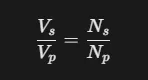
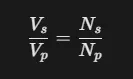
As the voltage drops, the current in the secondary winding increases to maintain power balance (assuming ideal conditions and negligible losses). This is why step-down transformers are used to convert high-voltage, low-current power into low-voltage, high-current power. The relationship between the voltages and the number of turns is given by:
where Vs is the secondary voltage, Vp is the primary voltage, Ns is the number of turns in the secondary, and Np is the number of turns in the primary winding.
Key Points:
The primary winding has more turns than the secondary winding.
The transformer reduces voltage and increases current on the secondary side.
It is widely used in power distribution to convert high transmission voltages to safer, usable levels for homes and industries.
The output voltage can be calculated using the turns ratio formula.
Step-down transformers are essential for safely operating household appliances and electronic devices that require lower voltage than supplied by the main power lines.
Step-up and step-down transformer operate on the principle of mutual induction, where alternating current in the primary coil induces voltage in the secondary coil via a shared magnetic field. Step-up and step-down transformer adjust voltage levels while inversely altering current to conserve energy. Below is a detailed breakdown of their workings:
Working Of Step-up and step-down transformer
Step-Up Transformers
Structure: Secondary winding has more turns than the primary winding (Ns>Np).
Voltage Increase: The output voltage rises proportionally to the turns ratio:
Current Reduction: To conserve energy (P=V×I), the secondary current decreases inversely, This minimizes power loss (I2R) during long-distance transmission.
Applications:
Boosting voltage from power plants for efficient grid transmission.
High-voltage devices like X-ray machines.
Step-Down Transformers
Structure: Secondary winding has fewer turns than the primary (Ns<Np).
Voltage Reduction: Output voltage decreases based on the turns ratio:
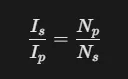
Current Increase: Secondary current rises inversely to maintain power balance:
This enables safe operation of low-voltage devices.
Applications:
Reducing grid voltage for household appliances (e.g., 230V to 12V).
Power adapters for electronics.
Energy Conservation
Transformers adhere to the law of energy conservation: Vp×Ip=Vs×Is(neglecting losses)
Ideal Case: Input power equals output power.
Real-World Efficiency: Losses (e.g., heat, eddy currents) reduce efficiency to ~98%, but core design and laminated cores mitigate these.
Key Takeaways
Feature
Step-Up Transformer
Step-Down Transformer
Turns Ratio (Ns/Np)
>1
<1
Voltage Change
Increases
Decreases
Current Change
Decreases
Increases
Primary Use
Power transmission
Household/industrial use
By leveraging electromagnetic induction and turns ratios, transformers enable efficient voltage adaptation while preserving energy.
Difference Between Step-up and step-down transformer
Basis of Difference
Step Up Transformer
Step Down Transformer
Number of turns
The number of turns in primary winding is less than that in secondary winding.
The number of turns in primary winding is more than that in secondary winding.
Effect on Voltage
It increases or steps up the voltage in the output circuit.
It decreases or steps down voltage in the output circuit.
Effect on Current
Current in output circuit is less than the current in input circuit.
Current in output circuit is more than the current in input circuit.
Maintenance
It requires less maintenance.
It requires high maintenance.
Mathematical relation between turns
N1 < N2
N2 < N1
Applications
It is used in X-rays extraction, microwaves, ovens, etc.
It is used in CD players, TV, washing machines, etc.
Step-up and step-down transformer
Advantages and Disadvantages
Step-up and step-down transformer are essential components in electrical systems, each serving distinct roles in voltage regulation. Below is a structured comparison of their advantages and disadvantages:
Step-Up Transformers
Advantages:
High Efficiency: Operates at over 95% efficiency due to minimized energy losses during long-distance power transmission.
Low Maintenance: Requires minimal upkeep, such as oil checks and contact cleaning, reducing operational costs.
Immediate Operation: Starts instantly after installation without delays.
Uninterrupted Functionality: Capable of running continuously, critical for power grids and industrial applications.
Large Size: Bulkier design due to increased windings and cooling infrastructure, complicating installation.
AC-Only Operation: Limited to alternating current (AC) systems, excluding DC applications.
Step-Down Transformers
Advantages:
Cost-Effective: Less expensive than step-up transformers, ideal for residential and commercial use.
High Reliability: Durable construction ensures consistent performance in diverse environments.
Voltage Flexibility: Adapts high grid voltages to safer levels for household appliances (e.g., 230V to 12V).
Energy Efficiency: Reduces transmission losses, lowering electricity costs.
Disadvantages:
Maintenance Demands: Periodic checks are required to address wear, increasing downtime and labor costs.
Heat Generation: Produces heat during operation, requiring thermal management.
AC-Only Operation: Incompatible with DC systems, limiting versatility.
Key Comparison
Feature
Step-Up Transformer
Step-Down Transformer
Primary Use
Power transmission (e.g., power plants)
Power distribution (e.g., homes, industries)
Voltage Change
Increases voltage
Decreases voltage
Current Change
Reduces current
Increases current
Size
Bulky, complex design
Compact, space-saving
Efficiency
>95% efficiency
Up to 99% efficiency
Applications of Step-up and step-down transformer
Step-up and step-down transformer play a vital role in modern electrical and electronic systems. Their ability to change voltage and current levels efficiently makes them essential in a wide range of applications:
Power Generation and Transmission Transformers are used at power plants to increase (step up) the voltage of electricity for long-distance transmission. This high-voltage transmission reduces energy loss, making it efficient to deliver electricity over vast distances.
Power Distribution Before electricity reaches homes and businesses, transformers lower (step down) the high voltage from transmission lines to safer, usable levels. This ensures that household appliances and equipment receive the correct voltage for safe operation.
Audio and Signal Processing Transformers are used to adjust the voltage of audio signals, ensuring high-quality sound reproduction and minimizing interference. They also help with impedance matching in audio systems, improving the transfer of audio signals between components like microphones, amplifiers, and speakers.
Electronic Devices Many electronic products, such as televisions, radios, and mobile chargers, use transformers to convert incoming voltage to the required level for internal circuits. They also provide electrical isolation and safety for sensitive components.
Impedance Matching In both audio and electronic systems, transformers are used to match the impedance between different devices. This maximizes power transfer and prevents signal loss or distortion.
Lighting Systems Transformers step down voltage for various lighting applications, including streetlights, office lighting, and landscape lighting, ensuring optimal performance and safety.
Telecommunications Transformers are used in telecommunication equipment to receive and process different types of signals and to provide isolation between circuits.
Medical Equipment Devices such as MRI and X-ray machines rely on transformers to generate the high voltages needed for operation, as well as to provide electrical isolation for safety.
Railway Electrification Transformers lower the high voltage from overhead lines to suitable levels for train operation, ensuring efficient and safe railway transportation.
Backup Power Systems In uninterruptible power supplies (UPS), transformers regulate voltage to provide continuous power during outages, protecting critical equipment like computers and medical devices.
Specialized Uses Transformers are also used in Tesla coils for generating high-frequency, high-voltage currents, and in various industrial and scientific applications.
Transformers are indispensable for efficient energy transfer, voltage regulation, signal processing, and safety across numerous fields, from power grids to consumer electronics.
—
Step-up and step-down transformer are essential devices in electrical engineering, allowing for the adjustment of voltage levels within AC circuits to ensure the safe and efficient operation of various electrical components.
In summary, transformers are fundamental in electrical engineering because they enable efficient power transmission, voltage regulation, and the safe operation of electrical systems and devices. Their ability to increase or decrease voltage as needed makes them indispensable in both power grids and a wide range of electronic applications.
Transformer core saturation happens when the core can no longer absorb more magnetic flux. Learn the causes, symptoms, a simple no-load test and prevention for 100 VA-10 kVA dry-type transformers.
How a buck-boost transformer works: series-winding polarity, differential kVA sizing with single-phase and three-phase examples, and the five limits that decide when it is the wrong tool.
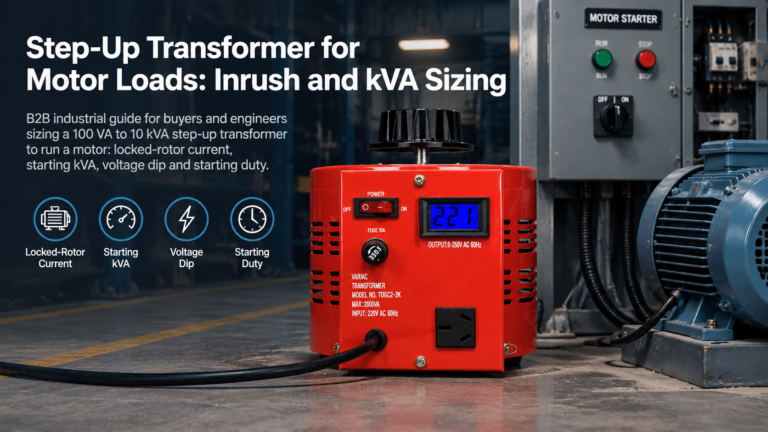
How to size a step-up transformer for a motor: locked-rotor current, kVA code letters, starting kVA by method, voltage-dip and thermal-duty checks, plus the traps most guides miss.