Alçak Gerilim Transformatörleri Her Zaman Ses Çıkarır mı?
Yayın tarihi: Yazar: Lisa
Çalışan bir transformatörün yanında durmuş olan herkes bunu duymuştur: Cihazın etrafındaki çelikten ve havadan geliyor gibi görünen alçak, sabit bir uğultu. Eğer bir alçak geri̇li̇m transformatörü, bu ses genellikle akla bir soru getirir: Bu normal mi, yoksa şimdiden bir sorun mu var?
Dürüst cevap evet; çoğu alçak gerilim transformatörü bir miktar ses çıkarır ve bu sesin küçük bir kısmı, çalışma prensiplerinden kaynaklanır. Önemli olan, bunu ayırt etmeyi öğrenmektir normal uğultu kaynak: transformatörden gelen anormal ses, çünkü bu fark genellikle gelişmekte olan bir arızanın en erken uyarısıdır.
Kısa Cevap: Evet, Çoğu Öyle — Ama Ses Size Bir Şey Anlatıyor
Hemen hemen her demir çekirdekli transformatör, nominal yükte bir miktar işitilebilir gürültü üretir. Bunun başlıca nedeni, şu adla anılan bir fiziksel etkidir: manyetostriksiyon Çekirdeği oluşturan silikonlu çelik levhalarda; sargı titreşimi, tank duvarı rezonansı ve soğutma fanı gürültüsünün de daha küçük ölçüde katkısı vardır. Bir transformatör, tasarım gereği asla tamamen sessiz olamaz.
Kuru tip alçak gerilim transformatörleri için referans seviyeler, kVA değeri ve tasarıma bağlı olarak genellikle 1 metre mesafede 40 ila 65 dB(A) aralığında yer alır. Bu aralığın içinde kalan ve sabit bir karakter sergileyen her şey normaldir. Aralığın dışında kalan — ya da karakterinde değişiklik gösteren — her şey ise daha yakından incelenmelidir.
Düşük Gerilim Transformatörleri Neden Vızıldar? 60 Saniyede Fizik
Duyduğunuz gürültünün oluşumunda üç mekanizma başrol oynar.
Manyetostriksiyon — tabakalanma olgusu
Silikon çelik levhalar, manyetik akı her tersine döndüğünde fiziksel uzunluklarını yüzde birin çok küçük bir kısmı kadar değiştirir. 60 Hz’lik şebeke beslemesinde bu tersine dönmeler saniyede 120 kez gerçekleşir; dolayısıyla çekirdek tam anlamıyla nefes alır bu hızda. Bu mikro hareket, sabit ve düzgün uğultunun başlıca kaynağıdır. Üreticiler, transformatör bobini Düşük gürültü için tasarım yaparken öncelikle laminasyon yığınını dikkate alın.
Neden uğultu, hat frekansının tam iki katıdır?
Manyetostriksiyon her döngüde her iki akı tepe noktasında da en yüksek seviyeye ulaştığı için, duyulan ses şebeke frekansının ikinci harmoniğidir — 60 Hz’lik bir sistemde 120 Hz, 50 Hz’lik bir sistemde ise 100 Hz. Çekirdek ve tank rezonansı bu sesi güçlendirir; işte bu yüzden 120 Hz’lik uğultu bu kadar kolay tanınır.
Gürültünün geldiği yer
Çekirdek doğrudan ısı yayar, sargılar buna eşlik ederek vızıldar ve tank duvarı bir hoparlör konisi gibi işlev görür. Herhangi bir gevşek cıvata veya kelepçe, duvarı daha verimli bir ısı yayıcıya dönüştürür; bu nedenle, sıkı bir mekanik montaj, bazen elektrik tasarımındaki herhangi bir değişiklikten daha fazla akustik fark yaratır.
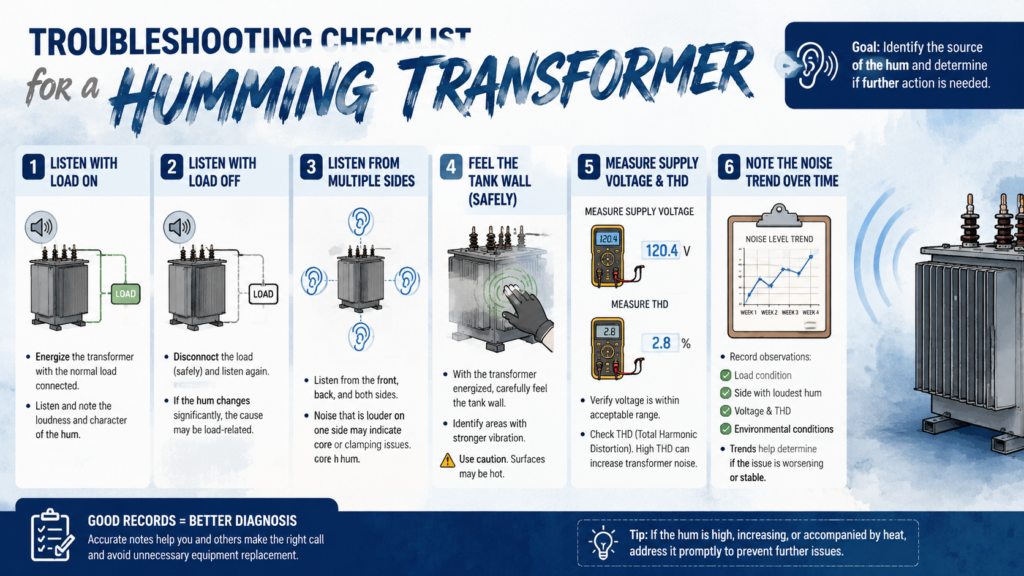
Vızıltı çıkaran bir alçak gerilim transformatörü için hızlı sorun giderme kontrol listesi
Neyin Normal Olduğu ve Neden Endişelenmeniz Gerektiği
Sadece ses seviyesi yeterli değildir — özellikler de önemlidir. Aşağıdaki tabloda, duyabileceğiniz sesler ile bunların sağlıklı, kuru tip bir alçak gerilim transformatöründe genellikle ne anlama geldiği karşılaştırılmıştır.
Ses
Tipik seviye (1 m'de)
Genellikle ne anlama gelir?
Sabit, düşük bir uğultu sesi; yük değiştiğinde değişiklik yok
40 – 55 dB(A)
Normal manyetostriksiyon — herhangi bir işlem gerekmez
Sürekli bir uğultu, tam yükte biraz daha yüksek sesli
50 – 65 dB(A)
Normal, ancak üst sınırda — montajın sağlam olduğundan emin olun
Çatırtı, patırtı veya cızırtı
65 dB(A) üzerinde veya düzensiz
Olası kısmi deşarj, gevşek donanım veya bobin yalıtımında hasar
Yüklerin değiştirilmesiyle değişen uğultu
Değişken
Çoğu zaman yükten kaynaklanan harmonikler veya doğru akım önyüklemesi
Tıkırtı, mekanik gürültü
Değişken
Gevşek kelepçeler, paneller veya montaj parçaları
Haftalar boyunca giderek artan gürültü
Yükseliş eğiliminde
Aşırı ısınma, gevşemiş katmanlar veya kısa devre oluşumu — düzenli aralıklarla inceleme yapın
Bir Alçak Gerilim Transformatörünün Normalden Daha Yüksek Ses Çıkarmasına Neden Olan Nedir?
Gürültü normal aralığın üzerine çıktığında, bunun nedeni neredeyse her zaman şu dört seçenekten biridir: mekanik gevşeklik, elektriksel bozulma, termal gerilim veya çevreyle etkileşim.
Gevşemiş laminasyonlar ve çekirdek kelepçeleri
Üretim sürecinde çekirdek yığını yüksek bir kuvvet altında sıkıştırılır. Yıllar süren termal döngüler ve nakliye sırasında maruz kalınan titreşimler sonucunda bu sıkıştırma kuvveti azalır. Bunun üzerine laminasyonlar tek bir kütle olarak hareket etmek yerine birbirlerine sürtünerek titreşir ve uğultu seviyesi birkaç dB artar. Yeniden sıkma — veya eski ünitelerde yeniden vernikleme — genellikle bu seviyeyi tekrar düşürür.
DC ön gerilimi, harmonikler ve doğrusal olmayan yükler
DC akımını şebekeye aktaran her türlü cihaz — yarım dalga doğrultucu, bazı akü şarj cihazları veya giriş filtrelemesi yetersiz olan büyük bir VFD — manyetik akı dalga formunu merkezden kaydırır. Çekirdek bir yarım döngüde daha fazla yük altında çalışır, manyetostriksiyon asimetrik hale gelir ve uğultu sesi daha yüksek ve pürüzlü hale gelir. Ticari kurulumlarda bu sorunun en yaygın nedenleri arasında modern LED sürücüleri ve anahtarlamalı güç kaynakları yer alır.
Aşırı yük ve aşırı ısınma
Bir alçak gerilim transformatörünü tip plakasında belirtilen kVA değerinin ötesinde çalıştırmak, çekirdeği doygunluğa yaklaştırır. Doygunluk, manyetik akı dalga formunu düzleştirir ve manyetostriksiyon tepe noktalarını keskinleştirir; bu da gürültüyü artırır ve yalıtımın eskimesini hızlandırır. Aşağı akışta ekipman ekledikçe transformatörünüzün ses seviyesi belirgin şekilde artmışsa, öncelikle ünitenin kendisinden ziyade aşırı yükten şüphelenin.
Artan rezonans ve muhafaza kuplajı
Çelik bir çerçeveye doğrudan cıvatalanmış bir transformatör, titreşiminin büyük bir kısmını bu çerçeveye aktarır ve bu çerçeve bir ses yayıcı görevi görebilir. Aynı transformatör, lastik izolasyon pedleri üzerine yerleştirildiğinde ve terminallerinde esnek kablo kanalları kullanıldığında, iç yapısında herhangi bir değişiklik yapılmadan gürültü seviyesini birkaç dB azaltabilir — bu, kabini açmadan önce kontrol etmeye değer bir husustur.
Gürültülü Bir Alçak Gerilim Transformatörünü Nasıl Sessizleştirebilirim?
Gürültü azaltma tekniklerinin çoğu üç kategoriye ayrılır: tasarım seçimleri, montaj seçimleri ve muhafaza seçimleri.
Tasarım seçenekleri. Vakum-basınçlı emprenye (VPI) işlemi, her laminasyon boşluğunu reçine ile doldurarak her katmanı mekanik olarak sönümler. Toroidal çekirdekler, manyetik akıya kesintisiz ve boşluksuz bir yol sağlayarak bu özelliği daha da ileriye taşır; işte bu nedenle iyi yapılmış bir toroidal transformatör genellikle benzer özelliklere sahip bir EI yığınından 5 ila 10 dB daha sessizdir. Gürültüye duyarlı ortamlarda — kayıt stüdyoları, muayene odaları, lüks konut ses-görüntü sistemleri — toroidal transformatörler standart tercihtir.
Montaj seçenekleri. Her bir montaj ayağının altına yerleştirilen neopren veya kauçuk yalıtım pedleri, kablo bağlantı terminallerindeki esnek kablo kanalları veya örgülü bağlantı kablolarıyla birlikte, üniteyi bina yapısından izole eder. Doğru şekilde uygulandığında, bu yöntem transformatöre hiç dokunmadan algılanan gürültüyü yaklaşık yarısı kadar — yani 10 dB civarında — azaltabilir.
Muhafaza seçenekleri. Ne tasarım ne de yalıtım yeterli olmadığında, ağırlıklı vinil ve ses emici astar içeren özel olarak tasarlanmış bir akustik muhafaza, 60 dB gürültü seviyesine sahip bir üniteyi arka plan müziği seviyesine indirebilir. Bunun bedeli ise ısınmadır — transformatörün çalışma sıcaklığının nominal sınıf sınırları içinde kalması için havalandırma sistemi uygun şekilde boyutlandırılmalıdır; aksi takdirde gürültüyü azaltmak karşılığında cihazın daha hızlı eskimesine neden olursunuz.
Öncelikle yükü ve beslemeyi kontrol edin. Hat reaktörleriyle harmonikleri gidermek, ağır doğrusal olmayan yükler için K sınıfı bir transformatör eklemek ya da sadece aşırı yükü azaltmak, genellikle gürültünün kendiliğinden ortadan kalkmasını sağlar.
“Düşük Gerilim Transformatörleri Her Zaman Ses Çıkarır mı?” başlığı
Teknisyeni Aramadan Önce Yapmanız Gereken Hızlı Kontroller
Birkaç dakika dikkatle dinlemek, çoğu zaman kasayı açmaya gerek kalmadan sorunun kaynağını ortaya çıkarır.
Önce yük varken, sonra yük yokken dinleyin. Yük kaldırıldığında gürültü kesilirse, gürültünün kaynağı yüküdür. Gürültü devam ederse, kaynağın kendisi çekirdektir.
Konuyu farklı açılardan değerlendirin. Yerel bir tıkırtı sesi genellikle bir panelin veya kapağın gevşek olduğunu gösterir; iç arıza anlamına gelmez.
Tankın duvarına dokunun (elektriksiz ve soğumuş haldeyken). Gevşek laminasyonlar titrek bir his verir; sıkı olanlar ise sağlam bir his verir.
Besleme gerilimini ve THD değerini ölçün. Uzun süreli aşırı gerilim veya yüksek harmonik bozulma, sorunun temel nedenine dair bir ipucudur.
Bu eğilime dikkat edin. Aylar boyunca giderek artan bir ses, bir arızanın gelişmekte olduğuna işaret eder; oysa her zaman var olan ses, o cihaz için normaldir.
Uygulamanız İçin Düşük Gürültülü, Düşük Gerilimli Bir Transformatör Bulmak
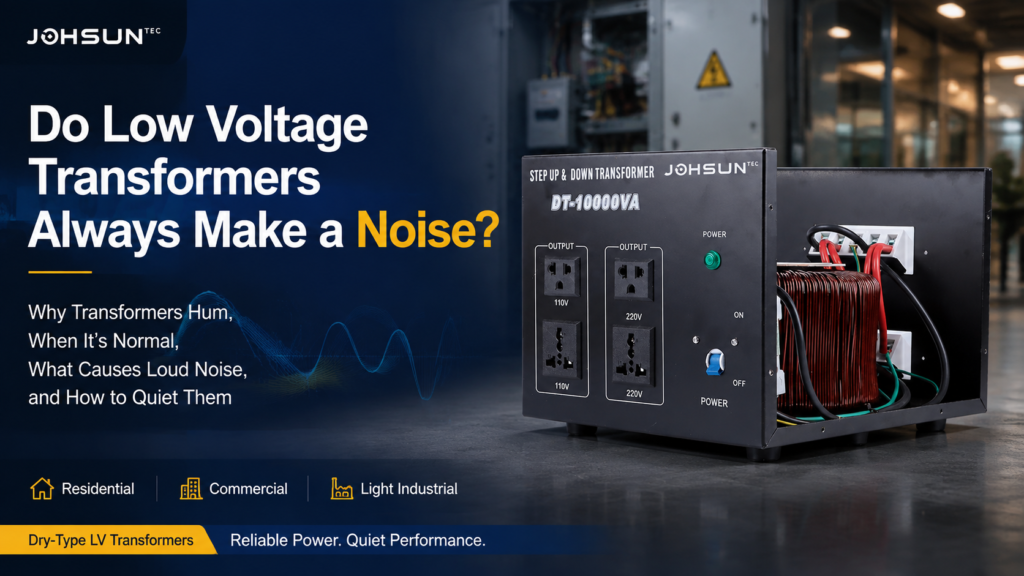
Belirttiğiniz ünite gürültüye duyarlı bir ortama kurulacaksa — ya da sadece konut veya ticari kullanım için daha sessiz bir genel amaçlı dönüştürücü istiyorsanız — teknik özellik belgesinde iki şeye dikkat edin: 1 metrede dB(A) cinsinden belirtilen ses seviyesi ve reçine emdirme, toroidal çekirdekler veya K-faktörü derecesinden bahseden yapı detayları. Johsun DT-10000VA yükseltici ve alçaltıcı transformatör Daha geniş kapsamlı DT/ST serisiyle aynı aileden gelen, reçine emdirilmiş bir çekirdek kullanır; bu da kVA değerleri arasındaki gürültü düzeylerini karşılaştırırken bu ürünü yararlı bir referans haline getirir.
İlgili bağlam için, şu konuyla ilgili kılavuz: Düşük güç uygulamaları için 100VA transformatörler ve şu adresteki adım adım kılavuz Doğru yükseltici transformatörün seçilmesi bu yelpazenin düşük güç ve yükseltici uçlarını kapsarken, şu makale ise izolasyon transformatörleri ek korumanın hem iletilen hem de yayılan gürültüyü nasıl azalttığını açıklamaktadır. Çeşitleri karşılaştıran okuyucular ayrıca şu genel bakışa da rastlayacaklardır: ototransformatör uygulamaları Gürültü azaltmanın tasarım açısından hangi durumlarda öncelikli olduğu ve hangilerinde olmadığına dair bir fikir edinmek için yararlıdır.
Sık Sorulan Sorular
Vızıldayan bir alçak gerilim transformatörünü çalışır durumda bırakmak güvenli midir?
Üreticinin belirttiği dB(A) aralığı içinde sabit bir uğultu olması normaldir ve güvenlidir. Sesin niteliği değişirse, giderek yükselirse ya da cızırtı, ısınma veya koku eşlik ederse, cihazı durdurun ve kontrol edin.
Bir transformatör için ne kadar gürültü çok fazladır?
Evrensel bir sınır bulunmamakla birlikte, üreticinin belirttiği değerin yaklaşık 10 dB(A) üzerinde olan veya kol mesafesinden sesini yükseltmeyi gerektirecek kadar yüksek olan her durum, daha yakından incelenmeyi gerektirir.
Bir transformatör zamanla daha fazla uğultu çıkarmayı “öğrenebilir” mi?
Transformatör öğrenmez, ancak mekanik durumu değişir. Sıkıştırma kuvveti azalır, vernik sertleşir ve termal döngüler bağlantı noktalarını gevşetir. Yıllarca sessizce çalışan bir ünite, bu etkilerin birikmesiyle daha gürültülü hale gelebilir — bu genellikle giderilebilir bir bakım sorunudur.
Toroidal transformatör, EI çekirdekli transformatörden daha sessiz olur mu?
Genel olarak, evet. Sürekli bir toroidal çekirdekte manyetik akının geçebileceği bir hava boşluğu bulunmaz ve kapalı manyetik yol mekanik olarak daha rijittir. Aynı kVA değeri için, iyi tasarlanmış bir toroidal tasarım, eşdeğer bir EI tasarımına kıyasla genellikle 5 ila 10 dB daha sessizdir.
Ekstra soğutma sistemi olmadan bir dolabın içine düşük gerilimli bir transformatör kurabilir miyim?
Ancak kabin buna uygun boyutlarda ise. Transformatörün bir kabin içine yerleştirilmesi ısıyı hapseder ve yüksek sıcaklık manyetostriksiyonu daha da kötüleştirir; bu nedenle havalandırması yetersiz bir kabinde gürültü seviyesi artabilir. Kabin montajı gerekiyorsa, ünitenin nominal gücünü düşürün veya zorlamalı havalandırma sistemi ekleyin.
Düşük Gerilimli Transformatör Gürültüsü İçin Önerilen Modeller
Teoriyi okumak yerine bir ürün seçmek istiyorsanız, buradan başlayın. Bu modeller, alçak gerilim transformatör gürültüsü konusunda en sık talep edilen kapasite aralıklarını kapsamaktadır ve her birinin teknik özelliklerine ve fiyat aralığına doğrudan bağlantı bulunmaktadır.
İhtiyacınız olan giriş gerilimini, çıkış gerilimini, fazı ve sürekli kVA değerini bize bildirirseniz, bir iş günü içinde size uygun modeli, fiyatı ve teslim süresini teyit edeceğiz. Standart dışı değerler ise şu şekilde ele alınır: OEM/ODM özel transformatör üretimi.
İspanya için 230 V - 110 V transformatör: REBT uyumluluğu, ITC-BT-18 ve ITC-BT-24 standartları, ikincil devrenin topraklanması ve UNE-EN IEC 61558 belgeleri.
Hollanda için 230 V - 110 V transformatör: NEN 1010, 30 mA kaçak akım kuralları, kaçak akım anahtarı ile otomatik kaçak akım şalteri arasındaki fark ve ikincil topraklama.